
Stacking up Indian giving against other BRICs

Indian policymakers increasingly worry about the emergence of two Indias: an increasingly affluent elite – with strong links to the global economy and a rapacious hunger for ever more conspicuous consumption – and a massive impoverished under-class, whose health, education and nutritional levels are on par with the darkest corners of sub-Saharan Africa.

New Delhi is struggling to bridge that gap through its own social welfare schemes, but many Indians say increasing philanthropic giving by wealthy companies and individuals will also be crucial if the country is to overcome its profound social problems.

On the face of it, India does not far badly on the philanthropy front. Bain & Co has recently estimated that Indians together donate 0.6 per cent of GDP to charities, higher than charitable giving levels in other emerging markets like Brazil (0.3 per cent of GDP) and China (0.1 per cent of GDP), but still far short of the 2.2 per cent donated in the US.

But the details reveal that wealthy Indian are rather parsimonious when it comes to opening their wallets for their more downtrodden brethren. According to Bain, 65 per cent of all charitable giving in India comes from the government itself, mostly in response to natural disasters. Another chunk comes from foreign organisations. Just 10 per cent of the funding for charities in India comes from Indian individuals or Indian-owned companies.

Bain argues India’s wealthy can easily afford to give more – and should “absolutely” be doing so. It notes that the top 5 per cent of households control 40 per cent of India’s wealth, and the top one percent controls 16 per cent of national wealth. But among these privileged elites, there’s little inclination for giving

In Indian society, “charitable donations do not necessarily win social recognition,” Bain said in a recent report on the issue. “Instead, many of the newly wealthy view increased material wealth as the key to improving social standing.” Indian tax laws also offer little incentive for charitable giving.

Some Indian tycoons and companies – like Sunil Mittal of Bharti Enterprises and Azim Premji of Wipro – have set up foundations, particularly focusing on the crucial issue of education. Yet India’s wealthy will have to be far more generous if the gap between the two Indias is to narrow and not widen.

Global equities macromap

Number of the day

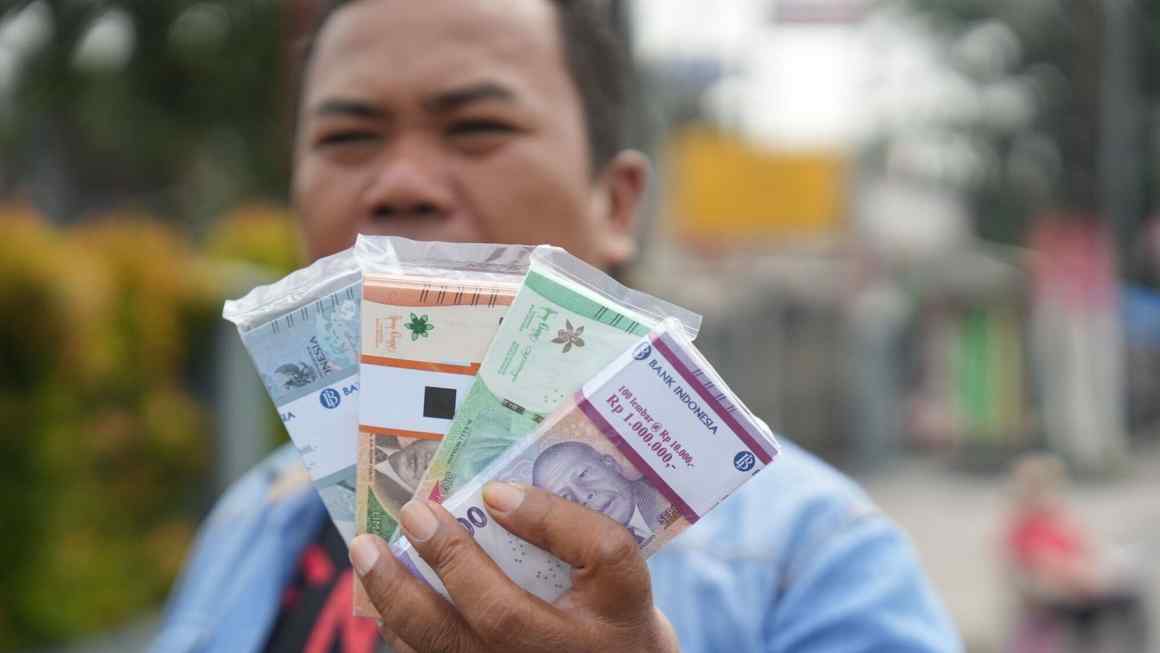
54.46 Rupees to the dollar on Wednesday, an all-time low for India's currency.

Featured posts

Myanmar

A businessman’s guide, British-style

Chart of the week

China’s trade surplus

beyondbrics

The emerging markets hub

About this blog Headlines email Blog guide
News and comment from more than 40 emerging economies, headed by Brazil, Russia, India and China.


'Like' our beyondbrics Facebook page, where we showcase a top story of the day
Sign up for our news headlines and markets snaphot service. We have two emails per day - London and New York headlines (sent at approx 6am and 12pm GMT).

To comment, please register for free with FT.com and read our policy on submitting comments.

There is an overall beyondbrics RSS feed, as well as feeds for all our countries, tags and authors. Learn more in our full RSS guide.

All posts are published in UK time.

Get in touch with us - your comments, advice and even complaints. Find out how to contact the team.

See the full list of FT blogs.

BB shortcuts

Regulars Series Archive
Chart of the week
Behind the numbers

Fund flows
Tracking money in and out of EM bonds
12 for 2012
Guest posts on key trends for the year ahead

Brics at 10
A decade of growth
The Diaspora Digest
EM diasporas, seen through their community media (Oct-Nov 2011)
Sick brics (Sep 2011)
Brics and mortar (Aug 2011)
Beyondbrics on the beach (Jul-Aug 2011)
China bubble? (June 2011)
Post-election Nigeria (June 2011)
Hey bric spender (Aug 2010)

Emerging markets data

Archive

« Apr Jun »May 2010
M T W T F S S
 12
3456789
10111213141516
17181920212223
24252627282930
31  

What we are writing about