



The word “overheating” dominates talk about Brazil’s economy these days. Inflation and growth forecasts are being revised upwards, the central bank is widely expected to continue raising interest rates and the government last week announced R$10bn in spending cuts.
But Carlos Maggioli, the head of sales and trading at Itaú BBA, says that even if Brazil’s economy grows as fast as 9 per cent, the threat of overheating won’t kick in until growth accelerates past India and China.
If growth goes up to 10 per cent, “then you will see overheating,” Mr Maggioli told beyondbrics in an interview at the investment bank’s annual conference in New York. But that’s unlikely, he added, because an infrastructure bottleneck will keep growth in the range of 5 to 9 per cent.
“The economics look extremely strong. I don’t think the stock market is pricing that right now,” he said.
Itaú Unibanco recently raised its GDP growth forecast to 7.5 per cent in 2010 from 6.5 per cent, and Guilherme da Nobrega, an Itaú economist, told Bloomberg yesterday that the estimate may be raised to as much as 8.5 per cent.
Such fast growth would likely put a lot of pressure on prices, since Brazil’s potential or non-inflationary growth rate is seen by most economists at between 4 and 5 per cent a year. Earlier this month, Guido Mantega, the finance minister, told the FT’s Jonathan Wheatley that his government has set a 6 per cent limit on growth.
Low-income housing boom
As for what’s driving growth, Mr Maggioli points to a shift in demand to the lower end of Brazil’s system of economic classification – the D and E classes, who earn less than R$1,115 (US$598) a month, according to the Getulio Vargas Foundation.
This is “a consumption trend we haven’t seen in the last 20 years,” Mr Maggioli said, and is fueling the low-income housing sector.
Housing credit is expanding rapidly: Caixa Econômica Federal, the government-controlled savings bank, made R$45bn in home loans in 2009 – R$25bn more than in 2008 and R$20bn more than it had projected
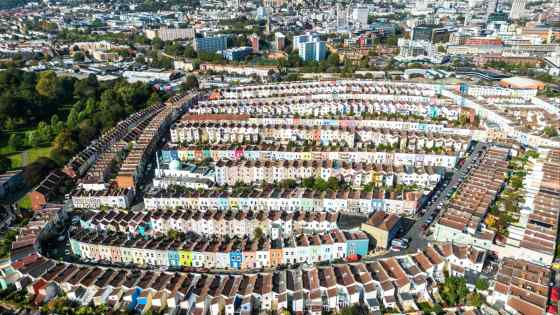
Add to that the 2m low-income homes scheduled to be built by 2014 through the federal “Mi Casa, Mi Vida” “Minha Casa, Minha Vida” housing programme, and it’s not hard to see why real estate is attracting attention.
Indeed, Bloomberg reports today that billionaire investor Sam Zell’s Equity International is stepping up its investment in Brazilian property to the tune of $500m.
“Our enthusiasm for Brazil could not be higher,” [Equity International chief executive Gary] Garrabrant, who co-founded Equity International with Zell in 1999, said in a May 18 interview in Sao Paulo. “You’ve got this local demand that’s unparalleled.”


Stefan Wagstyl
Josh Noble
Rob Minto
Pan Kwan Yuk
Jonathan Wheatley