




Higher wages in China: good news for the economy

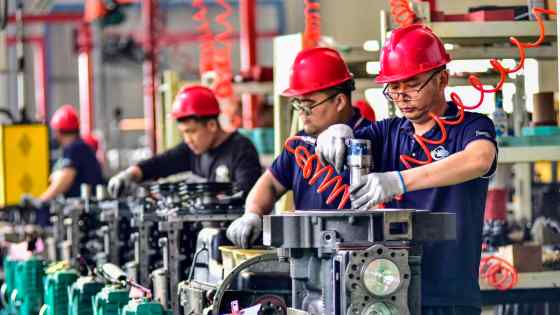
Chinese wage inflation has become something of a hot topic after Honda and Foxconn both decided to increase worker salaries this week – in Foxconn’s case by as much as 30 per cent. And now the Chinese union of KFC workers is also demanding more cash.

So will rising wages nudge China’s crown as factory of the world? And is it a boon for its neighbours?

Stephen Green at Standard Chartered disagrees. His bank surveyed manufacturers in China’s Guangdong earlier in the year about wages. They majority of those asked said they were expecting pay to rise by around 10 per cent. And while a few Chinese firms and multinationals have tentatively started to peer over the borders into Vietnam, Thailand or across to Indonesia, most companies thought that any relocation would be within China.

China’s economic growth has long been concentrated around the eastern coastal cities and around the Pearl and Yangzi river deltas. But now companies are increasingly looking inland, to provinces such as Sichuan, Inner Mongolia and the vast city of Chongqing, egged on by aggressive local governments and encouraged from Beijing.

Wage inflation is good news because it, first, helps spread the economic activity across the rest of the Chinese mainland – something the government has actively pursued by spending billions of dollars on improving road and rail infrastructure. Second, it means China can move towards a consumer-driven economy – something the US and Europe have been hoping for. As Green puts it: “Higher wages mean that now a worker in a Nike factory can go out and buy a motorbike, or a television”.

But what about profitability? Andrew Wong of Quam Securities told Hong Kong’s The Standard newspaper today:

“The rise in labor costs should be reflected in company results in the second and third quarters. If labor accounts for about a third of a company’s total costs, a salary increase will greatly affect its profit.”

Higher wages will hit manufacturing margins, but StanChart estimates that wages make up just 10-15 per cent of factory overheads. So while increasing wage costs are not a disaster for companies, they could still cause some headaches. Unless of course, they make motorbikes or televisions.

Related reading:
Change is finally afoot for China’s workers
– FT
Video: Why China’s labour system is broken
– FT
Wage increases likely to become the norm, says MSI CEO
– beyondbrics

Global equities macromap

Number of the day

15.3% Fall in Chinese imports in January, leaving China with a trade surplus of $27.3bn on the month.

Featured posts

Facebook

How much are EMs worth to the company?

European aviation

Malev will be missed

beyondbrics

The emerging markets hub

About this blog Headlines email Blog guide
News and comment from more than 40 emerging economies, headed by China, India, Brazil and Russia.


'Like' our beyondbrics Facebook page, where we showcase a top story of the day
Sign up for our news headlines and markets snaphot service. We have two emails per day - London and New York headlines (sent at approx 6am and 12pm GMT).

To comment, please register for free with FT.com and read our policy on submitting comments.

There is an overall beyondbrics RSS feed, as well as feeds for all our countries, tags and authors. Learn more in our full RSS guide.

All posts are published in UK time.

Get in touch with us - your comments, advice and even complaints. Find out how to contact the team.

See the full list of FT blogs.

BB shortcuts

Regulars Series Archive
Chart of the week
Behind the numbers

Fund flows
Tracking money in and out of EM bonds
12 for 2012
Guest posts on key trends for the year ahead

Brics at 10
A decade of growth
The Diaspora Digest
EM diasporas, seen through their community media (Oct-Nov 2011)
Sick brics (Sep 2011)
Brics and mortar (Aug 2011)
Beyondbrics on the beach (Jul-Aug 2011)
China bubble? (June 2011)
Post-election Nigeria (June 2011)
Hey bric spender (Aug 2010)

Emerging markets data

Archive

« May Jul »June 2010
M T W T F S S
 123456
78910111213
14151617181920
21222324252627
282930  

What we are writing about