


By Catherine Belton and Courtney Weaver
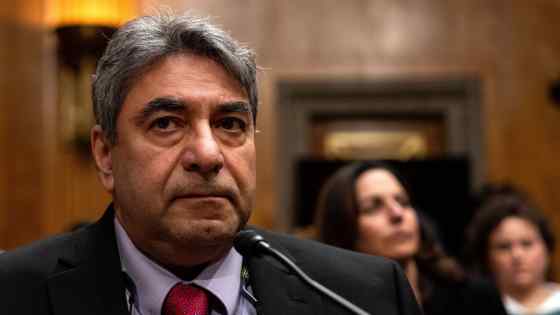
Will the Russian government cut off the man once dubbed “Putin’s banker”? It might seem a highly unlikely proposition. But investors are worried that Sergei Pugachyov, the mysterious founder of Mezhprombank and a senator representing the Siberian republic of Tuva, could become the first high profile Russian tycoon to default on a eurobond since the 2008 crisis swept the market.
Yields on Mezhprombank’s €200m eurobond have soared this week to levels not seen since October 2008 amid fears the bank would not be able to pay off the bond when it falls due on July 6. Today it was trading at about 90 per cent of the nominal price.
The bank, at the centre of a financial industrial group with assets in shipbuilding and real estate, has historically received a great deal of government support. Since the crisis hit, Mezhprombank has been one of the biggest recipients of unsecured anti-crisis loans issued by the Central Bank.
But while the majority of Russian banks have already started paying these loans off, Mezhprombank has not. According to Alexander Danilov, senior analyst at Fitch ratings agency in Moscow, out of the remaining 60bn roubles in outstanding unsecured loans owed to the Central Bank (down from a total 3.5 trillion roubles owed at the height of the crisis), Mezhprombank owes more than half.
Last week, Fitch and Standard and Poor’s lowered their outlook on Mezhprombank, warning of low liquidity and expressing concerns over its ability to repay the eurobond on time. Moreover, formally, “it has used up all its capacity to borrow from the central bank,” Danilov says. “There is a risk they may not be able to make the payment.”
A deal recently proposed by Mr Pugachyov to raise more cash by selling off his vast Severnaya Verf and Baltiisky shipyards to the state shipbuilding corporation OSK for about $3bn has met with a cool response from Igor Sechin, the powerful deputy prime minister. The shipyards are becoming hot properties as potential centres for building French Mistral warships.
Last week Sechin said he had received no proposal from Mr Pugachyov, and that he hoped Mezhprombank would be able to sort out its debt problems by itself. With debts owed to the state piling up, there is no reason for the government – which is battling to rein in its budget deficit – to pay such a sum for the yards, analysts say. It looks like Mr Pugachyov’s credit with the Russian government could be running dry.
Mezhprombank told beyondbrics it would be able to repay the eurobond and says there is no connection with the shipyard sale. In a conference call with investors, the CEO of the bank Jerry Kowalsky said “the bank has ample liquidity to repay the 6 July €200m Eurobond”. He added that investors should keep in mind that Mr Pugachyov has other assets on top of shipyards.
Those assets include the French luxury food chain Hediard, and with Mr Pugachyov making it onto the Sunday Times’ British rich list with an estimated fortune of $750m this year, he may well find the cash for the eurobond in a pocket somewhere.
But as Steven Dashevsky – a founder of the Russian Special Situations Funds – points out, the fears over the eurobond are “a very powerful illustration of how weak the fundamentals are for many of these financial industrial groups.” He added that their wellbeing substantially depended “on their relationship with the Kremlin.”
With government finances tighter, the honour of being dubbed “Putin’s banker” nearly a decade ago may not get Mr Pugachyov very far.


Stefan Wagstyl
Josh Noble
Rob Minto
Pan Kwan Yuk
Jonathan Wheatley