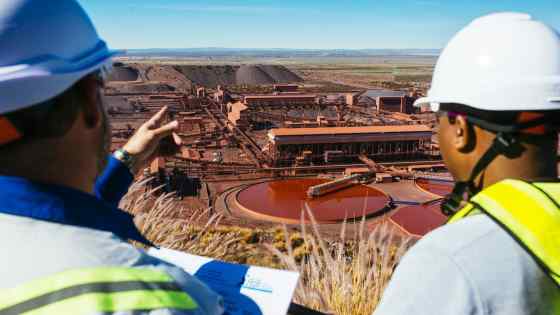
Global growth worries have many investors fretting over Brazil, fearful that China will ease up on buying steel, iron ore and other staple Brazilian exports. But the possible unraveling of Brazil’s commodity story may be a chance to tap into the country’s domestic growth, Credit Suisse analysts suggest.
“The change in China growth patterns [toward consumption] should cool the demand for commodities”, wrote Emerson Leite and other equity analysts in a note to clients. Factor in Brazilians’ growing incomes and increased access to credit, and slowing growth in US manufacturing, Credit Suisse says, and Brazil’s domestic picture looks even more attractive.
Accordingly, and given the still robust outlook for the Brazilian economy, we believe it’s time to take a closer look inside the country for opportunities. Our economic team forecasts 8% real GDP growth for 2010, and the latest consumer confidence index and unemployment data have been encouraging. As such, we are increasing our exposure to domestic names in Brazil, namely the Banking, Real Estate and Retail sector, and taking Metals & Mining, Oil & Gas and Steels to Underweight.
Among Credit Suisse’s recommendations is Banco do Brasil, whose shares have surged following its share offer on Wednesday.
Credit Suisse also reaffirmed its view that Brazilian stocks will outperform Mexican equities.
“Mexico continues to be expensive in comparison to Brazil and other [global emerging] markets”, the analysts wrote. “Mexico trades at a premium of 22 per cent to [global emerging] markets and 48 per cent to Brazil”. (Brazil’s benchmark Bovespa stock index is down 10.72 per cent this year, while Mexico’s IPC has fallen 2.87 per cent.)
What’s more, Credit Suisse sees a better economic outlook for Brazil than its northern neighbour, forecasting Mexican growth at 4.4 per cent this year, about half the 8 per cent rate it expects for Brazil.
And finally, the analysts say, the ongoing security fears stemming from Mexico’s drugs war “could constrain investments (recently homebuilders canceled investment projects in northern Mexico, for example)”. Of course, Mexico’s homicide rate is less than half Brazil’s, but crime has had less of an impact on companies’ willingness to invest and do business in Brazil, it seems.
Brazilians like to joke that Brazil is “the country of the future . . . and always will be”. It remains to be seen if economic reality will catch up with bullish forecasts this time round.


Stefan Wagstyl
Josh Noble
Rob Minto
Pan Kwan Yuk
Jonathan Wheatley