


Taiwan Semiconductor Manufacturing Company, the world’s biggest contract chipmaker, on Thursday raised its bet on the continued rapid growth of the global semiconductor industry to the tune of $1bn.
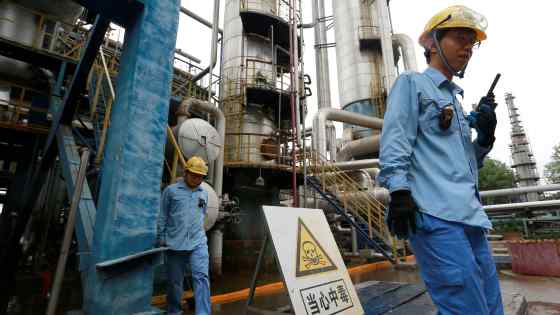
The company, which commands half the global market for contract chips, on Thursday raised its capital expenditure plans for this year from $4.8bn to $5.9bn. A large part of that extra spending is to expand capacity for next year and to fund plans to begin mass production of chips using more advanced, 28nm technology.
TSMC has long been seen as a bellweather for the broader technology industry because its chips go into products that range across the whole spectrum of electronic devices, from chips that control the engine in cars, to mobile phones and computers.
Morris Chang, chairman and chief executive, has previously said that demand for chipmaking was far outstripping supply, as demand for consumer electronics products from smartphones to netbooks rebounded strongly over the past year, while major chip manufacturers had been forced to halt or scale back expansion plans after the financial crisis.
“We have no upward flexibility [for clients placing orders] this year, and we have no upward flexibility next year,” Mr Chang said, adding: “We, of course, have always had downward flexibility.”
Analysts attending TSMC’s second quarter results conference in Taipei on Thursday, however, were decidedly more cautious about the outlook for the near future, with several directing questions to Chang about the possibility for overcapacity in the industry should demand weaken in Europe just as the extra capacity being built by TSMC – and rivals including Globalfoundries – come online.
Chang batted away such suggestions. “We do not build capacity on speculation. We build capacity on customer demand,” he said.
He did, at least, allow for the possibility of a weakening in consumer demand towards the end of the year. “I think there may be [an upcoming demand slowdown], but I’m not sure,” he said. But Chang quickly added that even if there was a second dip in the global economy, “the long term predictive indicators show that the weakening would only be temporary”.
Related:


Stefan Wagstyl
Josh Noble
Rob Minto
Pan Kwan Yuk
Jonathan Wheatley