How does an ill-fitting family spanning the Wahhabi state of Saudi Arabia and revolutionary Venezuela celebrate its 50th anniversary, which fell on Tuesday?
Well, no-one is saying the party-planning for the Organisation of the Petroleum Exporting Countries, founded in Baghdad in 1960, has been easy.
The Iraqi government had apparently hoped to host a symposium to mark the 50-year celebrations, which for logistics reasons were to take place after the next scheduled Opec meeting in Vienna next month.
Rumour has it that others scuttled the move. Either way, the most prominent celebration hosted by a member state is now slated for Riyadh, the capital of Opec’s so-called kingpin, Saudi Arabia. Algeria is also planning an event, while the secretariat in Vienna is launching a cultural exhibition next week.
Whatever the truth behind Baghdad’s party ambitions, there is a broader problem here: Iraq, while one of Opec’s 12 official members, has because of sanctions and war remained outside its output ceiling for years.
Bringing Iraq back under that umbrella is one of the cartel’s greatest challenges as Opec turns 50 today.
As oil majors invest in Iraq’s under-developed oil industry, the war-torn country could see its output rise five-fold to as much as 12m barrels a day over the next decade.
Beyond Iraq, the group has to deal with global concerns over the impact of hydrocarbons on global warming and the tilting balance of economic power towards Asia, not to mention concerns for the world’s economy over the coming months.
Some columnists are lining up to give the group a beating, hoping to mar its golden celebrations. The cartel manipulates the market, threatening global prosperity, they say.
Nor should the western powers put too much faith in Saudi Arabia, the kingdom that spawned Osama bin Laden. It has never bothered too much about the machinations of the press.
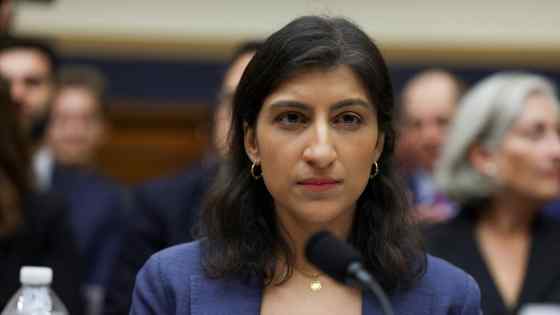
Ali al-Naimi, the Saudi oil minister (pictured), was educated by government-owned Saudi Aramco, rising through the ranks of a kingdom defined by privilege and connections. At 75, he is getting too old for his famous early-morning jogs around Vienna’s boulevards, during which out-of-breath hacks hang on his every word to divine some market-moving nuance.
Just as succession to the Saudi throne could set the political agenda in the world’s biggest oil exporter, finding a replacement for Mr Naimi could prove an important appointment for the oil market, given his stewardship of Opec’s transformation from yesteryear’s politicised body to the technocratic approach of today.
Opec’s price management, derided by exponents of free markets, has been largely successful in hitting its own targets. Through much of the past decade the group kept prices below $30 a barrel, before they span out of control towards the end of the global boom.
Despite the bust triggered by the recent financial crisis, prices have been kept in the $70s, around the level that Saudi Arabia’s king has publicly decreed as a fair price to maintain oil-field investment and keep supplies in tune with rising Asian demand.
So the ministers have a good excuse to toast their future when they get together in Riyadh next month.
“Saudi champagne”, the sparkling fruit drink served in the alcohol-free kingdom, might not get the party going as in salsa-infused Caracas.
But with oil prices sustaining themselves at levels that could prove to be record annual average highs in the midst of such global economic uncertainty, there will be smiles all around.


Stefan Wagstyl
Josh Noble
Rob Minto
Pan Kwan Yuk
Jonathan Wheatley