Facing off on microfinance

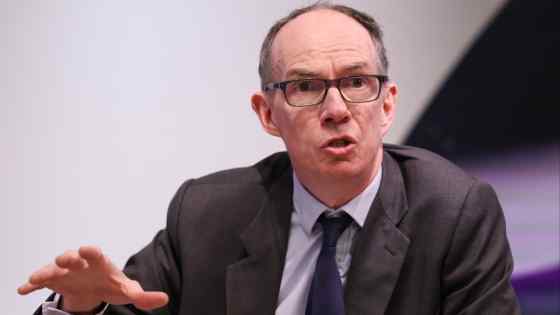
Muhammad Yunus, Founder and Managing Director of Grameen BankIs microfinance still microfinance if it involves outside shareholders and capital markets?

That question was the subject of a lively debate at the Clinton Global Initiative this afternoon as Grameen Bank founder and Nobel laureate Muhammad Yunus squared off against Vikram Akula, the founder and chair of SKS Microfinance, the recently listed microfinance lender.

Yunus, the man who invented the modern microcredit industry in 1976 when he started the research project that would become Grameen Bank, takes the purist approach: “microfinance is lending money to the poorest women for income-generating activity without collateral so she can help herself get out of poverty.”

Key to his definition is that the bank is owned by borrowers. “We are not opposed to making profit, only who makes the profit out of the poor people and how much”, he said. Under the Grameen model, 95 per cent of the bank is owned by the people it lends to, and 5 per cent is held by the government.

“The whole goal is social”, Yunus said. “I don’t own a single share in Grameen Bank.”

Akula, on the other hand, argued that “with 3bn people living on less than $2 a day, we need more than one approach.” Accessing external investors is essential in making sure “you never have to say no to any poor person who is simply asking for an opportunity.”

“We believe that commercial microfinance is an important tool to accelerate financial inclusion”, he said – particularly in countries, like India, where it’s hard for lenders to get banking licenses. The act of parliament in Bangladesh that allowed the central bank to support the creation of Grameen Bank was “a unique situation.”

“The reality is that in most developing countries the central bank simply doesn’t have that structure”, Akula said. “The only place to get that quantity of funds is commercial capital markets.”

But Yunus warned that turning to capital markets, while easy, takes lenders in “the wrong direction.”

“The moment you get exposed to international money, you’re open to problems” of those markets, including volatility. Trying to please investors can lead to “mission drift”: institutions risk losing sight of their goals, which should be strictly social.

Akula countered that differentiating commercial and social ends in microfinance is “a false dichotomy.” In the end, he said, “it’s not a question of for-profit versus non-profit, it’s that microfinance done well creates long-term shareholder value.”

Amid the debate, Mary Ellen Iskenderian of Women’s World Banking, a microfinance network, tried to thread the needle. She argued that true empowerment means moving beyond credit to savings and other products, providing the world’s poor with a full range of financial services.

“I can’t see how there could ever be enough donor capital to make inroads in the number of people who are unbanked”, she said. “I can’t see how that gap can be breached by anything other than access to capital finance.”

Studies done by WWB have shown that the transition of a microfinance insititution from NGO to a regulated for-profit is generally “tremendously positive”, she said, leading to better governance, more transparency and a greater mobilisation of savings.

But the studies also turned up an unexpected finding: those institutions lend to fewer women, a shift Iskenderian said is “stunning”, given the traditional microfinance model.

“The things that women entrepreneurs spend their money on are the kinds of things that have long-term intergenerational impacts”, she said: education, healthcare, housing improvements. “Having women as the conduit to household security through microfinance is important.”

So while markets may be buzzing about opportunities for monetising microfinance, it’s worth asking who, exactly, is reaping the benefit.

Related reading:
Clinton philanthropy summit kicks off with Google, P&G pledges
, beyondbrics
Aid versus business: what’s the best way to fight poverty?
, beyondbrics
Microfinance faces mega default risks, beyondbrics

Global equities macromap

Number of the day

11% Quarter-on-quarter GDP growth in Thailand, as the economy bouces back after the 2011 floods.

beyondbrics

The emerging markets hub

About this blog Headlines email Blog guide
News and comment from more than 40 emerging economies, headed by Brazil, Russia, India and China.


'Like' our beyondbrics Facebook page, where we showcase a top story of the day
Sign up for our news headlines and markets snaphot service. We have two emails per day - London and New York headlines (sent at approx 6am and 12pm GMT).

To comment, please register for free with FT.com and read our policy on submitting comments.

There is an overall beyondbrics RSS feed, as well as feeds for all our countries, tags and authors. Learn more in our full RSS guide.

All posts are published in UK time.

Get in touch with us - your comments, advice and even complaints. Find out how to contact the team.

See the full list of FT blogs.

BB shortcuts

Regulars Series Archive
Chart of the week
Behind the numbers

Fund flows
Tracking money in and out of EM bonds
12 for 2012
Guest posts on key trends for the year ahead

Brics at 10
A decade of growth
The Diaspora Digest
EM diasporas, seen through their community media (Oct-Nov 2011)
Sick brics (Sep 2011)
Brics and mortar (Aug 2011)
Beyondbrics on the beach (Jul-Aug 2011)
China bubble? (June 2011)
Post-election Nigeria (June 2011)
Hey bric spender (Aug 2010)

Emerging markets data

Archive

« Aug Oct »September 2010
M T W T F S S
 12345
6789101112
13141516171819
20212223242526
27282930  

What we are writing about