

Daily Archives: November 11, 2010

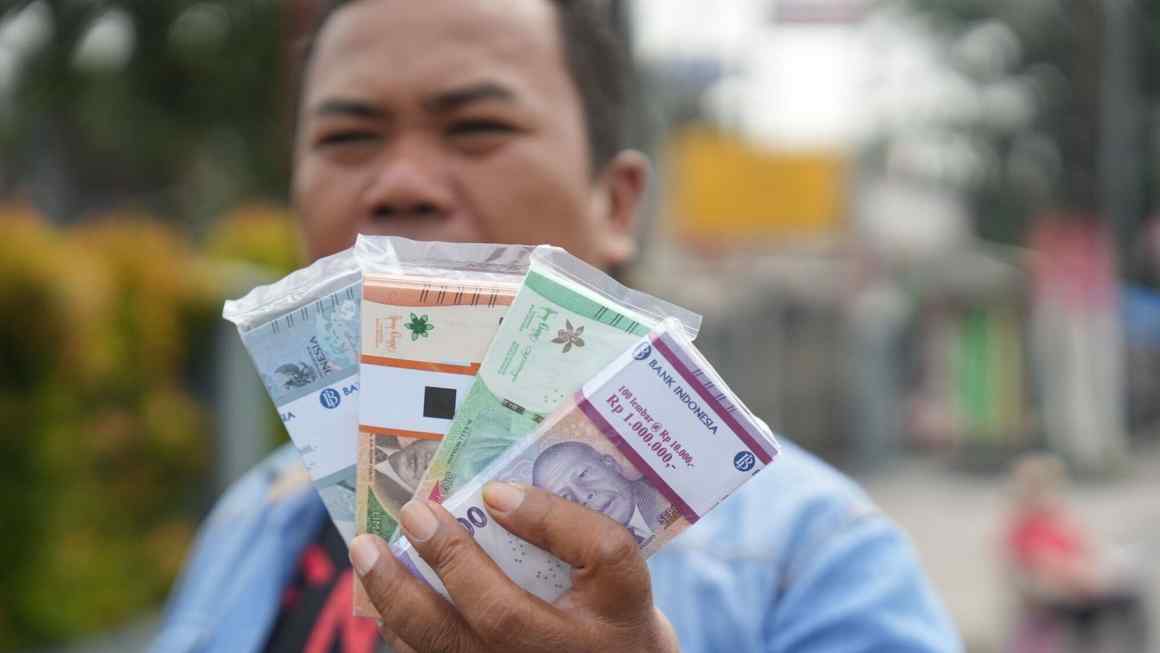
Brazilian real against US dollarWorries over Irish debt sent the Latin American currencies weaker against the dollar, even as world leaders met in Seoul with the spectre of currency war on their agenda. Meanwhile, Brazilian stocks continued this week’s declines as corporate earnings disappointed investors, and Banorte, the Mexican bank, led stocks lower on the benchmark IPC index. Continue reading »

Banco PanamericanoLosses of R$1bn apparently concealed by Banco Panamericano, a medium-sized Brazilian bank, may not present a systemic risk to the rest of the sector. But the episode does pose awkward questions for the central bank and the government – and it has sobering implications for Brazil’s consumer boom. Continue reading »

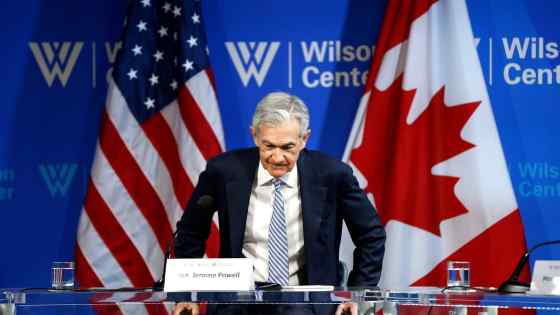
With Alan Greenspan putting the boot into US policymaking, the G20 summit in Seoul did not got off to the best start.

Tim Geithner, US treasury secretary, was forced to deny the former Federal Reserve Board chairman’s claims that Washington was “pursuing a policy of currency weakening”. Geithner retorted that the US would never deliberately push down the dollar to boost exports.

Even though the 84-year-old Greenspan is nowhere near South Korea, the spat will do little to improve the atmosphere in Seoul, where delegations are struggling to coordinate policy. Continue reading »

By Michael Stothard

When Joseph Stiglitz warns that developing world should put in place capital controls to control “hot money” flowing out of the US, he is not alone.

It is unclear just how much liquidity from the latest round of QE2 will end up in EM, but with Stiglitz urging capital controls to curb this hot money, it’s worth having a stab at the numbers. And some economists already are running the figures. Current estimates of how much QE2 liquidity will end up in EM ranges from between a quarter to a half of the $600bn. Continue reading »

Turkey’s prime minister has finally joined the chorus of emerging-market discontent with the US’s second round of quantitative easing.

“The remedy cannot be printing money. This will have repercussions for developing countries and the least developed countries,” said Recep Tayyip Erdogan (pictured) in a Reuters interview. “This is not a fair approach and Turkey cannot say yes to such a development.” Meanwhile, the central bank has announced its own, less rhetorical steps to discourage speculative inflows. Continue reading »

Hungarian stocks plunged for a second consecutive day on Thursday, as the central bank joined criticism of the government’s draft budget. With greater global caution, other central and eastern European markets also fell, led by financial stocks.

At the G20 meetings in Seoul, Russia urged rich countries to lift restrictions on foreign investment in real assets, in order to allow emerging countries to manage capital inflows. The proposal could provide an alternative to capital controls, one analyst commented. Continue reading »

Belgrade now has the highest benchmark rate in Europe. Serbia’s central bank has raised the key policy rate a whole percentage point to 10.5 per cent, its fourth raise in as many months. Continue reading »

By Kevin P. Gallagher, Boston University

Major Chinese investment in Latin America is now a regular event: Sinopec’s $7.1bn investment in Repsol’s Brazilian unit is just the latest example. Such deals are rightly celebrated with fanfare in Latin America. However, the long-run effects are uncertain – especially given that Latin American exports are losing badly to their Chinese counterparts in world markets.

Latin America needs to diversify its exports – away from oil, iron, soya, meat and the like – if it is to grow sustainably. Unfortunately, as the region has focused on selling its commodities to China, Chinese firms have been outcompeting Latin American manufacturing exporters at a frightening pace. Continue reading »

Brazil’s multi-asset exchange, BM&F Bovespa, should have cause to celebrate. The world’s third largest operator by market cap, it saw third-quarter profits rise 15 per cent compared to last year, thanks to Petrobras’s world-record share issue and a rise in futures trading.

But exchange executives are worried. The currency wars, which have seen Brazil impose and then raise taxes on foreign inflows, have created regulatory risk and damaged BM&F Bovespa’s share price, chief financial officer Eduardo Refinetti Guardia said on Wednesday. The exchange is now lobbying the government in Brasilia to tweak some of the controls to alleviate “distortions”. Continue reading »

Every foreign company wants a piece of the new Chinese middle class, but selling these consumers something really dear is, paradoxically, easier than selling something basic and mid-priced – like, say, a Gap t-shirt.

Those on even modest incomes think nothing of spending one or two months’ salary on Chanel or Cartier, but it remains to be seen whether they will part with their renminbi to end up looking like preppy Americans. Continue reading »

China is not lacking in self-confidence, as world leaders gathering for a G20 tussle over currencies and trade balances know very well. Here’s something that could boost it further: a prediction that China could surpass the US and become the world’s largest economy by 2012, at least on one measure of gross domestic product.

That’s the forecast from the Conference Board, a well-respected research organisation based in New York, which has run the numbers with GDP calculated on the basis of purchasing power parity, a measure that is not universally liked. Continue reading »

* Stiglitz urges capital controls to curb “hot money”

* Russian carmaker to take over F1 team

* First Eastern fund targets UK

* PetroChina, Shell ink joint projects

* Satyam founder Ramalinga Raju surrenders in fraud case Continue reading »

Asian markets fell on Thursday, with South Korean stocks down nearly 3 per cent from a two-year peak. In China, inflation sped to a 25-month high, raising expectations of further monetary tightening, but the Shanghai Composite gained, after Moody’s credit agency upgraded the rating of government bonds.

Joseph Stiglitz, the Columbia University economist, argued that India is more vulnerable to an asset bubble than China, saying that “strong economies that don’t yet have capital control become the focal point” for the liquidity injected the US Federal Reserve. Continue reading »

Mike Mack, chief executive of Swiss agrochemicals group Syngenta, and Nguyen Hoang Ngo, a farmer in north Vietnam, don’t have much in common. But they share a passion for Savior 1, a premium variety of tomato developed by Syngenta that is suited to Vietnam’s hot summers and resistant to the troublesome tomato leaf curl virus.

Savior 1 seeds cost around 60 per cent more than standard varieties, but the plants provide three crops a year instead of one. The tomatoes also tend to be more uniform and juicier so farmers can sell them for a higher price, 10,000-12,000 Vietnam dong ($0.51-$0.62) per kilo, instead of around 7,000 dong ($0.36) for normal tomatoes. Continue reading »

This is becoming a trend. Thailand’s PTT energy giant has just announced that it is to buy the remaining coal assets of Australia’s Straits Resources in a deal that values the company at A$544m. PTT bought 60 per cent of Straits Resources’ coal interests, which include mines in Indonesia, Brunei and Madagascar, last year.

Thai corporates got thumped in the Asian financial crisis ten years ago after taking on too much currency risk, and the survivors retreated into a deeply conservative investment strategy that has taken a bit of overcoming. But now — fuelled by a strong baht and an economy which has bounced back strongly from the crisis – they’re on a shopping trip. Continue reading »

Global equities macromap

Number of the day

11% Quarter-on-quarter GDP growth in Thailand, as the economy bouces back after the 2011 floods.

beyondbrics

The emerging markets hub

About this blog Headlines email Blog guide
News and comment from more than 40 emerging economies, headed by Brazil, Russia, India and China.


'Like' our beyondbrics Facebook page, where we showcase a top story of the day
Sign up for our news headlines and markets snaphot service. We have two emails per day - London and New York headlines (sent at approx 6am and 12pm GMT).

To comment, please register for free with FT.com and read our policy on submitting comments.

There is an overall beyondbrics RSS feed, as well as feeds for all our countries, tags and authors. Learn more in our full RSS guide.

All posts are published in UK time.

Get in touch with us - your comments, advice and even complaints. Find out how to contact the team.

See the full list of FT blogs.

BB shortcuts

Regulars Series Archive
Chart of the week
Behind the numbers

Fund flows
Tracking money in and out of EM bonds
12 for 2012
Guest posts on key trends for the year ahead

Brics at 10
A decade of growth
The Diaspora Digest
EM diasporas, seen through their community media (Oct-Nov 2011)
Sick brics (Sep 2011)
Brics and mortar (Aug 2011)
Beyondbrics on the beach (Jul-Aug 2011)
China bubble? (June 2011)
Post-election Nigeria (June 2011)
Hey bric spender (Aug 2010)

Emerging markets data

Archive

« Oct Dec »November 2010
M T W T F S S
1234567
891011121314
15161718192021
22232425262728
2930  

What we are writing about