The drama that once accompanied China-Russia summits has gone and Chinese premier Wen Jiaobao’s visit to Moscow for meetings with Russian leaders is no exception.
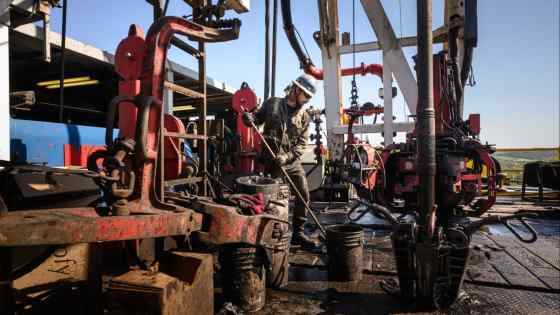
The political tensions which once ran through the lines between Beijing-Moscow like electric charges have not disappeared but they have faded before the realities of hard-headed economic cooperation. Business tops the agenda – headed by oil and gas business.
When Wen arrives in Moscow on Monday he will primarily be seeking a pricing accord for the gas deals the two countries have announced many times but never finalised. As in any business, until the price is agreed there cannot be an overall agreement.
Bloomberg reported Gu Jun, deputy director general of Beijing’s national energy administration, saying that the current price gap is around $100 per thousand cubic metres – which is wide given that Russia currently sells gas to European customers at around $300 per tcm.
With spot market prices now low – only $200 per tcm in Europe – China is keen to strike a quick deal. But for precisely the same reason, Russia is in no hurry . Only two years ago, with demand soaring, prices were twice as high. Gazprom forecasts that demand will recover to pre-crisis levels, but not before 2012.
China is offering cheap loans as part of a pricing deal. This could follow the oil agreement signed last year in which Mosocw promised to supply China for 20 years in return for a $25bn credit to Rosneft, the state-controlled oil group, and Transneft, the state-run pipeline monopoly.
Russia has this month started pumping small volumes of oil by pipeline to China year along a new East Siberian-Pacific Ocean link. The two countries in September laid the cornerstone for a huge refinery in the coastal city of Tianjin.
Gazprom had originally planned to start gas deliveries by a planned pipeline next year. But Kremlin officials have recently said it could be 2015, once the accord is agreed and the link is completed.
Meanwhile, China is completing the second of two gas pipelines to central Asia to help east shortages in its western and central provinces. For Beijing expanding and consolidating its influence in central Asia, with a view to securing energy and raw material supplies, has been a key strategy, successfuly implemented in recent years.
It has taken China into what Russia has long seen as its backyard. But Russian companies have lacked the capital to compete with China for projects or markets to rival China’s huge demand for oil, gas and metals.
After Moscow, Wen will travel to Tajikistan for a meeting of the Shanghai Cooperation Organisation – an informal body that groups China and Russia, and four central Asian states. Russia is wary of Chinese growing involvement in the region’s politics but sees the SCO as a way of channelling Beijing’s influence into cooperation rather than competition.
Related reading:
Russia hails oil pipeline as first step towards China, FT


Stefan Wagstyl
Josh Noble
Rob Minto
Pan Kwan Yuk
Jonathan Wheatley