

The cost to Africa of war in Sudan

For foreign investors, frontier markets don’t come much wilder than south Sudan. But what happens in that land-locked expanse of scrub also matters to people who’ve ploughed their money into more “civilised” places next door, such as Egypt and Kenya, as a new report reminds us.

Frontier Economics has looked at the economic cost of renewed conflict in Sudan, a danger that is weighing on the region as southerners prepare to vote in a referendum on independence on January 9. It concludes that if the referendum sparks conflict and if it runs for ten years – two big ifs – Sudan’s neighbours could lose over $25bn in GDP, while Sudan itself could lose $50bn.

The referendum was part of a 2005 peace deal that ended a decades-long civil war between Islamist leaders in north Sudan and southern rebels fighting against repression and discrimination. The fear today is that if the north does not want to let the oil-rich south secede, conflict will erupt again.

Measuring the costs of potential future conflict is an inexact science, if it’s a science at all, and Frontier Economics acknowledges that. But it estimates that Kenya and Ethiopia could each lose $1.1bn-$1.8bn a year in GDP if conflict breaks out on the other side of their borders, depending on how serious that conflict is.

Very roughly, that’s between 3 and 6 per cent of each country’s 2009 GDP.

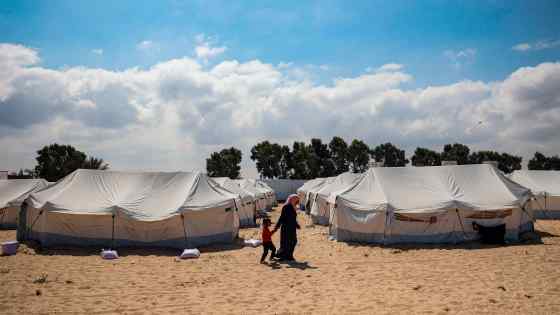
How would the damage be done? In several ways: reduced demand from Sudan for their products; the pressure of fleeing Sudanese refugees on their resources; spillover conflict across borders; the diversion of public spending to the military; and a perception that the whole region has become a riskier place.

Ethiopia’s economy is still tightly controlled by the state, so there aren’t many foreign investors there to worry about the knock-on effects of conflict.

But Kenya is a different story: it is east Africa’s economic powerhouse, a transport and manufacturing hub, and the regional base for a host of western multinationals and private equity groups that would find any conflict distinctly unsettling.

Egypt is another interesting part of the potential shock zone, as it’s home to the largest economy in the region. Most scenarios for conflict would not directly affect Egypt’s border, which is with north Sudan. But the report says:

The risk to Egypt is still serious. Apart from specific economic impacts, Egypt has a very strong strategic interest in Sudan because of the Nile. Impacts of conflict and its aftermath on the use of the Nile could have significant economic consequences for Egypt

The report doesn’t mention China, but it too could suffer. It is the biggest foreign stakeholder in the Sudanese oil industry, via China National Petroleum Company’s interests in various production and exploration blocks, and it receives approximately three-quarters of Sudan’s oil exports.

The oil industry is acutely vulnerable to any conflict because about 75 per cent of Sudan’s proven reserves of 6.3bn barrels are in the south, but the pipeline that carries the oil to export terminals and refineries runs through the north.

The south needs Khartoum’s co-operation to sell its oil; the north needs revenues from its neighbour’s resources; and the two sides of the country have yet to agree how they will cooperate to keep the oil flowing in the event of secession.

Related reading:
South Sudan’s road to independence, FT magazine
South Sudan uses oil to ease secession fears, FT
Why a free Southern Sudan is bad news for Darfur, Foreign Policy

Global equities macromap

Number of the day

11% Quarter-on-quarter GDP growth in Thailand, as the economy bouces back after the 2011 floods.

beyondbrics

The emerging markets hub

About this blog Headlines email Blog guide
News and comment from more than 40 emerging economies, headed by Brazil, Russia, India and China.


'Like' our beyondbrics Facebook page, where we showcase a top story of the day
Sign up for our news headlines and markets snaphot service. We have two emails per day - London and New York headlines (sent at approx 6am and 12pm GMT).

To comment, please register for free with FT.com and read our policy on submitting comments.

There is an overall beyondbrics RSS feed, as well as feeds for all our countries, tags and authors. Learn more in our full RSS guide.

All posts are published in UK time.

Get in touch with us - your comments, advice and even complaints. Find out how to contact the team.

See the full list of FT blogs.

BB shortcuts

Regulars Series Archive
Chart of the week
Behind the numbers

Fund flows
Tracking money in and out of EM bonds
12 for 2012
Guest posts on key trends for the year ahead

Brics at 10
A decade of growth
The Diaspora Digest
EM diasporas, seen through their community media (Oct-Nov 2011)
Sick brics (Sep 2011)
Brics and mortar (Aug 2011)
Beyondbrics on the beach (Jul-Aug 2011)
China bubble? (June 2011)
Post-election Nigeria (June 2011)
Hey bric spender (Aug 2010)

Emerging markets data

Archive

« Oct Dec »November 2010
M T W T F S S
1234567
891011121314
15161718192021
22232425262728
2930  

What we are writing about

Apple banking bonds Brazil economy Brics CEE China economy consumer corruption currencies currency war debt energy equities eurozone crisis exports FDI food & drink guest post Hugo Chávez IMF India economy inflation interest rates internet investment IPOs M&A manufacturing mining monetary policy oil & gas politics Repsol retail Russian elections Russian politics tax technology telecoms trade vehicles video World Bank YPF