
Russia: the rouble rises

The Russian central bank has put into effect its latest moves in the fight against inflation with some style.

After raising interest rates on Monday for the first time since 2008, the authorities late on Tuesday widened the trading band for the rouble – and were happy to see the currency rise sharply on Wednesday, by a full 1 per cent against a US dollar/euro basket.

As well as gaining some ground in the anti-inflation front, the central bank can claim another modest advance towards its aim of liberalising the rouble. Governor Sergei Ignatiev should be pleased with this week’s work.

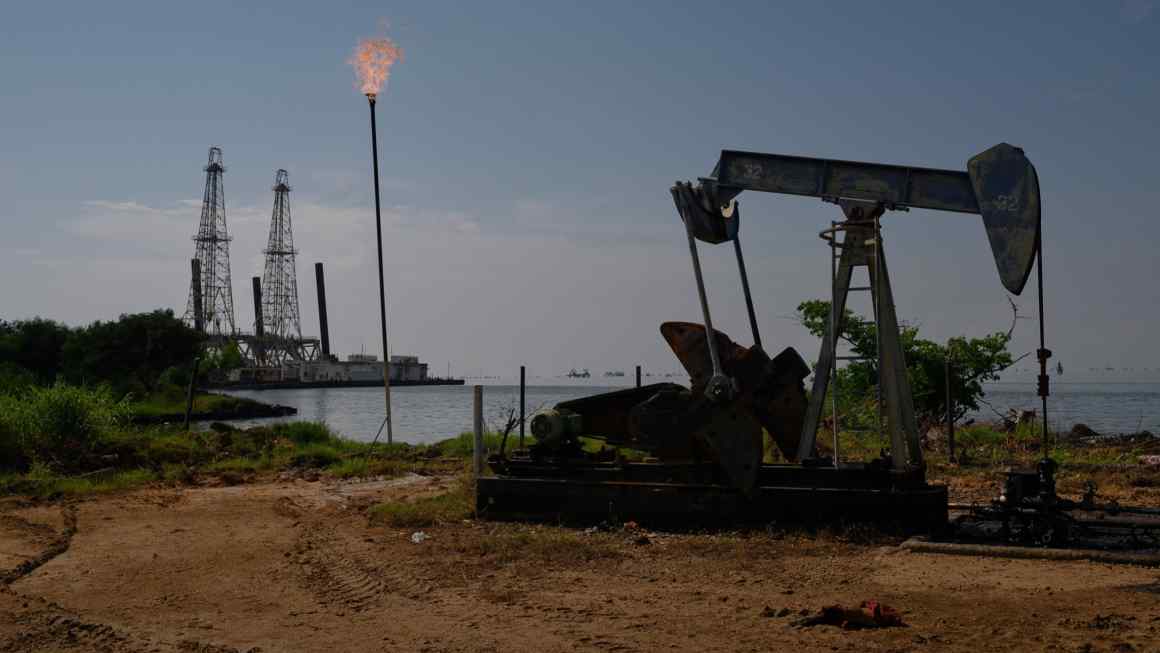
Of course, the main driver for the strong rouble is the rising oil price, fuelled by the turmoil in the Middle East.

But it’s an ill wind…and Russian central bank has taken the opportunity to widen the trading band of the rouble against its dollar/euro basket by 0.5 roubles to a range of 32.45-37.45.

The rouble rose 1 per cent to a 9-month peak of 33.31 against the basket. But it still some 20 per cent off its 2008 peaks – so there is plenty of headroom in the market.

The bank’s first deputy chairman Alexei Ulyukayev said the band widening should help battle Russia’s surging inflation while increasing risks for speculators, and added that short-term risks point to further currency appreciation.

JP Morgan said in a note: “A wider, stronger corridor, rouble-bullish policymaker
rhetoric and high oil prices make continued rouble appreciation possible.”

In the past, the energy lobby has blocked rouble appreciation because it cut the value of  its dollar-denominated earnings.

But with ordinary Russians worried about rising prices and a presidential election in the pipeline, the priority for government officials is to curb inflation, which was running at an annual rate of 9.7 per cent last month

Renaissance Capital said in a note:

By widening the floating corridor, the CBR indicates that the current account surplus (on the back of an oil price above $110/bbl) is substantial enough to create inflationary risks, even in the absence of capital inflows. Previously, the huge surplus was balanced by $15-20bn in capital outflows in January-February, which is seasonally explained to a large extent.

The CBR is aware that once capital outflows slow, it will increase its presence in the FX market and will create inflationary risks which may realise in 2H11. Inflation in 2H11 seems to be the top priority for policymakers.

The higher oil price may also ease the authorities’ concerns about sluggish economic growth. With almost all the extra revenues flowing into the government’s coffers, the government will have plenty of money for supporting the poor, the civil service and the occasional cash-squeezed billionaire.

It’s not a recipe for balanced long-term growth but it should be enough to secure the 2012 election for the Kremlin candidate, be he Vladimir Putin or Dmitry Medvedev.

Global equities macromap

Number of the day

12.4% Fall in Mail.Ru shares on Monday, on the back of its Facebook stake.

beyondbrics

The emerging markets hub

About this blog Headlines email Blog guide
News and comment from more than 40 emerging economies, headed by Brazil, Russia, India and China.


'Like' our beyondbrics Facebook page, where we showcase a top story of the day
Sign up for our news headlines and markets snaphot service. We have two emails per day - London and New York headlines (sent at approx 6am and 12pm GMT).

To comment, please register for free with FT.com and read our policy on submitting comments.

There is an overall beyondbrics RSS feed, as well as feeds for all our countries, tags and authors. Learn more in our full RSS guide.

All posts are published in UK time.

Get in touch with us - your comments, advice and even complaints. Find out how to contact the team.

See the full list of FT blogs.

BB shortcuts

Regulars Series Archive
Chart of the week
Behind the numbers

Fund flows
Tracking money in and out of EM bonds
12 for 2012
Guest posts on key trends for the year ahead

Brics at 10
A decade of growth
The Diaspora Digest
EM diasporas, seen through their community media (Oct-Nov 2011)
Sick brics (Sep 2011)
Brics and mortar (Aug 2011)
Beyondbrics on the beach (Jul-Aug 2011)
China bubble? (June 2011)
Post-election Nigeria (June 2011)
Hey bric spender (Aug 2010)

Emerging markets data

Archive

« Feb Apr »March 2011
M T W T F S S
 123456
78910111213
14151617181920
21222324252627
28293031  

What we are writing about