

Russian oil & gas: damned both ways

It was somehow appropriate that the St Petersburg International Economic Forum, Russia’s annual economic showcase, should kick off with a session on the outlook for world energy demand. But the news for Russia was distinctly mixed.

The discussion took place as Russian president Dmitry Medvedev and his Chinese counterpart Hu Jintao struggled back in Moscow to thrash out an agreement over prices and terms of a long-delayed gas supply deal. They had hoped to sign the deal in St Petersburg on Friday, as they together kick off the forum’s main events.

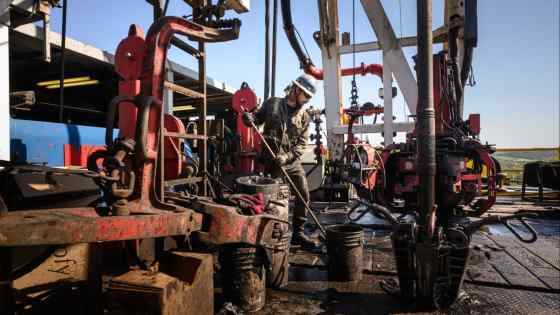
Presenting its latest medium-term outlook in Russia’s “northern capital”, the International Energy Agency raised its forecast for oil demand. That helped push up its average price forecast to $103 a barrel – nearly $20 more than in its medium-term outlook last year.

But while it predicted gas consumption would grow 2.4 per cent annually, the IEA warned European demand for gas – the crucial export market for Russia’s Gazprom – was “stagnating”. And the IEA included no pipeline deliveries of Russian gas to China in its five-year view, despite Russia’s hopes of opening up China as a major new market.

Laszlo Varro, the IEA’s head of gas, told delegates in St Petersburg that for the first time China would be the main driver of increasing gas demand, accounting for about one third of global growth.

That emphasised the size of the potential prize for Russia in breaking into the Chinese market. But after five years, the two sides have not so far been able to agree on price, and some economists have questioned the viability of the whole plan.

“In the 2016 time horizon we did not include pipeline exports from Russia to China. These are quite difficult projects, you need to build major pipeline systems, bring production into new gas fields, and also the distances are quite large and the infrastructure is quite undeveloped,” Varro said.

He added that Russia had the resource base to supply China, but would have to develop new reserves in eastern Siberia rather than redirect gas from existing fields in western Siberia.

“Very large investment in very difficult projects will be needed,” he warned.

The nearer-term news on oil was also mixed for Russia. Nobuo Tanaka, IEA director, warned the short-term squeeze on oil risked a hard landing for the world economy – though the IEA was prepared to release strategic crude reserves to ensure supply. The situation, he warned was beginning to “resemble 2008”.

“We know that 2008 was a very hard landing scenario” for the world economy, he said. “By providing more oil to the market, we prefer a soft landing scenario.”

Concerns about the impact of higher oil prices on global growth seem to be holding back investor interest in Russian stocks. There has not been the same equity market rally that accompanied the previous oil price spike earlier this year.

Chris Weafer, a long-time Russia strategist, says investors now believe a higher oil price “inevitably means demand destruction and a quick collapse for the price and for investor sentiment towards Russia”.

“Most investors see Russia as damned by the curse of high oil. It’s damned if the price goes lower, and damned if it goes higher. It’s the legacy of having not taken full advantage of the economic revival from 2000.”

That need for finally modernising Russia’s economy and diversifying away from oil and gas is, of course, set to be the big theme of the St Petersburg forum in the next two days. The opening panel was a good reminder of why.

Related reading:
China-Uzbekistan: Gas diplomacy, beyondbrics
Russia-China gas deal: Wen to sign? beyondbrics

Global equities macromap

Number of the day

12.4% Fall in Mail.Ru shares on Monday, on the back of its Facebook stake.

beyondbrics

The emerging markets hub

About this blog Headlines email Blog guide
News and comment from more than 40 emerging economies, headed by Brazil, Russia, India and China.


'Like' our beyondbrics Facebook page, where we showcase a top story of the day
Sign up for our news headlines and markets snaphot service. We have two emails per day - London and New York headlines (sent at approx 6am and 12pm GMT).

To comment, please register for free with FT.com and read our policy on submitting comments.

There is an overall beyondbrics RSS feed, as well as feeds for all our countries, tags and authors. Learn more in our full RSS guide.

All posts are published in UK time.

Get in touch with us - your comments, advice and even complaints. Find out how to contact the team.

See the full list of FT blogs.

BB shortcuts

Regulars Series Archive
Chart of the week
Behind the numbers

Fund flows
Tracking money in and out of EM bonds
12 for 2012
Guest posts on key trends for the year ahead

Brics at 10
A decade of growth
The Diaspora Digest
EM diasporas, seen through their community media (Oct-Nov 2011)
Sick brics (Sep 2011)
Brics and mortar (Aug 2011)
Beyondbrics on the beach (Jul-Aug 2011)
China bubble? (June 2011)
Post-election Nigeria (June 2011)
Hey bric spender (Aug 2010)

Emerging markets data

Archive

« May Jul »June 2011
M T W T F S S
 12345
6789101112
13141516171819
20212223242526
27282930  

What we are writing about