
President Dilma Rousseff lost her second minister in less than a month to a corruption scandal on Wednesday.
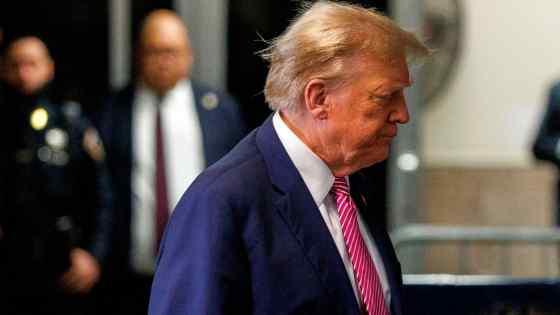
Senator Alfredo Nascimento (pictured left), transport minister, “left the government … to cooperate with efforts to fully clarify suspicions surrounding the operation of the Transport Ministry”, the government said in a statement.
His resignation follows the downfall last month of Ms Rousseff’s most senior minister, Antonio Palocci, the official who was responsible for coordinating relations with her unwieldy coalition. He stepped down after an ethics scandal.
Mr Nascimento has been embroiled in a controversy since a magazine, Veja, alleged over weekend that officials at his ministry were taking kickbacks in return for transport projects.
The minister hails from a small grouping in her coalition, the Party of the Republic, and it was unclear how destabilizing his departure would be.
But she is already believed to be struggling to manage relations with her largest coalition partner, the PMDB, a loose agglomeration of regional interests known for their love of pork. The PMDB is reportedly angry at her for cutting back on budgetary expenditure requested by Congress and for withholding important government jobs.
So far, Ms Rousseff’s coalition troubles have tended to be interpreted in two diametrically opposite ways, depending on who is speaking. One is that she is too brusque and uncharismatic and lacks the political skills of her predecessor, Luiz Inácio Lula da Silva. According to this argument, she is ultimately doomed to failure when it comes to handling her coalition and therefore is in danger of becoming a weak president incapable of getting her own way in Congress.
The other view is that her willingness to clamp down on tainted ministers and replace them with new faces – Mr Palocci’s successor as chief of staff is a first-time senator – will freshen up her administration. Some of her ministers, such as Mr Palocci, are throwbacks to her predecessor’s government, which was marked by corruption scandals. According to this perspective, she is undertaking some important house-keeping that will allow her to steer a steady course for the rest of her time in office.
Whichever view prevails will ultimately depend on what her government accomplishes. Mr Nascimento presided over one of the most important and richest ministries. Brazil urgently needs to spend hundreds of billions of dollars to bring its infrastructure up to scratch. The Growth Acceleration Programme – an infrastructure push that has a large transport component – envisages investment of about $1,000bn. It is a pet project of Ms Rousseff and a key part of her preparations for the World Cup soccer final in 2014 and the Olympics two years after.
Ms Rousseff remains popular and this is probably the time to remove dead or decaying wood from her cabinet. But with a number of bills stalled in Congress and rising criticism of Brazil’s infrastructure bottlenecks and its slow preparations for the World Cup, she will need to bang heads together fast and start to show results soon.
Related reading:
Brazil: Dilma’s enemy within, beyondbrics
Dilma’s popularity survives crisis, beyondbrics
Rousseff continues spring cleaning, beyondbrics
Rousseff’s fiscal plans under threat as top minister quits, beyondbrics


Stefan Wagstyl
Josh Noble
Rob Minto
Pan Kwan Yuk
Jonathan Wheatley