When Google launches its “g.co” URL shortener on Tuesday, the internet search company will be moving into an exclusive new internet neighbourhood.
Beyondbrics is calling it Alphabet City. Twitter, Amazon, Overstock and GoDaddy have already moved in, snapping up teensy URLs such as a.co, t.co and x.co for a premium.
Of .co’s three-letter addresses, 18 alphabetical remain, and nine numerical. For Colombia, owner of the .co domain, Alphabet City is proving lucrative.
“These days, with Twitter, where you only have 140 characters, to have a URL that is only three characters is incredibly valuable,”says Lori Anne Wardi, vice-president of .CO Internet, which operates the domain. “Every time we sell one of these names, the pool becomes smaller. And the neighbourhood you will be joining is getting more valuable.”
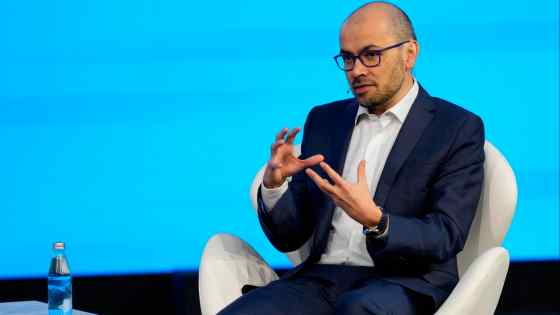
Juan Diego Calle, co-founder and chief executive of .CO Internet, would not confirm how much Google paid for g.co.
But he told the FT that “any negotiations we do [for three-letter URLs] are significantly north” of the $1.5m price tag that has been floated.
Calle, in partnership with Neustar of the US, won the contract to operate .co on behalf of the Colombian government for 20 years back in 2009.
The company celebrates its 1st anniversary of public launch on Wednesday, and it has already surpassed the “sweet spot” of 1m registered domain users.
Most country domains have little value beyond national borders. Tuvalu and Montenegro have had some success marketing their .tv and .me domains.
Colombia’s good fortune is that .co makes English speakers think “company”.
Colombia’s second piece of good fortune is more of its own making: the domain was tendered only after a long public consultation, to a team bent on making .co a premium corner of the web.
As Techcrunch’s Alexia Tsotsis notes, Google and 500 Startups are lending gravitas to the .co domain brand, making it one of the hot new geeks of Silicon Valley.
To generate confidence in the brand, .CO Internet persuaded Twitter and AngelList, a community of entrepreneurs and investors (angel.co), to jump on board before the public launch. It also offered the world’s biggest brands a .co address to avoid domain squatting and a replay of the “wild west” days of early dotcom.
Calle, a Colombian entrepreneur who started his first company at 20, says the domain’s tangible benefit to his home country is in the form of royalties: 25 per cent of revenues, on average.
“The least tangible benefit, the one that makes us most proud, is that you can now point to Colombia as a country that is a having a global impact on the digital landscape,” Calle says. “It’s difficult to quantify but the fact is our .co domains are now registered in over 200 countries.”
Related reading:
Internet suffix scramble looms for companies, FT
The .CO Story – with Juan Calle, Domain Sherpa
How to Become an Internet Land Baron, Huffington Post
Google’s go-short mantra, eBrand
Colombia file, beyondbrics


Stefan Wagstyl
Josh Noble
Rob Minto
Pan Kwan Yuk
Jonathan Wheatley