



There’s nothing Hugo Chávez likes more than to shake his fist at the private sector. Nationalising businesses is one of his favourite pastimes, with his Queen-of-Hearts-like cry of “expropriate it!” dreaded in boardrooms across Venezuela.
But it has its consequences. With steel tube-maker Tenaris initiating arbitration proceedings before the International Centre for Settlement of Investment Disputes (ICSID) on Wednesday, it becomes Venezuela’s 18th pending case at the World Bank tribunal.
Billions of dollars are at stake, with ExxonMobil alone demanding compensation of at least $7bn after its assets were nationalised in 2007.
Only Argentina has more pending cases at the ICSID, with no less than 26. Some analysts even cited Venezuela’s pending arbitration cases as one of the motives for its decision to move its reserves out of jurisidictions where it fears its foreign assets could be frozen or vulnerable.
With countries like Argentina and Venezuela taking more and more of a stand against international corporate interests – in Argentina’s case against bondholders, in Venezuela’s it is partly a case of seeking to increase the benefits of its vast natural resources – transnational companies are increasingly resorting to international tribunals.
According to a study last year by the Institute for Policy Studies, Latin American governments make up about 9 per cent of the 155 ICSID member governments, but are the targets of over half of all ICSID cases, and two-thirds of the cases related to mining industries.
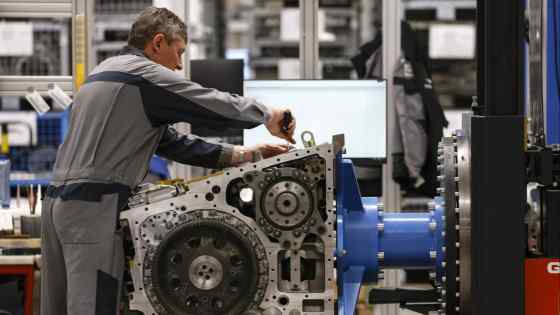
In the case of Tenaris, which is the majority-owned subsidiary of Argentina’s Techint group, it cites an “absence of progress” in discussions with the Venezuelan government on compensation since the expropriation of its subsidiary Matesi Materiales Siderurgicos in 2009.
It is unclear why Ternium, also majority owned by Techint, was able to agree in 2009 on compensation of $1.97bn for its stake in the Sidor steel mill, nationalised a year earlier. With Techint being one of Argentina’s flagship companies, the fact that Argentina and Venezuela enjoy close political relations is believed to have helped in the negotiations.
Being a US company, Exxon, for example, does not have that advantage. But at least it has the ICSID. Venezuelan companies, alas, don’t even have that. And with new filings putting more and more pressure on Venezuela’s cash-strapped state oil company PDVSA, whose debt has ballooned in recent years, they are hardly likely to be a priority.
According to local industry chamber Conindustria, 401 companies have been expropriated so far this year. It is all too likely that a good number of them won’t receive what they regard as “fair” compensation – let alone in a timely fashion.
Related reading:
Venezuela file, beyondbrics


Stefan Wagstyl
Josh Noble
Rob Minto
Pan Kwan Yuk
Jonathan Wheatley