By Sergei Guriev of the New Economic School in Moscow
The last week brought long-awaited news: Russia has completed its negotiations with all the members of the World Trade Organization. Russia is expected to sign the documents by mid-December and finally join WTO – after almost 18 years of talks. Why is this news so important and if it is, why has it taken so long?
The benefits of joining the only global trade organization (which now has 153 members including all the large economies – except for Russia) are too obvious to restate them. Some would argue that they are smaller for Russia given it’s role as a commodity exporter. This is certainly not true. First, the fact that Russia has so far failed to diversify its exports is partially related to the fact that Russia is not a WTO member. In particular, while market access is never a problem for commodity exporters, non-commodity exports often rely on the non-discriminatory access to foreign markets guaranteed by the WTO rules.
Secondly, the WTO is not only about trade in goods but also about trade in services – the sector where Russia has been lagging. Access to trade in services, including financial services, telecommunications, and business services is therefore especially beneficial for Russia.
Thirdly, and most importantly, WTO accession is a welcome sign of a commitment to improve Russia’s investment climate. The WTO creates a legal framework – with credible enforcement institutions – for foreign trade and investment. The role of WTO accession can be compared to that of the EU accession for the Central and East European countries. For these countries, the EU accession created an “external anchor”; both societies and politicians knew that they had to implement the reforms and stick to the terms of the accession.
Certainly, the WTO framework is much less comprehensive than EU’s Acquis Communautaire. Yet, given that Russia is unlikely to join the EU in any foreseeable future, the WTO is probably the best anchor available to Russia. Also, China has shown, it is certainly not trivial (there is no doubt that WTO accession has helped to raise the competitiveness of Chinese economy). An additional benefit for Russia is that the WTO accession opens the road to joining the OECD which will also help improve corporate governance and the investment climate.
How large are these effects? My colleagues David Tarr and Natalya Volchkova (in their chapter in the 2010 book Russia after the Global Economic Crisis) have used a computable general equilibrium model of Russian economy to quantify the implications of Russia’s WTO accession. Their estimates are very substantial. Russia will gain 3.3 per cent of GDP per year in the short run. Interestingly, the gains will be much larger in the long run – about 11 per cent of GDP per year. The explanation is very simple: the short-run effects include static benefits due to trade openness, while the long run effects are due to improved investment climate and are therefore much larger.
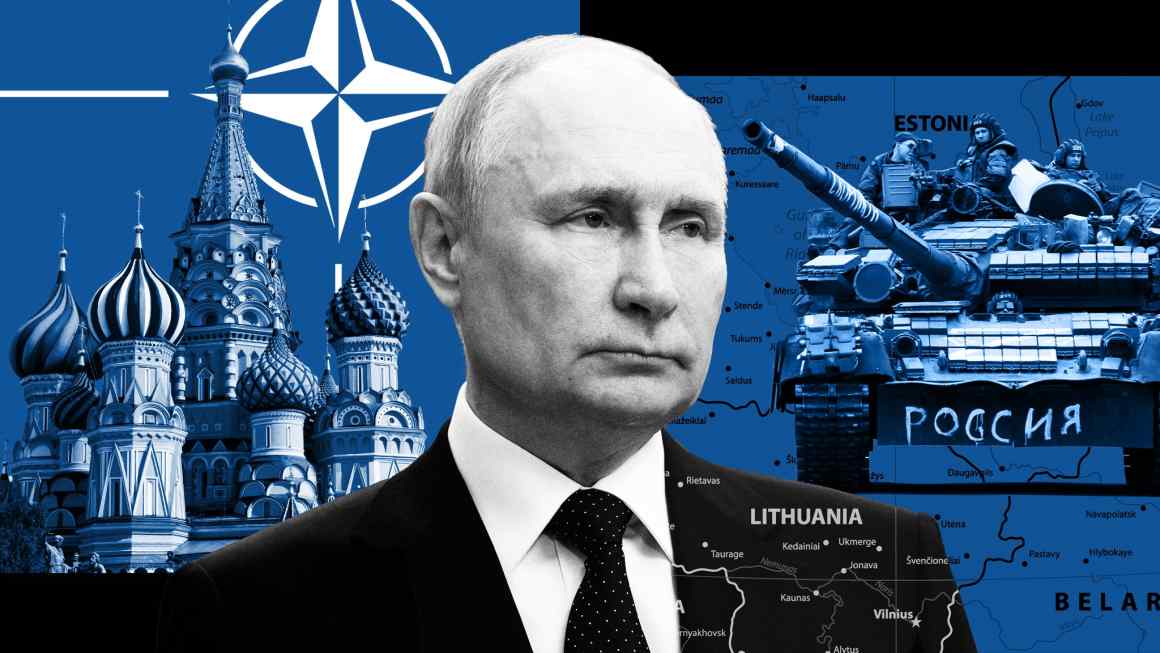
So if the benefits of WTO accession are so large and evident, why has it not happened before? In early 2000s, the newly-elected Vladimir Putin declared WTO accession as one of his main economic policy goals – and yet the accession has been delayed many times. Most recently, in June 2009, the accession negotiations were set back by then-prime minister Putin himself. After a successful round of negotiations between Russia and the WTO members, Vladimir Putin suddenly announced that Russia was not interested in the membership anymore and instead was looking to pursue a customs union between Belarus, Kazakhstan and Russia – which delayed Russia’s WTO accession by about two years.
The delays and reversals in Russia’s long path to WTO are not random – they are explained by the very same reasons that imply the large benefits of the WTO. Membership is a commitment to an open and competitive economic policy exactly because it constrains lobbying by interest groups that benefit from protectionism. These very interest groups know that WTO accession will be costly for them – and have so far successfully thwarted the efforts to join the WTO.
This is why the WTO accession is very welcome for Russia – and moreover, an irreversible step forward.
Sergei Guriev is Professor of Economics and Rector of the New Economic School in Moscow
Related reading:
Russia/WTO: what’s in it for Georgia? beyondbrics
Russia clears final hurdle to joining WTO, FT
Russia & the WTO: the end in sight, beyondbrics
Russia will struggle to join the fold on trade, FT


Stefan Wagstyl
Josh Noble
Rob Minto
Pan Kwan Yuk
Jonathan Wheatley