

Deutsche: if you think 2011 was bad for EM equities, just wait for 2012

Amid the flurry of 2012 forecasts from emerging markets strategists, one stands out. While there’s a lot of bearish sentiment, nobody paints a starker picture than Deutsche Bank’s John-Paul Smith, who glumly headlines his report “GEM to underperform again in 2012″.

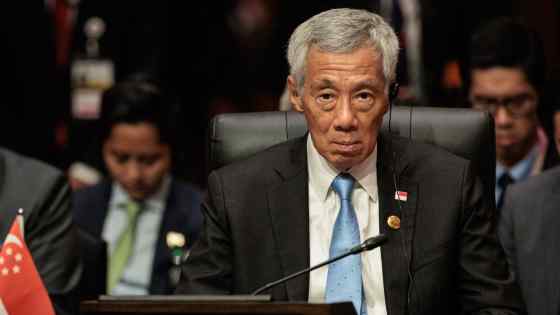
His views are worth considering as he was right for 2011. At the start of the year, when most EM equity strategists were bullish,  Smith (pictured) declared that EMs were entering “a period of secular underperformance”. In April his prediction was looking ragged, with the MSCI EM index 5 per cent up. But now it’s 17 per cent down.

Smith, who describes himself as the GEMs’ only structural bear,  writes:

Emerging market equities look cheap to us on earnings and asset based valuations in both absolute terms and relative to DM, but expensive on cashflow multiples; we expect cashflow to come under increasing pressure within GEM, given the greater degree of cyclical exposure and prevailing corporate governance structures. Investors generally appear too optimistic about the prospects for monetary and fiscal easing within the emerging economies – we think that the Chinese economy may be about to experience the start of something close to a hard landing, though this is not DB’s house view.

Against this backdrop we are relatively agnostic about the outlook for GEM in absolute terms but would forecast underperformance of a similar order of magnitude to 2011 relative to DM.

Given that US stocks were flat on the year for 2011, that translates into an underperformance of EMs on DMs of 17 percentage points. So what ever happened to the idea that EMs are going for growth and DMs are stagnant?

Smith’s main point is that companies – and therefore equity investors – don’t necessarily share fully in GDP growth because EM governments force companies to share the proceeds of their success with workers, consumers and the state.

He writes:

GEM companies are increasingly seen as ‘facilitators’ for the broader economy, on the Chinese model, across many GEM markets. They are vulnerable to attempts by the state to mitigate the impact of a more difficult economic environment on the broader population through higher taxation, price restrictions and pressure to maintain operational and capital expenditure at levels, which are sub-optimal for shareholder returns. We see all of the BRIC markets, Korea and South Africa as
potentially the most susceptible to these kinds of pressures.

On top of this, markets will be volatile next year because of uncertainty about policies in the eurozone and elsewhere,  fund managers’ desire to avoid losses in difficult times, and likely swings in the oil price. All this will disturb EM equities more than DM.

Smith lists 10 points to worry about:

1. DM economies no longer have the fiscal resources to fire up the global economy.
2. On China, the consensus is too optimistic, and a hard land is possible, given concerns about inflation, the health of the banks,  and recent signs of an “incipient flight” of money out of China, despite the tough capital controls.
3. There is limited scope for fiscal or monetary loosening elsewhere in the EM world, given the persistence of inflation.
4. Domestic economic policy changes will drive potential shifts in the investment outlook. But the implementation and timing are uncertain.
5. The state will drive the redistribution of resources away from shareholders and in favour of labour.
6. Geopolitics and international relations may cause disruption as in 2011.
7. Outlook for commodities is negative.
8. Corporate governance and management quality will matter more than in recent years because external growth drivers will be much weaker.
9. Cash flow generating companies could be attractive.
10. Markets will continue to be relatively unpredictable with high levels of volatility.

Smith’s conclusion is unapologetic. “The long-term case for GEM will be increasingly
questioned as we go through 2012.” Bah, humbug.

Related reading
GEM bulls look out: here comes a bear, beyondbrics

Global equities macromap

Number of the day

240p The new offer for Cove Energy shares from PTT, trumping the bid from Shell.

beyondbrics

The emerging markets hub

About this blog Headlines email Blog guide
News and comment from more than 40 emerging economies, headed by Brazil, Russia, India and China.


'Like' our beyondbrics Facebook page, where we showcase a top story of the day
Sign up for our news headlines and markets snaphot service. We have two emails per day - London and New York headlines (sent at approx 6am and 12pm GMT).

To comment, please register for free with FT.com and read our policy on submitting comments.

There is an overall beyondbrics RSS feed, as well as feeds for all our countries, tags and authors. Learn more in our full RSS guide.

All posts are published in UK time.

Get in touch with us - your comments, advice and even complaints. Find out how to contact the team.

See the full list of FT blogs.

BB shortcuts

Regulars Series Archive
Chart of the week
Behind the numbers

Fund flows
Tracking money in and out of EM bonds
12 for 2012
Guest posts on key trends for the year ahead

Brics at 10
A decade of growth
The Diaspora Digest
EM diasporas, seen through their community media (Oct-Nov 2011)
Sick brics (Sep 2011)
Brics and mortar (Aug 2011)
Beyondbrics on the beach (Jul-Aug 2011)
China bubble? (June 2011)
Post-election Nigeria (June 2011)
Hey bric spender (Aug 2010)

Emerging markets data

Archive

« Nov Jan »December 2011
M T W T F S S
 1234
567891011
12131415161718
19202122232425
262728293031  

What we are writing about

banking bonds Brazil economy Brics CEE China economy consumer corruption currencies currency war debt energy equities eurozone crisis exports FDI food & drink guest post Hugo Chávez IMF India economy inflation interest rates internet investment IPOs M&A manufacturing mining monetary policy oil & gas PMI politics Repsol retail Russian elections Russian politics tax technology telecoms trade vehicles video World Bank YPF