Russia has come to its own conclusions about the disruption of its gas exports to Europe during a cold snap this month and is once again blaming Ukraine of causing the problem.
While there’s nothing new about this, the dispute appears to have triggered a decision at the highest level in the Kremlin to cut Ukraine out of the Russian gas transit business altogether as soon as possible.
Analysts are still puzzling over what caused a sudden shortfall in Russian gas exports to Europe early this month as freezing winds blew across the continent from Siberia. Was Gazprom unable to meet the surge in Russian and European energy demand, could there have been a technical hitch, or had Ukraine, as has happened in the past, been filching Russian gas from transit pipelines bound for Europe?
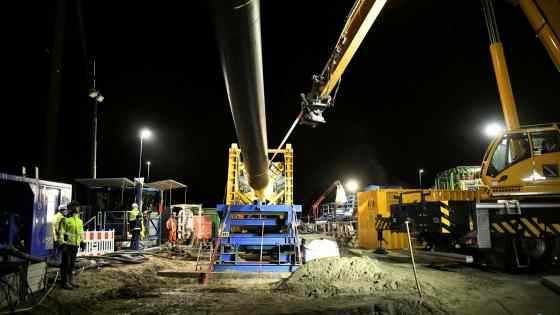
After a muddled early response, Gazprom accused Ukraine of causing the crisis and decided on a heavy handed response. Once the North Stream and South Stream pipeline projects to transport Russian gas across the Baltic Sea and the Black Sea are operating at full capacity, Gazprom will be in a position to stop using Ukrainian transit routes and will do so immediately.
Dmitry Medvedev summoned Alexei Miller, Gazprom’s chief executive to the Kremlin for discussions about South Stream this week that turned into a moan about Ukraine’s behavior. Ukraine had inflicted damage on Gazprom’s finances and reputation by disrupting gas supplies to Europe, Miller told the Russian president. “There is no effective mechanism to control the behavior of Naftogaz Ukrainy (Ukraine’s state oil and gas firm) in such a situation.”
Medvedev gave orders for South Stream to be built to the maximum 63bn cu m/year design capacity – a move that would free Russia from dependence on Ukrainian transit pipelines altogether.
Ukraine, which is negotiating to reduce the volume of gas it earlier contracted to buy from Gazprom, has denied removing Russian gas from transit pipelines this month.
Jonathan Stern, head of gas research at the Oxford Institute of Energy Studies, is not sure which side to believe and thinks the truth will come out only when people have stopped being interested. Gazprom could just be blaming Ukraine to cover up for its humiliating failure to meet the sudden surge in gas demand in Europe during the cold snap, he says. “We could be seeing a limit on what Russia can deliver on a daily basis.”
Mikhail Korchemkin, head of the US-based East European Gas Analysis consultancy, says Ukraine is innocent of wrongdoing. Bottlenecks in Gazprom’s complicated gas distribution and storage network caused the supply shortfall in Europe. Gazprom’s decision to reduce Central Asian gas imports had not helped leading to a shortage of gas in peak periods. “There is not enough gas to fill the pipelines even though the latter has spare capacity,” he says.
Many analysts suspect that South Stream is a bluff by Gazprom to force Ukraine to hand over control of the gas transit and storage network on its territory. Ukraine needs gas transit fees to stay afloat, but has flatly refused to surrender the pipelines its sees as a national treasure.
However, Stern believes that in the aftermath of this winter’s supply disruptions “it is becoming more and more likely South Stream will happen.”
Building export pipelines to circumvent Ukraine is a very expensive option for Gazprom. Nord Stream, which began delivering Russian gas across the Baltic Sea to Germany last year, cost $10bn. Gazprom has now embarked on a project to double the pipeline’s 27.5bn cu metres a year capacity by the end of this year. South Stream, designed to carry gas across the Black Sea to central and south Europe will be even more expensive with a price tag of $20bn.
Equity analysts, who have frequently raised alarm about Gazprom’s excessive capital expenditure, warned this week that South Stream would not add value to the company whose stock already trades at a discount to its peers. In a research note Troika Dialog said that if the pipeline would only serve to replace existing export infrastructure in Ukraine it could “be considered a total waste of money.”
“We remain hopeful that the recent statements from the Russian president as well as Gazprom are designed solely to put further pressure on Ukraine ……Otherwise, the project would be yet another factor that would keep Gazprom’s stock from re-rating upward.”
Related reading:
Russian gas: under pressure, beyondbrics
Gazprom turns on gas and blames EU, beyondbrics
Ukraine fears new Russian gas route, beyondbrics
Turkey deal boosts Russia’s pipeline project, FT
Nord Stream: turning on the tap, beyondbrics


Stefan Wagstyl
Josh Noble
Rob Minto
Pan Kwan Yuk
Jonathan Wheatley