

Guest post by Vladimir Putin: US-Russia ties need strong economic base

By Vladimir Putin

Russia is part of the greater world. We do not wish to and cannot isolate ourselves from it. However, we intend to be consistent in proceeding from our own interests and goals rather than decisions dictated by someone else. Russia will continue to conduct an independent foreign policy.

Global security can only be achieved through co-operation with Russia rather than by attempts to push it into the background, weaken its geopolitical position or compromise its defences.

We will continue on our constructive course to enhance global security, renounce confrontation, and counter challenges like the proliferation of nuclear weapons, regional conflict and crises, terrorism and drug trafficking.

The major principles for any feasible civilization are indivisible security for all states, that excessive use of force is unacceptable and that the basic principles of international law must always be respected. Failure to abide by these principles destabilises international relations.

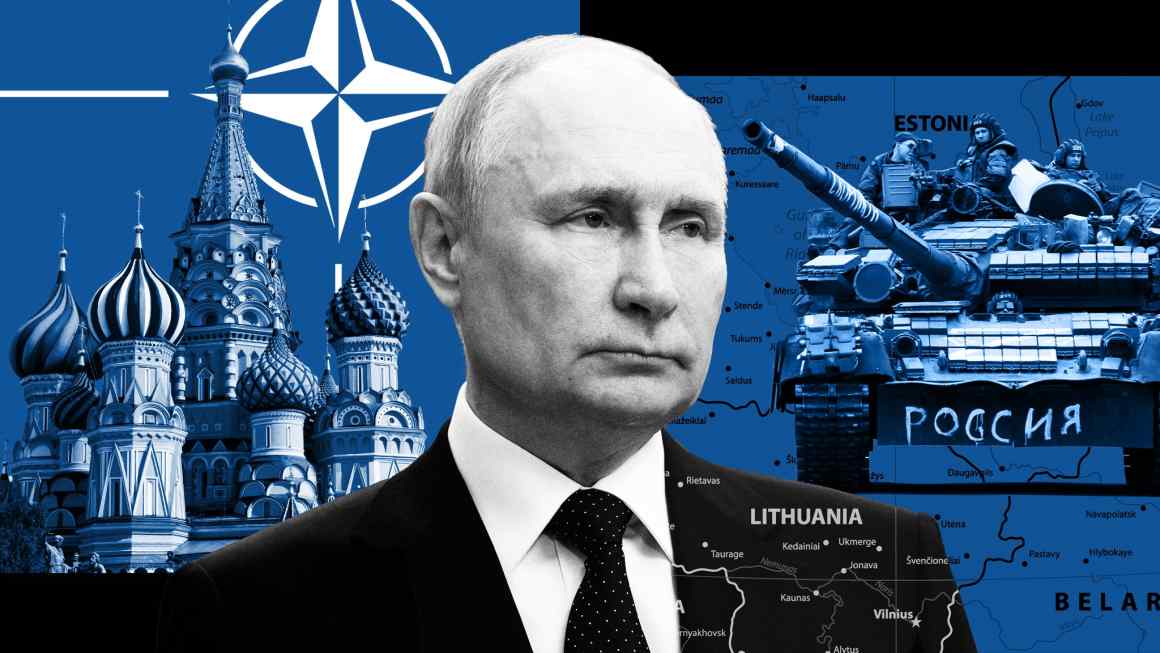
Some US and Nato actions contradict the logic of modern development. This is the case with an expansion of Nato that includes the deployment of new military infrastructure with US-drafted plans to establish a missile defense system in Europe.

We are worried that although the outline of our “new” relations with Nato are not yet final, the alliance is already providing us with “facts on the ground” that are counterproductive to building mutual trust.

It is important for the United Nations to effectively counter the dictates of some countries and their arbitrary actions in the world arena. Nobody has the right to usurp the prerogatives and powers of the UN, particularly the use of force with regard to sovereign nations.

It seems that Nato members, especially the United States, have developed a peculiar interpretation of security that is different from ours. The Americans have become obsessed with the idea of becoming absolutely invulnerable. This utopian concept is unfeasible. It is the root of the problem.

A year ago the world witnessed a new phenomenon. The Arab Spring was initially received with hope for positive change. However, it soon became clear that instead of asserting democracy, attempts were being made to depose an enemy and to stage a coup, which only resulted in the replacement of one dominant force with another even more aggressive dominant force.

Foreign interference in support of one side of a domestic conflict and the use of power in this interference was negative. A number of countries got rid of the Libyan regime by using air power in the name of humanitarian support. The revolting slaughter of Muammer Gaddafi was the manifestation of these actions.

No one should be allowed to employ the Libyan scenario in Syria. The international community must work to achieve an internal Syrian reconciliation. It is important to achieve an early end to the violence no matter what the source, and to initiate a national dialogue – without preconditions or foreign interference and with due respect for the country’s sovereignty. The key objective is to prevent an all-out civil war. Russian diplomacy has worked and will continue to work toward this end.

Let’s demand that the armed opposition do the same as the government; in particular, and withdraw military units and detachments from cities. The refusal to do so is cynical. If we want to protect civilians – and this is the main goal for Russia – we must make all the participants in the armed confrontation see reason.

The current developments in the Arab world are instructive. They show that striving to introduce democracy by use of power can produce – and often does produce – contradictory results.

Today, Iran is the focus of international attention. Needless to say, Russia is worried about the growing threat of a military strike against Iran. If this happens, the consequences will be disastrous. It is impossible to imagine the true scope of this turn of events.

This issue must be settled exclusively by peaceful means. We propose recognising Iran’s right to develop a civilian nuclear programme, including the right to enrich uranium. But this must be done in exchange for putting all Iranian nuclear activity under reliable and comprehensive IAEA safeguards. If this is done, sanctions against Iran, including unilateral ones, must be rescinded.

In recent years a good deal has been done to develop Russian-American relations. Even so, we have not managed to fundamentally change the matrix of our relations, which continue to ebb and flow. The main problem is that bilateral political dialogue and cooperation do not rest on solid economic foundations. The current level of bilateral trade falls far short of the potential of our economies. The same is true of mutual investments. We have yet to create a safety net that would protect our relations against ups and downs.

Nor is mutual understanding strengthened by regular US attempts to engage in “political engineering,” including in regions that are traditionally important to us and during Russian elections.

In general, we are prepared to make great strides in our relations with the US, to achieve a qualitative breakthrough, but on the condition that the Americans are guided by the principles of equal and mutually respectful partnership.

Vladimir Putin is prime minister of Russia. This article is an abridged version of a longer opinion piece published on Monday on the prime minister’s websitein Russian in the Moskovskiye Novosti newspaper and in English in a sister publication, the Moscow News,

Related reading
Guest post by Vladimir Putin: Russia needs more technology and less corruption, beyondbrics
Russia: Politics and uncertainty return to Moscow, FT
Anti-Putin protests from ‘ring around Moscow’, FT
Putin’s progress, one round or two, FT
Russia: elections fears fade, beyondbrics
12 for 2012: Will Putin 2.0 be any different? beyondbrics

Global equities macromap

Number of the day

240p The new offer for Cove Energy shares from PTT, trumping the bid from Shell.

beyondbrics

The emerging markets hub

About this blog Headlines email Blog guide
News and comment from more than 40 emerging economies, headed by Brazil, Russia, India and China.


'Like' our beyondbrics Facebook page, where we showcase a top story of the day
Sign up for our news headlines and markets snaphot service. We have two emails per day - London and New York headlines (sent at approx 6am and 12pm GMT).

To comment, please register for free with FT.com and read our policy on submitting comments.

There is an overall beyondbrics RSS feed, as well as feeds for all our countries, tags and authors. Learn more in our full RSS guide.

All posts are published in UK time.

Get in touch with us - your comments, advice and even complaints. Find out how to contact the team.

See the full list of FT blogs.

BB shortcuts

Regulars Series Archive
Chart of the week
Behind the numbers

Fund flows
Tracking money in and out of EM bonds
12 for 2012
Guest posts on key trends for the year ahead

Brics at 10
A decade of growth
The Diaspora Digest
EM diasporas, seen through their community media (Oct-Nov 2011)
Sick brics (Sep 2011)
Brics and mortar (Aug 2011)
Beyondbrics on the beach (Jul-Aug 2011)
China bubble? (June 2011)
Post-election Nigeria (June 2011)
Hey bric spender (Aug 2010)

Emerging markets data

Archive

« Jan Mar »February 2012
M T W T F S S
 12345
6789101112
13141516171819
20212223242526
272829  

What we are writing about

banking bonds Brazil economy Brics CEE China economy consumer corruption currencies currency war debt energy equities eurozone crisis exports FDI food & drink guest post Hugo Chávez IMF India economy inflation interest rates internet investment IPOs M&A manufacturing mining monetary policy oil & gas PMI politics Repsol retail Russian elections Russian politics tax technology telecoms trade vehicles video World Bank YPF