

Tag: Orban

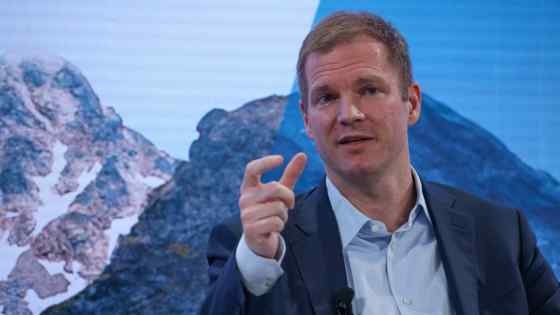
Hungary’s central bank is widely expected to cut its benchmark rate by 25 basis points to 5.25 per cent on Tuesday, at the last policy meeting before governor András Simor (pictured) steps down.

In a big week for the National Bank of Hungary, prime minister Viktor Orbán is due to name Simor’s successor on Friday, just three days before the new chief starts on Monday, March 4. Since Orban has made clear he wants a more relaxed monetary policy, he seems certain to pick a governor sympathetic to his views – possibly economy minister György Matolcsy. Continue reading »

By György Barcza of Századvég Economic Research

Since taking power in a landslide election victory in the spring of 2010, the Hungarian government, led by Viktor Orban and his Fidesz party, has received much criticism regarding its economic policy – including the FT’s beyondbrics.

Yet in the main, critics have failed to offer any alternative, other than to return to the previous economic model of transition from centrally-planned communism. Continue reading »

Investors have given Viktor Orbán the benefit of the doubt by backing the country’s $3.25bn bond issue, its first international offering in more than a year.

They’ll be hoping that the unpredictable Hungarian prime minister won’t let them down as he prepares for next year’s parliamentary election, with all its political and economic uncertainty. Is this a safe bet? Continue reading »

Hungarian Prime Minister Viktor OrbanSay what you will, when it comes to confident – and confidence boosting – speeches, Viktor Orban is up there with the best. Speaking on public radio on Friday, for example, the Hungarian prime minister assured the nation that – as the government website paraphrased him:

“Hungary will begin to ascend in 2013,” and that having done the hard work in the past 30 months, the days of massive legislation efforts “needed for the country’s survival and competitiveness” are largely over and it’s time for growth. Continue reading »

Hungary’s central bank (MNB) cut rates again on Tuesday, lopping 25 basis points off the base rate for the second consecutive month.

The move, which leaves the base rate at 6.5 per cent – still the highest in the EU – is seen by analysts as confirmation that the dovish ‘external’ members of the monetary council – ie the four appointed by prime minister Viktor Orban – are eager to spur growth rather than target inflation. Continue reading »

A “list of horrors”.

That’s how Hungary’s prime minister Viktor Orbán described on Thursday the conditions given by the IMF / EU for a deal, via a video on his Facebook page.

It’s just the latest twist in the long-running credit line saga, and comes one day after Orbán and his right-hand finance man Mihály Varga had talked confidently about reaching a deal “this autumn”. Continue reading »

Hopes that the EU would give the green light to opening talks with Hungary and International Monetary Fund have been given something of a thumbs up from the markets.

The forint, stock exchange and CDS all improved on the news. Can the mood be sustained? Continue reading »

Hungary’s central bank on Tuesday left its benchmark interest rate unchanged at 7 per cent a year – the highest in the European Union.

The decision was in line with market expectations, leaving investors free to focus their attention on the government and its efforts to secure the support of other EU states for talks on an EU/International Monetary Fund aid plan. Continue reading »

It’s too early to say that Hungary is best buddies with the EU, but here’s a start.

Hungary on Monday said it planned new taxes and more cuts in state spending in order to stabilise the economy and meet the deficit targets required to fully access European Union grants. Continue reading »

Hungary’s central bank held interest rates unchanged on Tuesday, making three straight months at 7 per cent, the highest among central European currencies. The move was more bland than buzz – fully in line with market expectations – and the forint remained unchanged after the announcement, at around 291.5 to the euro.

Instead, the buzz in Budapest is whether the government is serious about getting an EU-IMF credit line or, given the improved international sentiment, will go it alone and successfully tap the markets with a foreign currency bond issue. Continue reading »

The OECD published a 150-page report on Hungary on Tuesday, part wish-list, part gripe. The country must take “swift action” to stabilise its economy and put growth on a sound footing.

This on the same day that the EU suspended some of Hungary’s infrastructure subsidies unless the deficit isn’t cut by June 22. But will the Orbán government take heed? Continue reading »

Hungarians love to tell you about their innovators in science, engineering and maths. Now, it seems, we have a new Magyar trailblazer – the world’s worst-paid banker.

And not just any banker, but the head of the National Bank of Hungary (MNB) – the central bank itself.

András Simor, who’s been in the wars with Viktor Orbán’s Fidesz government from the start, has offered to work for Ft1 per month – that’s about 1/3 of a euro cent, which wouldn’t get you the skin off a salami past its sell-by date in even the remotest part of the puszta. Continue reading »

Who do you trust? If you are Hungary’s central bank, the answer is: Viktor Orbán. The bank kept interest rates at 7 per cent on Tuesday, surprising analysts who had anticipated a half-percentage point hike and causing a brief fall in the forint. But the bank is placing its faith in the prime minister doing the right thing in the eyes of the EU.

Meanwhile the man himself was in Brussels to meet EU top brass – apparently conceding ground over key legislation that might otherwise block a deal with the IMF, particularly over the independence of the central bank. It’s a bit of a gamble all round. Continue reading »

By Péter Oszkó, former finance minister of Hungary

Viktor Orbán, Hungary’s prime minister, appeared unusually flexible and conciliatory in the European Parliament last week.

But, true to form, he still came up with some well-worn excuses for his government’s performance since taking office. His opponents exposed a few, but missed others – a number of which are demonstrably false. Continue reading »

Another conciliatory noise from Budapest, this time something quite specific – which could help persuade sceptics that Viktor Orbán, the prime minister, is at last serious about making concessions to reach a EU/IMF deal.

Orbán said on public radio on Friday that Hungary would abandon a planned merger of the central bank and its financial markets regulator – a key point of dispute with Brussels. Continue reading »

BB: time to register

Dear beyondbrics readers,

After more than three years of fully open access, we are taking the step of asking our readers to register on FT.com to read our articles. Beyondbrics will still be free but we'd like to know a bit more about you, our readers. Other FT blogs (including Alphaville) already do the same thing. Registration is active on beyondbrics from May 6.

Many of you are already registered on FT.com, or are subscribers - in which case, if you are logged in to the site you will not notice any difference. Just carry on as before.

For those of you not yet registered, it's a simple process which only takes a few moments.

Reading beyondbrics articles will NOT deduct from your free monthly quota of stories on FT.com.

Many thanks

Stefan Wagstyl, emerging markets editor

Global equities macromap

Number of the day

-0.2% Fall in Polish retail sales in April, rather worse than 1.1 per cent growth expected.

beyondbrics

The emerging markets hub

About this blog Headlines email Blog guide
News and comment from more than 40 emerging economies, headed by Brazil, Russia, India and China.


'Like' our beyondbrics Facebook page, where we showcase a top story of the day
Sign up for our news headlines and markets snaphot service. We have two emails per day - London and New York headlines (sent at approx 6am and 12pm GMT).

Pretty much everything you need to know about beyondbrics is in our About this site page. But briefly:

To comment, please register for free with FT.com and read our policy on submitting comments.

There is an overall beyondbrics RSS feed, as well as feeds for all our countries, tags and authors. Learn more in our full RSS guide.

All posts are published in UK time.

Get in touch with us - your comments, advice and even complaints. Find out how to contact the team.

See the full list of FT blogs.

BB shortcuts

Regulars Series Archive
Chart of the week
Behind the numbers

Corporate watch
A regular in-depth look at a significant emerging market-based company

The Weekender
Catch up with the week in emerging markets
Hello 2013
Guest posts on the outlook for the year ahead

2012 review
Quiz, charts, most read and more

BB review
An occasional series reviewing books and arts from around the beyondbrics world

Brics at 10
A decade of growth
12 for 2012
Guest writer predictions
2011 review
The year in numbers
The Diaspora Digest
EM diasporas, seen through their community media (Oct-Nov 2011)
Sick brics (Sep 2011)
Brics and mortar (Aug 2011)
Beyondbrics on the beach (Jul-Aug 2011)
China bubble? (June 2011)
Post-election Nigeria (June 2011)
Hey bric spender (Aug 2010)

Emerging markets data

Archive

« AprMay 2013
M T W T F S S
 12345
6789101112
13141516171819
20212223242526
2728293031