Yes camp’s bravado versus No camp’s confidence

Perhaps it’s just bravado, or the effects of one extra Guinness for the road, but the Yes camp appears less nervous than you might think. On Tuesday night, only 36 hours before the polls open for Ireland’s referendum on the European Union’s Lisbon treaty, an adviser to an Irish government minister reviewed the state of the world from his seat in a Dublin bar and confided that he expected a 52 to 48 per cent victory for the pro-Lisbon forces.

This morning, I put his forecast to a prominent businessman in the Irish capital. “Oh really? I’d heard 53 to 47,” he replied.

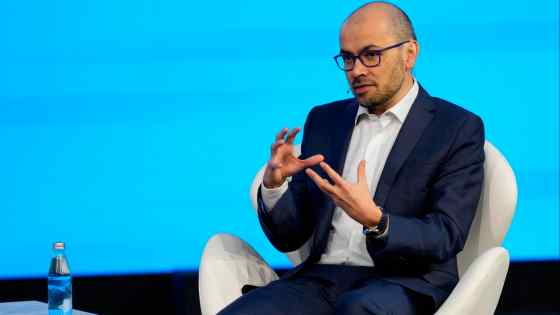
Whether either of these predictions owes anything to the private polling that is being conducted around the Emerald Isle is not entirely clear. The No camp, for its part, has a point when it says the most recent published polls show the anti-Lisbon vote steadily going up. “We’re not taking a single vote for granted,” says Declan Ganley, the leader of the anti-Lisbon Libertas movement.

 By common consent, a great deal depends on the turn-out. It was the low turn-out of about 35 per cent that caused the upset No vote in Ireland’s referendum on the EU’s Nice treaty in June 2001. When the Irish voted again on the treaty in October 2002, the turn-out was 49 per cent and the result was a convincing Yes victory.

On Thursday, experts say that a turn-out of 45 per cent or more of Ireland’s 3.05m voters should be sufficient for the Lisbon treaty to squeeze through.

 But it may not be quite so simple. According to an Irish Times poll published on June 6, 70 per cent of respondents said they were very likely to vote in the referendum. Even if such a high turn-out is improbable, some analysts say that much  “soft opinion” – people who are not especially pro -or anti-European and who may not even have decided whether to bother to vote on Thursday – is trending in a No direction.

If this is so, a high turn-out – say, between 60 and 70 per cent – may not work to the advantage of the Yes forces. “As things stand, we may very well see a situation where a very low turn-out favours the No side,  a medium turn-out favours the Yes side, and a very large turn-out might just favour the No side,” writes Harry McGee of the Irish Times political staff.

Brussels blog

Notes from the EU

About this blog Blog guide
This blog covers everything from the European Union's foreign and economic policies to the fortunes of its political leaders - as well as the more light-hearted aspects of life in Europe.


To comment, please register for free with FT.com and read our policy on submitting comments.

All posts are published in UK time.

Contact the Brussels blog team: Peter Spiegel, Joshua Chaffin, Alex Barker and Stanley Pignal.

See the full list of FT blogs.

The Brussels blog authors

Peter Spiegel is the FT's Brussels bureau chief. He returned to the FT in August 2010 after spending five years covering foreign policy and national security issues from Washington for the Wall Street Journal and the Los Angeles Times, focusing on the wars in Iraq and Afghanistan. He first joined the FT in 1999 covering business regulation and corporate crime in its Washington bureau, before spending four years covering military affairs and the defence industry in London and Washington.

Joshua Chaffin is one of the FT's EU correspondents, covering areas including policies on trade, the environment and energy. He has worked in the FT's Brussels bureau since late 2008 and before that was an FT correspondent in New York and Washington DC.

Alex Barker is EU correspondent, covering the single market, financial regulation and competition. He was formerly an FT political correspondent in the UK and joined the FT in 2005.

Stanley Pignal is Brussels correspondent for the Financial Times, covering EU justice, home affairs, social developments, telecoms and the Benelux region. He joined the bureau in January 2009, having previously worked for the FT as a corporate reporter in London.

FT blog: The World

Across the globe: Gideon Rachman and his FT colleagues debate international affairs on The World blog.

In the news

Angela Merkel Belgium Budget credit ratings agencies EU presidency EU summits European banks European Central Bank eurozone Finland Germany Greece Herman Van Rompuy Hungary IMF Italy Jose Manuel Barroso Libya Mario Monti Michel Barnier Nato Nicolas Sarkozy Olli Rehn Portugal Schengen Silvio Berlusconi sovereign debt crisis Spain Viktor Orban

Archive

« May Jul »June 2008
M T W T F S S
 1
2345678
9101112131415
16171819202122
23242526272829
30