
Europe and the China card

September 26, 2008

The August war in Georgia, and Russia’s recognition of the breakaway enclaves of Abkhazia and South Ossetia, have plunged relations between Moscow and the European Union into their iciest condition since the Soviet Union’s demise in 1991. But if it plays its cards right, it is the EU, rather than Russia, that in the long run will gain something from the crisis.

One month after the Kremlin embarked on the path of dismembering Georgia by recognising Abkhazia and South Ossetia as independent states, what is most striking is how negatively the rest of the world has reacted. As far as I can tell, only Nicaragua has followed Moscow’s lead to the point of full recognition. Even Belarus, the former Soviet republic closest to Moscow, has held back.

Elsewhere, sympathy for the Russian position has come from Azerbaijan’s Armenian-controlled enclave of Nagorno-Karabakh, Turkish-occupied Northern Cyprus and Hamas in the Gaza Strip. All things considered, not a very impressive collection of supporters.

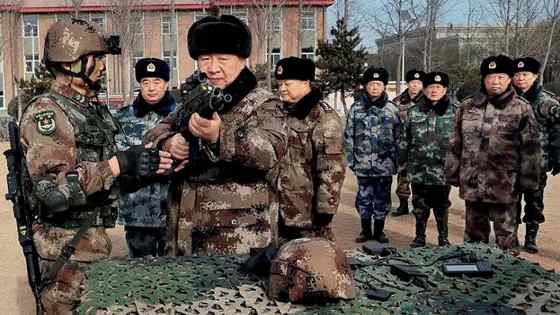
The most important expression of displeasure at Russia’s action, though carefully coded, came from China. For Beijing, the formal recognition of Abkhazia and South Ossetia was an attack on the principles of territorial integrity and non-interference in other states’ domestic affairs that the Chinese regard as sacrosanct.

As Bobo Lo, an expert at the Centre for European Reform think-tank, puts it: “The analogy that matters is not Tibet or Xinjiang - long under de facto as well as de jure control - but Taiwan… Moscow’s recognition of Abkhazia and South Ossetia establishes a dangerous precedent, whereby de facto control supported by a dominant external power can introduce new realities.”

Russia has not merely isolated itself but left itself “more friendless than at any time in the past 60 years”, Bobo Lo argues.

This presents opportunities for the EU. European leaders worry about their over-reliance on Russian energy supplies, and about Russia’s meddling in its former sphere of control in eastern Europe. But doesn’t China’s anger at Moscow’s attempted partition of Georgia create an opening for the EU to develop a closer strategic relationship with Beijing?

In a sense, such a move would replay Richard Nixon and Henry Kissinger’s use of “the China card” in the early 1970s. Of course, it would get nowhere without the support of the British, French and German - the EU’s dominant foreign policy players. But, as it happens, one or two European government ministers are already thinking along these lines.

Who, I wonder, will be Europe’s Nixon?

11 Responses to “Europe and the China card”

Comments

  1. Thick as most European politicians are they would have to take idiocy to the Bush like limit to involve China in European affairs. Once involved they might change sides. What a happy outcome that would be in the middle of the twenty first century. The new Chinese Eurasian alliance with its new long border contiguous with Europe proper.

    Posted by: Babeouf | September 26th, 2008 at 1:13 pm | Report this comment
  2. Well apart from being wrong in that China actually supported the Russian actions (although would not recognise independence due to making a precedent over Taiwan), I also have to ask what sort of goal such an alliance will achieve?

    Economically both regions are competitors both for natural resources, and for energy. Although one is a importer region while another an exporter.

    Geopolitically and militarily both regions are totally isolated from each other, short of getting China to reopen already signed border disputes with Russia and jeopardise their main energy supplier I can’t see any action of consequence here at all.

    There is no “Nixon moment” to take advantage of, as right now unlike the Neutral China of the 1970’s, today’s China operates jointly already with Russia in many spheres.

    This is done because it is profitable for both sides, breaking this would be unprofitable.

    Posted by: Gareth | September 26th, 2008 at 4:14 pm | Report this comment
  3. The real problem is the continuous push by US to isolate Russia. This has been going on for years. C. Rice is still stuck in the cold war mentality. She was a specialist in Russian-US relations and never could switch her mode of thinking. If you push someone hard enough, eventually some might push back. This is dangerous because when someone is cornered they might do something unpredictable.
    Also as far as Georgia, what strikes me is no one mentions the Ossetians. When the western powers annex, for lack of a better word, Kosovo, it’s all well because it is us, and we are good. But when someone else protects people that are being killed, it is bad, period. There are some voices of reason out there, but they are mostly drowned out by Russia is bad because it’s Russia.

    Posted by: Mark | September 26th, 2008 at 4:47 pm | Report this comment
  4. The Russian action in Georgia invariably alarms the Chinese leadership, because of its similarity to the independence of Mongolia. Mongolia was a part of China since the Qing dynasty. Under the pretense of eliminating White Russian rebels, the Red Army invaded and then occupied the region for over 60 years, while China was weakened by the Japanese invasion and the Civil War between the Nationalists and the Communists. For many years, only USSR and Mongolia recognized each other. At the end of WWII, Stalin successfully pressured Mao to accept independence for Mongolia in exchange for aid and support. The two regions of Georgia are peanuts compared to the loss of Mongolia for China.

    Posted by: George | September 27th, 2008 at 2:07 am | Report this comment
  5. Following the separation of Mongolia from China, Tannu Tuva, the northern-most portion of Mongolia was conveniently annexed by USSR in 1944.

    Posted by: George | September 27th, 2008 at 2:53 am | Report this comment
  6. I want to share more information on this topics so that will be helpful for everyone.

    Finance blog, finance,economics,Corporate finance,Personal finance,Investing,Marketing

    Posted by: BizBlogged | September 27th, 2008 at 8:30 am | Report this comment
  7. But China is a Dictatorship under the rule of the Communist Party and occupying Tibet, haha!!!

    Invade China NOW!!!

    Bomb China NOW!!!

    I don´t have any doubt America will bomb China until they learn democratic principles, murdering 300 million Chinese if necessary.

    Posted by: Enrique | September 28th, 2008 at 10:43 pm | Report this comment
  8. EMBARGO to China NOW!!!!

    Posted by: Enrique | September 28th, 2008 at 10:50 pm | Report this comment
  9. Why doesn’t someone report this Enrique guy. FT allows racists just as long as it’s against Chinese.

    Posted by: Madness | September 29th, 2008 at 2:44 pm | Report this comment
  10. Let’s be practical and realistic ! Europa and USA best interests are in trade and commerce with all, specially with near Russia!

    we need massive trade with Russia and for global trade and stability , we need Arctic Sea exploration and development and that requires Russia,Canada,USA,Norway,Island and Denmark to pool technologies and assets together and get going !

    and why create conflicts between Russia and Europa ? who benefits ? weapons sales ? money laundering ? influence peddlers ? of course some of these same “manipulators” are already in Beijing trying to grab corrupt Chinese government employees and Chinese rich tax-evaders and do their banking and off-shore shopping and storage, so they will most likely suggest to these Chinese “top-tiers” that conflict between China and Russia is a good way to increase ” Defense business ” , right ? that’s the usual method,after all ! i hope the honest Chinese will “laser-focus” on these corrupt few and make sure they don’t harm the whole of China.

    the Europeans and Americans won’t even know what happens until all hell breaks lose in 2 years…as usual.

    so in many ways, it’s true that all this fabricated conflict between Russia , Europa and the USA is old History, yes ! it’s been done before many times.

    Posted by: financialtools1@gmail.com | September 29th, 2008 at 10:27 pm | Report this comment
  11. France, Italy & Germany must convince Russia to joint EU now to avoid war in Europe that will bring total destruction of Europe. US and the NATO are demonizing Russia. NATO meaning now are North Anglo-American Treaty Organization.

    EU with out Russia is disable or no Muscles.
    EU with out Russia is only a Prostitute.
    EU with Russia is Great Super Power or Complete Europe.

    Posted by: Naphitsta GanMao | September 30th, 2008 at 7:57 am | Report this comment

Post a comment


As a final step before posting the comment, please type the two words you see in the image beloweight numbers in the audio clip; this test is to prevent automated robots from posting comments.

More FT Blogs and Forums

  • Economists' Forum Leading economists and the FT's chief economics commentator, Martin Wolf, debate the big issues

  • Clive Crook's blog The FT's chief Washington commentator blogs about intersection of politics and economics

  • Gadget GuruThe FT's personal technology expert Paul Taylor answers your gadgetry questions

  • Margaret McCartney's blogA forum by GP and FT opinion columnist on healthcare issues

  • Gideon Rachman's blog The FT's chief foreign affairs commentator on world issues and his travels

  • Westminster Blog By our UK Parliament writers

  • The Undercover Economist Tim Harford's blog on economics in everyday life

  • Willem Buiter's Maverecon The LSE professor blogs on 'economics, politics, ethics, religion, culture, free and open source software (FOSS), and whatever'

  • John Gapper's blog FT chief business commentator talks about business, finance, media and technology

  • FT Alphaville Instant market news and commentary for finance professionals

  • Management Blog A forum for the latest thinking about the issues that preoccupy managers around the world

  • Dear Lucy Columnist Lucy Kellaway and readers solve your workplace woes

  • FT Tech Blog Our San Francisco and world correspondents look at the intersection of technology and business

  • Editors' blogAn insight into the content and production of the Financial Times, written by the decision-makers