Repair work in Strasbourg

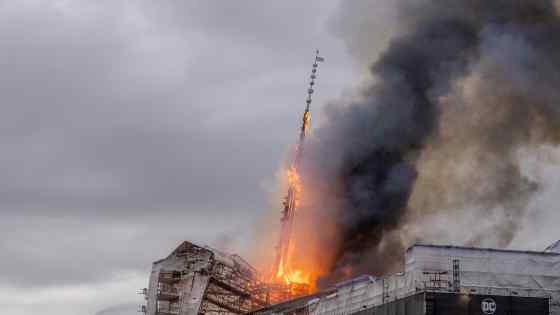
August 7 was some day in European history. In Georgia, a war broke out. In Strasbourg, the ceiling of the main chamber of the European Parliament fell down.

Unlike in Georgia, there were no casualties in Strasbourg. No one was even in the chamber at the time – a not unusual sight. Only 12 times a year do hundreds of Brussels-based parliamentarians, aides, lobbyists and media people make the 430km trip to Strasbourg for a monthly plenary session of the legislature. The rest of the time, their base is the Belgian capital.

With the ceiling in ruins, parliament officials were obliged last week to hold the first plenary meeting of the new political season in Brussels. The next session, from September 22 to September 25, will also be staged in Brussels.

Dare one suggest that this arrangement should be made permanent? After all, the cost of decamping to Alsace once a month is estimated at €200m a year – not to mention all the extra CO2 emissions from the travel.

Some surveys suggest that more than 80 per cent of parliamentarians want one permanent home for their assembly, and that a similar majority want it to be Brussels. “As long as we have to travel to Strasbourg, people will rightly say that the EU is wasting money,” says Gary Titley, leader of the UK Labour party group.

But it isn’t going to happen, is it? No French government will give up the prestige and influence perceived to come from playing host to the legislature. From a French point of view, the beauty of Strasbourg as a location for a major EU institution is that the city not only symbolises Franco-German reconciliation but, nowadays, is emphatically French territory.

Besides which, the present arrangements for the parliament are written in EU treaty law and cannot be changed without the approval of all 27 member-states. Apparently, it’s not just the ceiling in Strasbourg that needs some repair work.

Brussels blog

Notes from the EU

About this blog Blog guide
This blog covers everything from the European Union's foreign and economic policies to the fortunes of its political leaders - as well as the more light-hearted aspects of life in Europe.


To comment, please register for free with FT.com and read our policy on submitting comments.

All posts are published in UK time.

Contact the Brussels blog team: Peter Spiegel, Joshua Chaffin, Alex Barker and Stanley Pignal.

See the full list of FT blogs.

The Brussels blog authors

Peter Spiegel is the FT's Brussels bureau chief. He returned to the FT in August 2010 after spending five years covering foreign policy and national security issues from Washington for the Wall Street Journal and the Los Angeles Times, focusing on the wars in Iraq and Afghanistan. He first joined the FT in 1999 covering business regulation and corporate crime in its Washington bureau, before spending four years covering military affairs and the defence industry in London and Washington.

Joshua Chaffin is one of the FT's EU correspondents, covering areas including policies on trade, the environment and energy. He has worked in the FT's Brussels bureau since late 2008 and before that was an FT correspondent in New York and Washington DC.

Alex Barker is EU correspondent, covering the single market, financial regulation and competition. He was formerly an FT political correspondent in the UK and joined the FT in 2005.

Stanley Pignal is Brussels correspondent for the Financial Times, covering EU justice, home affairs, social developments, telecoms and the Benelux region. He joined the bureau in January 2009, having previously worked for the FT as a corporate reporter in London.

FT blog: The World

Across the globe: Gideon Rachman and his FT colleagues debate international affairs on The World blog.

In the news

Angela Merkel Belgium Budget credit ratings agencies EU presidency EU summits European banks European Central Bank eurozone Finland Germany Greece Herman Van Rompuy Hungary IMF Italy Jose Manuel Barroso Libya Mario Monti Michel Barnier Nato Nicolas Sarkozy Olli Rehn Portugal Schengen Silvio Berlusconi sovereign debt crisis Spain Viktor Orban

Archive

« Aug Oct »September 2008
M T W T F S S
1234567
891011121314
15161718192021
22232425262728
2930