

Arctic challenges may prompt US to ratify UN Convention on Law of Sea

Excuse the pun, but the Arctic is a hot topic in Brussels these days. So hot that I and many others struggled through wintry rain and darkness this morning to hear Elisabeth Walaas, Norway’s state secretary for foreign affairs, give a talk on the challenges facing the High North.

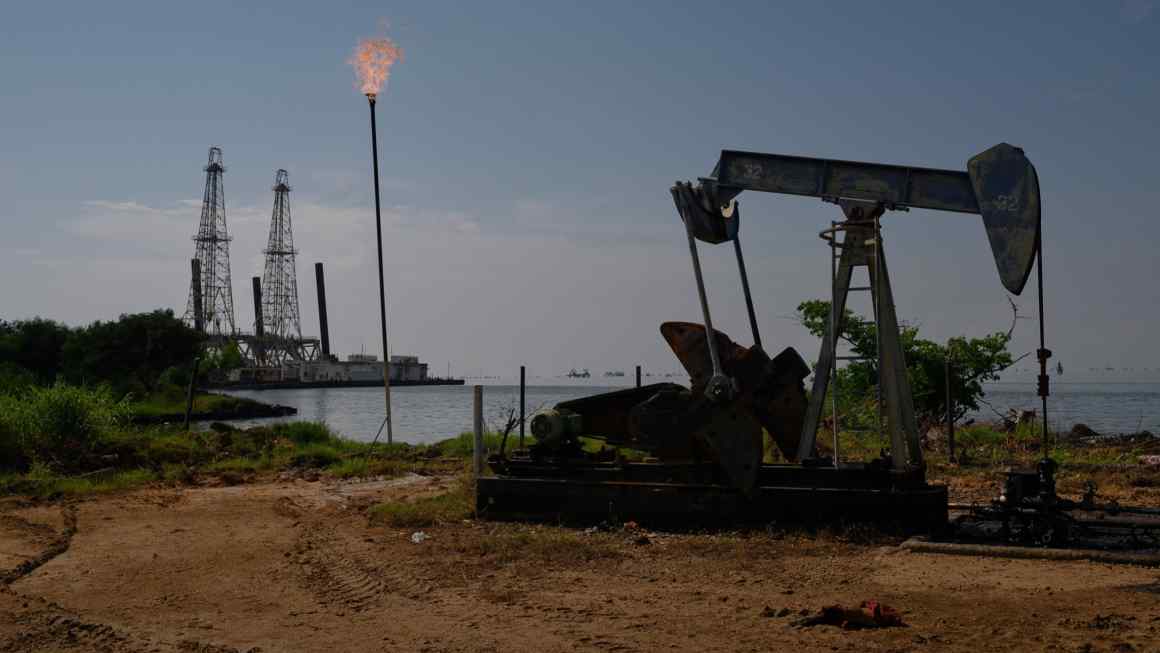
By now, the facts are well-known. The Arctic region is thought to contain huge energy resources, perhaps as much as 20 per cent of the world’s undiscovered, technically recoverable reserves. In an age of dwindling fossil fuel supplies, the temptation to exploit these resources is irresistible.

But the Arctic environment is exceptionally fragile. Global warming is already taking a severe toll. The ice and permafrost are melting. Ocean levels are rising. New shipping routes will open up. Fish stocks will move among different national jurisdictions, raising questions about how to stop uncontrolled harvesting. To cap it all, the US government declared last May that polar bears were an endangered species.

Meanwhile, territorial disputes hang over the Arctic. Canada and the US, for example, disagree about whether the Northwest Passage is an internal Canadian waterway or an international strait. This is no small matter. Once the passage is fully open, shipping companies will be able to knock thousands of nautical miles off their vessels’ journeys between Asia and Europe. Regulating the inevitable surge in maritime traffic will be a heavy responsibility.

The case for a strong international legal framework to govern the Arctic seems unanswerable. But here’s what Walaas said: “As we [in Norway] see it, there are no legal gaps in the Arctic that need to be filled, and no need for a new comprehensive international regime to govern the Arctic. What’s needed is effective implementation of what we’ve got.”

By this, she meant above all the 1982 United Nations Convention on the Law of the Sea, but also several lesser codes and forums such as the 1992 Convention on Biological Diversity, the 1995 Fish Stocks Agreement, the Arctic Council (to which the European Union has applied for observer status) and the International Maritime Organisation.

All other Arctic states agree with Norway that the existing agreements are sufficient. For the US, former president George W. Bush made that plain in a national security directive adopted only one week before he left office. The main argument is that, unlike the Antarctic, where a treaty system dating to 1961 governs international conduct, the Arctic is an ocean under ice and falls under the scope of the Law of the Sea.

It’s interesting that the odd man out in this debate is the European Parliament. By a big majority, it passed a resolution last October calling for an international treaty for the protection of the Arctic. Legislators were fearful that Russia, in whose territory large amounts of the untapped energy reserves lie, wouldn’t extract the oil and gas without damaging the Arctic environment.

But if Walaas and others are right, then it would help if the US government were finally to ratify the Convention on the Law of the Sea. George W. Bush’s administration wanted to, but Senate conservatives thwarted him. Now John Kerry, the incoming Senate foreign relations committee chairman, says he will push for ratification because the Arctic is “a strategic priority for our nation”.

Will this be another area where Barack Obama’s arrival in the White House will make a difference?

Brussels blog

Notes from the EU

About this blog Blog guide
This blog covers everything from the European Union's foreign and economic policies to the fortunes of its political leaders - as well as the more light-hearted aspects of life in Europe.


To comment, please register for free with FT.com and read our policy on submitting comments.

All posts are published in UK time.

Contact the Brussels blog team: Peter Spiegel, Joshua Chaffin, Alex Barker and Stanley Pignal.

See the full list of FT blogs.

The Brussels blog authors

Peter Spiegel is the FT's Brussels bureau chief. He returned to the FT in August 2010 after spending five years covering foreign policy and national security issues from Washington for the Wall Street Journal and the Los Angeles Times, focusing on the wars in Iraq and Afghanistan. He first joined the FT in 1999 covering business regulation and corporate crime in its Washington bureau, before spending four years covering military affairs and the defence industry in London and Washington.

Joshua Chaffin is one of the FT's EU correspondents, covering areas including policies on trade, the environment and energy. He has worked in the FT's Brussels bureau since late 2008 and before that was an FT correspondent in New York and Washington DC.

Alex Barker is EU correspondent, covering the single market, financial regulation and competition. He was formerly an FT political correspondent in the UK and joined the FT in 2005.

Stanley Pignal is Brussels correspondent for the Financial Times, covering EU justice, home affairs, social developments, telecoms and the Benelux region. He joined the bureau in January 2009, having previously worked for the FT as a corporate reporter in London.

FT blog: The World

Across the globe: Gideon Rachman and his FT colleagues debate international affairs on The World blog.

In the news

Angela Merkel Belgium Budget credit ratings agencies EU presidency EU summits European banks European Central Bank eurozone Finland Germany Greece Herman Van Rompuy Hungary IMF Italy Jose Manuel Barroso Libya Mario Monti Michel Barnier Nato Nicolas Sarkozy Olli Rehn Portugal Schengen Silvio Berlusconi sovereign debt crisis Spain Viktor Orban

Archive

« Dec Feb »January 2009
M T W T F S S
 1234
567891011
12131415161718
19202122232425
262728293031