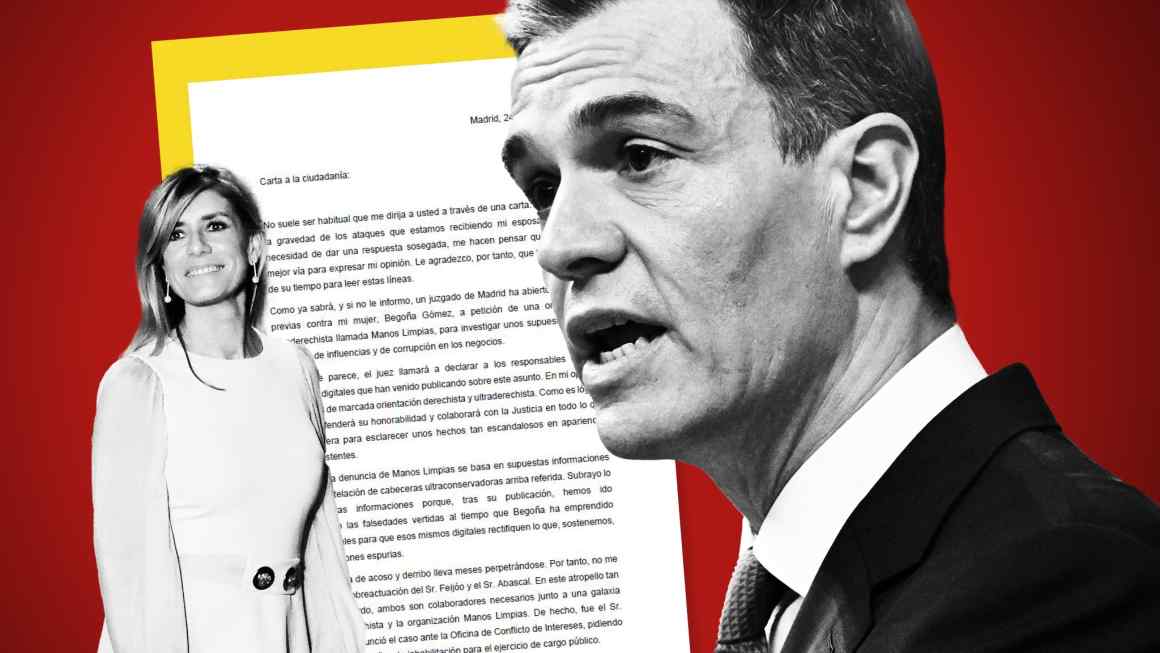
The real sin of Silvio Berlusconi

It’s quiz time, and here’s your starter for ten.  Which 18-year-old hottie home-breaker, as the European tabloid press is calling her, recently made the immortal statement:  “I want to be a showgirl.  But I’m also interested in politics.  I am flexible.”

Yes, it’s Noemi Letizia, the teenager at the centre of a divorce suit launched against 72-year-old Italian premier Silvio Berlusconi by his wife, Veronica Lario.  Reading the interview that young Noemi gave to the Corriere del Mezzogiorno newspaper (“I often sing with Papi Silvio at the piano, or we do karaoke”), it’s hard to know who to feel more sorry for – Lario, Noemi’s ex-fiancé Gino Flaminio, or the entire 60m Italian people.

Flaminio has every reason to feel hard done by.  He says he went out with Noemi for 16 or 17 months – “it was a serious relationship” - until, half a year ago, she received a phone call out of the blue from the prime minister.  And that, as they say, was that.

Flaminio will probably console himself one day that he’s better off without the flighty Noemi.  By contrast, opinion polls show that the Italian people seem determined to stick with Berlusconi, whose ratings remain remarkably high more than a year after he assumed the premiership for the third time in 15 years.

Berlusconi’s adversaries, in and outside Italy, seethe with fury when they see how he gets away with it.  Less than two weeks ago a Milan court ruled that David Mills, a British corporate lawyer sentenced to be jailed for accepting a $600,000 bribe in 1997, had given false testimony to protect the billionaire Berlusconi and his Fininvest holding company.  In any other western European country, a scandal of these dimensions would have brought down the premier in less time than it takes to say “Papi”.  But not in Italy, where Berlusconi succeeded last year in ramming a bill through parliament that gave him immunity from prosecution.

Of course, the premier denies that he did anything wrong and says it’s all a plot by leftwing judges and prosecutors to destroy his political career.  This depressing ritual of accusation and counter-accusation between Berlusconi and the judiciary has been going on for many years and shows no sign of stopping.

In the court of public opinion, however, some may consider it surprising that Berlusconi has not been convicted of being one of the worst stewards of the Italian economy since 1945.  His first, short-lived government in 1994 achieved nothing.  His five-year spell in power from 2001 to 2006 was notable mainly for its failure to introduce the liberalising reforms that Italy desperately needs to make itself competitive in the eurozone.  Now, he is presiding over a slump that the International Monetary Fund thinks may make Italy the only eurozone country to experience three consecutive years of recession from 2008 to 2010.

Worst of all, Italy’s public debt is set to soar to 116 per cent of gross domestic product by 2010, according to the European Commission.  In other words, Italy will be back where it was in the late 1990s.

Noemi or no Noemi, this is Berlusconi’s real sin.

Brussels blog

Notes from the EU

About this blog Blog guide
This blog covers everything from the European Union's foreign and economic policies to the fortunes of its political leaders - as well as the more light-hearted aspects of life in Europe.


To comment, please register for free with FT.com and read our policy on submitting comments.

All posts are published in UK time.

Contact the Brussels blog team: Peter Spiegel, Joshua Chaffin, Alex Barker and Stanley Pignal.

See the full list of FT blogs.

The Brussels blog authors

Peter Spiegel is the FT's Brussels bureau chief. He returned to the FT in August 2010 after spending five years covering foreign policy and national security issues from Washington for the Wall Street Journal and the Los Angeles Times, focusing on the wars in Iraq and Afghanistan. He first joined the FT in 1999 covering business regulation and corporate crime in its Washington bureau, before spending four years covering military affairs and the defence industry in London and Washington.

Joshua Chaffin is one of the FT's EU correspondents, covering areas including policies on trade, the environment and energy. He has worked in the FT's Brussels bureau since late 2008 and before that was an FT correspondent in New York and Washington DC.

Alex Barker is EU correspondent, covering the single market, financial regulation and competition. He was formerly an FT political correspondent in the UK and joined the FT in 2005.

Stanley Pignal is Brussels correspondent for the Financial Times, covering EU justice, home affairs, social developments, telecoms and the Benelux region. He joined the bureau in January 2009, having previously worked for the FT as a corporate reporter in London.

FT blog: The World

Across the globe: Gideon Rachman and his FT colleagues debate international affairs on The World blog.

In the news

Angela Merkel Belgium Budget credit ratings agencies EU presidency EU summits European banks European Central Bank eurozone Finland Germany Greece Herman Van Rompuy Hungary IMF Italy Jose Manuel Barroso Libya Mario Monti Michel Barnier Nato Nicolas Sarkozy Olli Rehn Portugal Schengen Silvio Berlusconi sovereign debt crisis Spain Viktor Orban

Archive

« Apr Jun »May 2009
M T W T F S S
 123
45678910
11121314151617
18192021222324
25262728293031