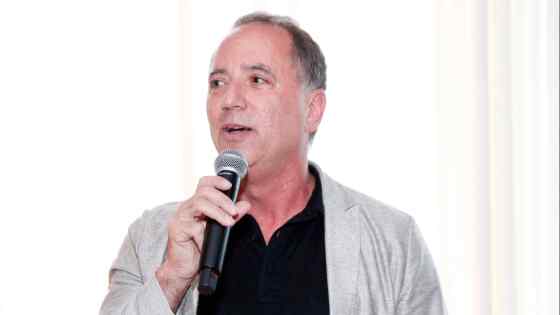
Klaus the destroyer takes aim – again – at the Lisbon treaty

Hello, hello, hello, what’s this, then?  Another attempt by Czech President Vaclav Klaus to derail the European Union’s Lisbon treaty?  Surely not!  Let’s take a closer look.  Oh, my God, yes, it’s true.  And how could we ever have doubted it?  Because the thing about Klaus is that if it looks like pork and dumplings, and it smells like pork and dumplings, and it tastes like pork and dumplings, then you can bet your life that it definitely is pork and dumplings.

The Czech Republic’s six-month EU presidency comes to an end on June 30.  This date once looked likely to mark Klaus’s departure from the EU stage.  Instead, it now appears certain that Klaus – who delights in being one of the least liked EU leaders of all time - will press on with his campaign to sabotage the Lisbon treaty.

The story so far: Irish voters rejected the treaty last June, but latest opinion polls indicate that they will reverse their verdict in a second referendum, expected in October.  In order to hold this referendum, however, the Irish government needs legal guarantees of its national sovereignty in the fields of taxation, military neutrality and right-to-life policies.

Ireland will receive these guarantees from its EU partners at the Brussels summit that opens on Thursday.  But the cunning Klaus says that the guarantees amount to new legal arrangements that, under the Czech constitution, will require ratification by the Czech parliament.

Now, the Czech parliament finally ratified the Lisbon treaty last month after an agonising political struggle that contributed to the previous government’s downfall in March.  It would seem crazy for the parliament to go through this painful process a second time.  Sure enough, Jan Fischer, the new Czech prime minister, disputes Klaus’s interpretation of the constitution and says there is no need for parliamentary approval of the Irish guarantees.

But Fischer is a non-party, caretaker premier who won’t be in office a few months from now, because the Czech Republic is to hold a general election.  Klaus, by contrast, will still be up there in Prague Castle – the perfect place for him, if you remember the mysterious castle in Franz Kafka’s novel of the same name. And let us not forget, Klaus still hasn’t completed the Czech Republic’s formal ratification of the Lisbon treaty by adding his presidential signature to parliament’s approval of it in May.

So what is Klaus’s game?  Is he toying with the idea of delaying Czech ratification of the Lisbon treaty for so long that eventually a eurosceptic Tory government comes to power in the UK and holds a British referendum that produces a clear No to the treaty, thereby killing it forever?  It no longer looks like such a wild theory.

Brussels blog

Notes from the EU

About this blog Blog guide
This blog covers everything from the European Union's foreign and economic policies to the fortunes of its political leaders - as well as the more light-hearted aspects of life in Europe.


To comment, please register for free with FT.com and read our policy on submitting comments.

All posts are published in UK time.

Contact the Brussels blog team: Peter Spiegel, Joshua Chaffin, Alex Barker and Stanley Pignal.

See the full list of FT blogs.

The Brussels blog authors

Peter Spiegel is the FT's Brussels bureau chief. He returned to the FT in August 2010 after spending five years covering foreign policy and national security issues from Washington for the Wall Street Journal and the Los Angeles Times, focusing on the wars in Iraq and Afghanistan. He first joined the FT in 1999 covering business regulation and corporate crime in its Washington bureau, before spending four years covering military affairs and the defence industry in London and Washington.

Joshua Chaffin is one of the FT's EU correspondents, covering areas including policies on trade, the environment and energy. He has worked in the FT's Brussels bureau since late 2008 and before that was an FT correspondent in New York and Washington DC.

Alex Barker is EU correspondent, covering the single market, financial regulation and competition. He was formerly an FT political correspondent in the UK and joined the FT in 2005.

Stanley Pignal is Brussels correspondent for the Financial Times, covering EU justice, home affairs, social developments, telecoms and the Benelux region. He joined the bureau in January 2009, having previously worked for the FT as a corporate reporter in London.

FT blog: The World

Across the globe: Gideon Rachman and his FT colleagues debate international affairs on The World blog.

In the news

Angela Merkel Belgium Budget credit ratings agencies EU presidency EU summits European banks European Central Bank eurozone Finland Germany Greece Herman Van Rompuy Hungary IMF Italy Jose Manuel Barroso Libya Mario Monti Michel Barnier Nato Nicolas Sarkozy Olli Rehn Portugal Schengen Silvio Berlusconi sovereign debt crisis Spain Viktor Orban

Archive

« May Jul »June 2009
M T W T F S S
1234567
891011121314
15161718192021
22232425262728
2930