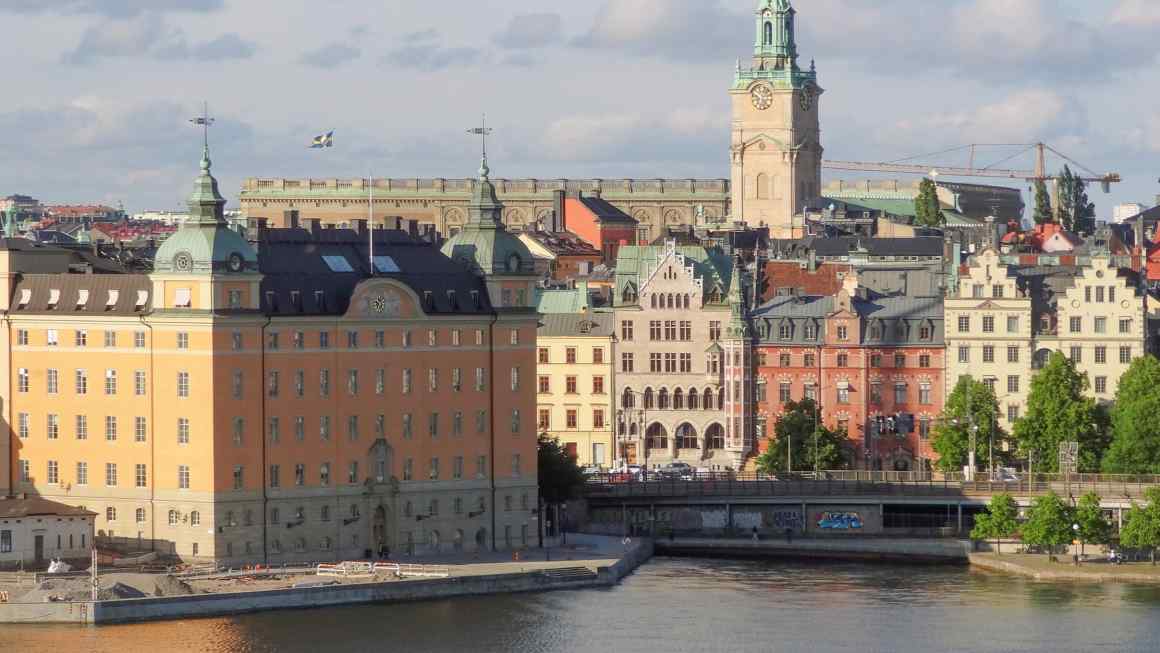

Sweden’s European Union presidency hasn’t even started yet, but people in Brussels are already saying that the Swedish presidency website is the most impressive that any EU country has so far come up with. Its homepage is clean, simple and intelligently presented, and the entire site is nice and easy to navigate.
I particularly like the section “The EU in our daily lives”, which is a slideshow of 15 photographs that attempt to explain how EU laws and activities shape so much of everyday European life. It kicks off with a snapshot of a rather lugubrious-looking dog and the caption: “Dogs and cats travelling within the EU must have their own pet passports.”
Then we get an abrupt introduction to some of the grimmer realities of modern Europe. “Custody disputes between parents from different EU countries must be settled in the child’s home country,” warns the caption to Snapshot Number 2. “Abused women can receive help from women’s shelters, funded by the EU,” declares the caption to Snapshot Number 5.
A lighter note is struck with Snapshot Number 9 – “Chocolates must consist of one-quarter pure chocolate” – and consumer-friendly policies are highlighted in Snapshot Number 13 – “The EU has set a cap on mobile phone rates when travelling abroad”.
But without doubt my favourite picture is the initially mystifying Snapshot Number 7, which depicts a black-eared sheep with something yellow stuck on its right ear. Underneath we read: “Gute sheep (gutefår) graze on Gotland thanks to EU funding for farmers.”
Gute sheep are a breed of horned sheep native to Gotland, the largest island in the Baltic sea, just off Sweden’s south-east coast. They were once in danger of extinction but now, supported by groups such as the Gute Sheep Society of Sweden, and backed by EU funds, they are well protected.
But what’s the subtle message here? That the Common Agricultural Policy isn’t such a waste of money, after all?


Across the globe: Gideon Rachman and his FT colleagues debate international affairs on