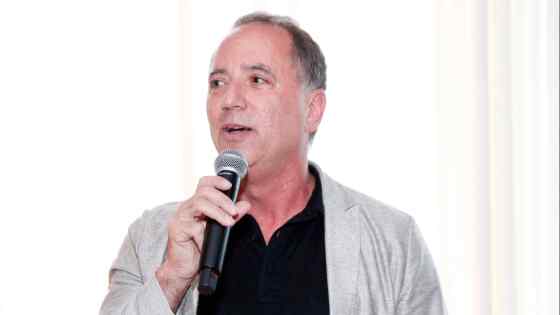
Place your bets now on who’ll be the next EU foreign policy chief

To follow up on Monday’s blog, in which I suggested it was extremely unlikely that Italian foreign minister Franco Frattini would achieve his ambition of becoming the European Union’s next foreign policy chief, the obvious question is – well, who will get the job?

Three names keep cropping up.  One is Jaap de Hoop Scheffer, a Dutchman who has served as Nato’s secretary-general since 2004 and who is about to be replaced by Anders Fogh Rasmussen, a former Danish prime minister.  The second is Carl Bildt, Sweden’s foreign minister, who is another ex-premier.  The third is Olli Rehn, a Finn who is the EU’s enlargement commissioner.

I should stress that, in contrast to Frattini, none of these three is shamelessly promoting himself for the job, which Spain’s Javier Solana has held since 1999.  In fact, Bildt told a group of Brussels-based reporters visiting Stockholm last week that he didn’t want it.  This was no doubt very sensible.  It is a sad but undeniable fact that Bildt, highly experienced and intellectually brilliant though he may be, has a few too many critics and enemies for his own good.

France and Germany think he is sometimes too outspoken about Russia (after he compared Russia’s actions in Georgia last year to Nazi tactics in the 1930s, what Russia thinks of Bildt must be close to unprintable).  The Greek Cypriot-controlled government of Cyprus doesn’t care for Bildt because of his sympathy towards Turkey’s EU membership bid.  The fact that a Dane is about to get the top Nato job means that there will be less enthusiasm in EU capitals for putting a fellow Scandinavian in the EU’s most prestigious foreign policy post.  All in all, I wouldn’t buy Bildts.

Rehn is less controversial and, for that reason, a credible compromise candidate.  Like Bildt, however, he is from the Nordic area – and other EU countries may think that, with Rasmussen at Nato, that’s enough from that corner of Europe for the moment.  In addition, five years as EU enlargement commissioner may not look quite convincing enough on his CV.  My heart says “Buy Rehns” but my head says “Don’t”.

Then there is De Hoop Scheffer.  He has done a competent job at Nato, but it is murmured in Brussels that he lacks the ideas and imagination needed to make a success of the EU’s common foreign policy – often more common on paper than it is in reality.  On the other hand, the EU’s larger countries – France, Germany and the UK - would surely prefer someone who doesn’t cause them trouble.  Let’s put it this way: I’m not buying De Hoop Scheffers today, but I may dip in my wallet later.

Brussels blog

Notes from the EU

About this blog Blog guide
This blog covers everything from the European Union's foreign and economic policies to the fortunes of its political leaders - as well as the more light-hearted aspects of life in Europe.


To comment, please register for free with FT.com and read our policy on submitting comments.

All posts are published in UK time.

Contact the Brussels blog team: Peter Spiegel, Joshua Chaffin, Alex Barker and Stanley Pignal.

See the full list of FT blogs.

The Brussels blog authors

Peter Spiegel is the FT's Brussels bureau chief. He returned to the FT in August 2010 after spending five years covering foreign policy and national security issues from Washington for the Wall Street Journal and the Los Angeles Times, focusing on the wars in Iraq and Afghanistan. He first joined the FT in 1999 covering business regulation and corporate crime in its Washington bureau, before spending four years covering military affairs and the defence industry in London and Washington.

Joshua Chaffin is one of the FT's EU correspondents, covering areas including policies on trade, the environment and energy. He has worked in the FT's Brussels bureau since late 2008 and before that was an FT correspondent in New York and Washington DC.

Alex Barker is EU correspondent, covering the single market, financial regulation and competition. He was formerly an FT political correspondent in the UK and joined the FT in 2005.

Stanley Pignal is Brussels correspondent for the Financial Times, covering EU justice, home affairs, social developments, telecoms and the Benelux region. He joined the bureau in January 2009, having previously worked for the FT as a corporate reporter in London.

FT blog: The World

Across the globe: Gideon Rachman and his FT colleagues debate international affairs on The World blog.

In the news

Angela Merkel Belgium Budget credit ratings agencies EU presidency EU summits European banks European Central Bank eurozone Finland Germany Greece Herman Van Rompuy Hungary IMF Italy Jose Manuel Barroso Libya Mario Monti Michel Barnier Nato Nicolas Sarkozy Olli Rehn Portugal Schengen Silvio Berlusconi sovereign debt crisis Spain Viktor Orban

Archive

« Jun Aug »July 2009
M T W T F S S
 12345
6789101112
13141516171819
20212223242526
2728293031