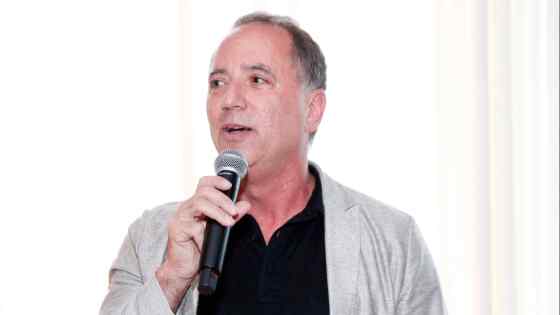
Juncker’s EU presidential ambitions expose UK-Continental divide

There can be few presidential campaigns that have kicked off with the declaration “I am not a dwarf”.  But this is what Le Monde quotes Jean-Claude Juncker today as saying in the interview in which Luxembourg’s prime minister reveals he would consider being a candidate for the European Union’s presidency “if the call came”.

I have interviewed Juncker and seen him in action more than a few times over the years, and I can confirm that he is not a dwarf – though I have heard other disparaging terms applied to him that need not concern us here.  What most interests me is the enormous gulf in perceptions of Juncker’s potential candidacy between the UK and certain mainland European countries.

In UK government circles, Juncker is seen as a non-starter for two reasons.  First, the president’s job will be to represent the EU on the world stage, especially – according to one view - when sudden crises flare up, such as the August 2008 war between Russia and Georgia.  During that conflict, President Nicolas Sarkozy of France represented the EU as the holder of the bloc’s rotating presidency, and even he – one of the EU’s true big hitters – found his negotiations with the Russians extremely tough going.  Juncker, as the leader of the EU’s 26th biggest country (population 500,000 out of a EU total of 500m), would in the British view just not be taken seriously enough as the EU’s voice in such a crisis.

Secondly, Luxembourg represents a country with a profound commitment to deep European integration, something that is anathema to the British.  It is the same objection that caused the UK to reject the candidacy of Guy Verhoftstadt, the former Belgian premier, for the European Commission presidency in 2004.

On the Continent, especially in some of the EU’s western European member-states and in certain smaller countries, Juncker is seen as an entirely credible candidate.  Members of the German Bundestag and foreign policy establishment admire him, though it is open to question whether that view is shared by Chancellor Angela Merkel.  In the end, she is the only person in Berlin whose opinion matters, since she will make Germany’s choice.

As was pointed out by Le Monde‘s interviewer, Juncker appears to have fallen in Sarkozy’s estimation over the past year because of the Luxembourger’s alleged inability to rise to the occasion when the global financial crisis struck Europe.  Accurate or not, this observation prompted a smooth reply from Juncker on Sarkozy’s brilliance as the EU’s president from July to December 2008: ”Europe has never been led with such perspicacity as under the French presidency.”

I feel pretty sure that such compliments won’t ever make Sarkozy support Juncker as the EU’s first full-time president, since the French head of state’s own six months in charge of the EU gave a good idea of the kind of dynamic leadership that he thinks Europe needs.

But that probably won’t upset Juncker, since he is a canny politician whose instincts surely told him long ago that he would never get the job and that the most he could hope for would be to sabotage Tony Blair’s candidacy.

Brussels blog

Notes from the EU

About this blog Blog guide
This blog covers everything from the European Union's foreign and economic policies to the fortunes of its political leaders - as well as the more light-hearted aspects of life in Europe.


To comment, please register for free with FT.com and read our policy on submitting comments.

All posts are published in UK time.

Contact the Brussels blog team: Peter Spiegel, Joshua Chaffin, Alex Barker and Stanley Pignal.

See the full list of FT blogs.

The Brussels blog authors

Peter Spiegel is the FT's Brussels bureau chief. He returned to the FT in August 2010 after spending five years covering foreign policy and national security issues from Washington for the Wall Street Journal and the Los Angeles Times, focusing on the wars in Iraq and Afghanistan. He first joined the FT in 1999 covering business regulation and corporate crime in its Washington bureau, before spending four years covering military affairs and the defence industry in London and Washington.

Joshua Chaffin is one of the FT's EU correspondents, covering areas including policies on trade, the environment and energy. He has worked in the FT's Brussels bureau since late 2008 and before that was an FT correspondent in New York and Washington DC.

Alex Barker is EU correspondent, covering the single market, financial regulation and competition. He was formerly an FT political correspondent in the UK and joined the FT in 2005.

Stanley Pignal is Brussels correspondent for the Financial Times, covering EU justice, home affairs, social developments, telecoms and the Benelux region. He joined the bureau in January 2009, having previously worked for the FT as a corporate reporter in London.

FT blog: The World

Across the globe: Gideon Rachman and his FT colleagues debate international affairs on The World blog.

In the news

Angela Merkel Belgium Budget credit ratings agencies EU presidency EU summits European banks European Central Bank eurozone Finland Germany Greece Herman Van Rompuy Hungary IMF Italy Jose Manuel Barroso Libya Mario Monti Michel Barnier Nato Nicolas Sarkozy Olli Rehn Portugal Schengen Silvio Berlusconi sovereign debt crisis Spain Viktor Orban

Archive

« Sep Nov »October 2009
M T W T F S S
 1234
567891011
12131415161718
19202122232425
262728293031