
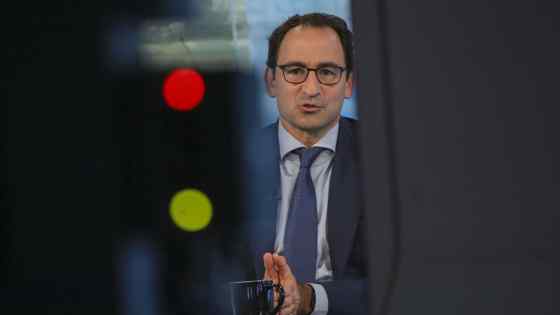

Since the Fifth Republic’s birth in 1958, France has had six presidents – and only one, François Mitterrand (1981-1995), was a man of the left. Now certain elements of the French left see a great opportunity to capture the presidency again by selecting Dominique Strauss-Kahn, the International Monetary Fund’s director-general, as their candidate to run against Nicolas Sarkozy in the 2012 election.
I saw Strauss-Kahn, or “DSK”, in action in October 1998 when, as France’s finance minister, he travelled to Saarbrücken, capital of the tiny German state of Saarland, for a meeting with Oskar Lafontaine, his left-wing German opposite number. Back then, the big economic story in Europe was what many people saw as an effort by Lafontaine and Strauss-Kahn to push for politically managed exchange rates and thus, supposedly, to curb the European Central Bank’s independence on the eve of the euro’s introduction. The fuss over this was quite out of proportion to what the two ministers had in mind, let alone what they were capable of delivering. Lafontaine didn’t last even one year as German finance minister.
Other than the lack of genuine radicalism in the two men’s proposals, my abiding memory of the Saarbrücken event was that Strauss-Kahn spoke German – very good German indeed. It was the first time I had heard a French politician speak German so fluently (although it is less unusual than you might think – none other than Charles de Gaulle had a good command of German).
I was impressed with Strauss-Kahn because he clearly had a sound grasp of economic policy – something that came through in his speeches of that era, too. He was pretty scathing about “market fundamentalists”, but he made it plain that he believed in fiscal discipline, low inflation and the benefits of well-regulated markets.
According to a recent CSA opinion poll, Strauss-Kahn would beat Sarkozy in a presidential contest by 52 to 49 per cent, whereas if Martine Aubry, the socialist party’s leader, were to try her luck, she would lose to the incumbent president by 52 to 48 per cent. None of this means that Strauss-Kahn will find it easy to get the socialist nomination. Aubry may want it – and so may Ségolène Royal, who crashed to defeat against Sarkozy in 2007.
The poor track record of the French left in winning presidential elections may say something about the extraordinarily high calibre of centre-right French politicians. More likely, it reveals much about the conservatism of broad sections of French society. Perhaps it says even more about the French left’s uncanny inability to put up a united front when it matters – a fault that goes back all the way to the original socialist-communist split of December 1920.
If the left is serious about regaining the Elysée, it could do a lot worse than pick Strauss-Kahn. Royal looked out of her depth in 2007, and Aubry has never fulfilled the promise of her early career. The decision, however, will rest with voters who will take part in a primary next year to choose the left’s candidate. Will they have enough sense to pick the one politician on the left whose stature comes close to that of Sarkozy?


Across the globe: Gideon Rachman and his FT colleagues debate international affairs on