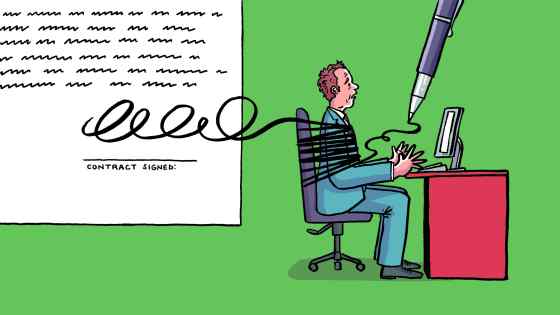



Christmas has come early to Brussels’ beleaguered eurocrats, thanks to a ruling from the European Court of Justice. After months of deliberation, the ECJ sided with EU staff in their pay dispute with member states.
Specifically, the court found that Scrooge-like member states overstepped their powers when they sought to cut in half a 3.7 per cent pay raise due thousands of diplomats and staff at the European institutions for 2009.
Civil servant pay is a touchy subject in Brussels, where eurocrats have long had to endure taunts that they are first-class passengers on a champagne-soaked and caviar-laden gravy train. But it has arguably never been so sensitive, given the bleak age of austerity now dawning across Europe.
The ECJ ruling just happened to coincide with the Irish government’s announcement of a four-year austerity plan that will squeeze 15bn euros from the budget. The deep cuts that David Cameron, the UK prime minister, and other leaders are imposing at home mean they have to be seen wielding at least as sharp an axe against Brussels. That helps to explain the stand-off with the European Parliament over next year’s EU budget.
But the EU pay system is blissfully unaware of such politics. According to the rules, EU pay is based on a basket of civil servant salaries from eight member states from the previous year. This is then balanced against a special Brussels international expatriate cost-of-living index. Plug it in for 2009, and you get 3.7 per cent.
One of the biggest problems with the system – politically-speaking – is the time-lag. Because of the need to capture and analyse data, it takes 12 to 18 months for changes in the member states to catch up to the EU salaries. That explains how EU staff can win a raise just as member states are announcing plans to savage their own civil servants.
Although they do not expect a public outpouring of sympathy, some eurocrats complain that their perks have been curtailed since a 2004 reform of the labour agreement. Among other things, it reduced starting salaries while raising employees’ pension contributions. They still have enviable job security. (“You have to be pretty talented to get kicked out of here,” one official concedes). Still, next year’s EU pay increase is slated to be just 0.4 per cent. Given the current environment, it seems more concessions will be on the horizon when the labour pact comes up for renewal in 2013. Alas, even the eurocrat is feeling the pain these days – sort of.


Across the globe: Gideon Rachman and his FT colleagues debate international affairs on