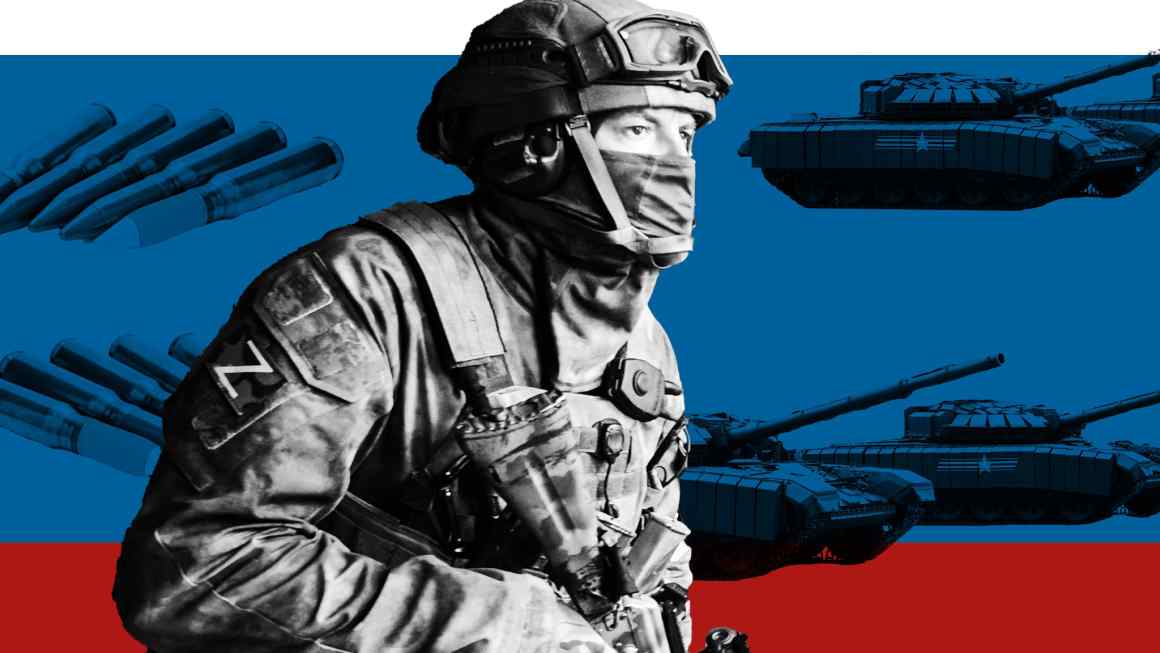
When word filtered out on Tuesday that Russia’s Gazprom would be capping its gas shipments to the European Union, a shiver went through an unusually frigid Brussels.

After two major supply cuts in the last ten years – the most recent in 2009 – European policymakers have become conditioned to believe that any interruption in Russian gas may be the beginning of another full-blown crisis instigated by the Kremlin.

Gazprom said it was going to have to limit European sales in order to serve the needs of domestic consumers struggling through a cold winter. Fears appeared to subside a bit, though, when the company promised to try to make up the difference over the coming days.

Perhaps the most surprising thing about the incident is how quickly it has become a non-event. The reason, according to EU officials, is that the continent learned the lessons from the last gas crisis and has worked to make itself far less vulnerable to future Russian shocks. Read more

Hungary's Viktor Orban during his address in Strasbourg last year. Brussels Blog will be live blogging his appearance on Wednesday .

Viktor Orban, Hungary’s combative prime minister, already had a lengthy list of Brussels’ critiques to rebut during an address today at the European parliament in Strasbourg, which the Brussels Blog is planning to live blog when it begins at 3pm local time.

Expectations are high after last year’s rowdy appearance, and the list of particulars has only grown in the last 24 hours: the European commission, the European Union’s executive arm, on Tuesday declared three new Hungarian laws in violation of the EU treaties, and warned that one may threaten the independence of the country’s central bank.

Just this morning, however, the commission added to the list again, hitting out at Orban – who prides himself on ridding his country from Soviet communism – for failing to respect “media freedom and media pluralism”, the same criticism he faced in Strasbourg a year ago. Read more

Baltic Sea fisherman. Image by Getty

Has the UK lost its influence in Europe? That has become the conventional wisdom in Brussels after prime minister David Cameron last week spurned France and Germany by refusing to sign up to a new “fiscal compact” to further integrate the bloc’s economies.

A first indication may come over the next 24 hours, during which a group of bleary-eyed ministers will try to close an agreement on the European Union’s annual fisheries quotas. Unlikely as it may seem, the UK is expected to get its way because it has rounded up support from France and Germany.

The December fisheries council is one of Brussels’ quirky annual rites and arguably the world’s ultimate fish market. Working late into the night, European diplomats barter quotas on scores of salt water species – from North Sea cod to the nephrop norvegicus – to piece together a comprehensive agreement governing the fisheries of the world’s biggest seafood consumer.

As my colleague, Andrew Bolger, reported in Thursday’s FT, Scotland’s fishing industry is nervous, thanks to Cameron’s defiance. Read more

For the unfortunate diplomats locked in the Justus Lipsius council building all of Friday and into Saturday morning, the European Union’s 2012 budget negotiations were an arduous affair. Upon emerging, one groggy diplomat lamented “an evening I can never get back.”

But to the union at large, the remarkable thing about the talks was how easily they went down.

For those who missed the news early Saturday morning, representatives from the EU’s 27 member states, the European parliament and the European commission agreed on a 2.02 per cent increase in next year’s budget, bringing it to €129bn.

That was well below the 5.23 per cent sought by MEPs, and the 4.9 per cent recommended by the commission. Read more

France and Germany may be divided over the key issues on the agenda of today’s European Union summit. But President Nicolas Sarkozy and Chancellor Angela Merkel have found common ground in the need to hammer Italy over its heavy debt load.

The leaders of the EU’s biggest and most powerful member states called in Silvio Berlusconi, the Italian prime minister, this morning for a pre-summit tongue-lashing. The message they delivered, according to one diplomat familiar with the discussion, was that Italy must deliver “specific and convincing reform measures soon.” They communicated a similar message to Berlusconi at a gathering on Saturday evening held by the centre-right European People’s Party.

Sarkozy also expressed his displeasure with Italy’s refusal to make way for a Frenchman on the European central bank’s executive board, according to the diplomat. France is due to lose its seat when Jean-Claude Trichet steps down as ECB president at the end of the month to be replaced by Mario Draghi, the outgoing president of the Bank of Italy. Berlusconi infuriated the French this week when he declined to free up a seat on the powerful decision-making committee by refusing to name current board member Lorenzo Bini Smaghi as Draghi’s replacement. Read more

Triploi's Old City. September 2011

Tripoli's Old City. September 4.

The European Union’s diplomatic corps, the External Action Service, has landed in Tripoli – the first step in a move to establish a delegation office there. But now that the EU is on the ground in the Libyan capital, don’t expect a torrent of aid to begin flowing just yet.

A post-Gaddafi Libya, and the Arab Spring, in general, present a big opportunity for the new EAS to demonstrate that it can play a useful role helping to promote development and nurture fledgling democracies in the region. The EAS was envisioned as one of the main levers of the EU’s “soft power” when it was enshrined in the 2009 Lisbon treaty. Yet it has got off to a decidedly rocky start.

The extent of the EAS’s role in Libya remains in question. EU officials say they have been told by Libya’s National Transitional Council that it does not intend to hand over the country’s post-conflict reconstruction to foreign interests, and that it will insist on leading the process itself. Read more

New York Stock Exchange on August 4, 2011. Image by AFP

In a sign of the severity of this week’s market turbulence, Olli Rehn, Europe’s economics commissioner, has cut short his holiday and will be back in Brussels today. Rehn is to address the press corps at midday – presumably to undo some of the damage caused by an explosive letter penned by his boss, José Manuel Barroso, the European Commission president.

In his letter – which was sent to the eurozone heads of government on Wednesday, but released to the press on Thursday – Barroso acknowledged that the big decisions taken at a eurozone summit on July 21 were not having the intended effect on financial markets. He also called for a “rapid reassessment” of the eurozone’s €440bn bailout fund just two weeks after leaders had armed it with new weapons following a torturous, months-long debate. Read more

Demetris Christofias, president of Cyprus

Demetris Christofias, president of Cyprus, at the eurozone summit in Brussels in June

The news of further turmoil in Cyprus is a reminder that Italy and Spain are not the only eurozone members that may soon be forced to seek European Union support.

After weeks of negotiations, the coalition government’s junior partner, the centrist Democratic Party, has broken off talks with the ruling AKEL, led by communist president Demetris Christofias. As of this morning, that has pushed the yields on 10-year Cypriot bonds above 11 per cent. Read more

Angela Merkel

Angela Merkel in Brussels on July 21.

Eurozone leaders have made their way into the council building in Brussels, and their comments – though still cautious – have turned upbeat. Here is a sample of the chatter, thanks to our door-stepping friends at Reuters.

Angela Merkel, the German chancellor, believes a decisive deal is at hand. “I expect that we will be able to seal a new Greece programme. That is an important signal. And with this programme we want to grasp the problems by their root,” Merkel said.

Asked whether a Franco-German agreement – which would likely push Greece into a selective default – had the support of its main critic, Jean-Claude Trichet, the European Central Bank president, she was more circumspect. “We spoke at length with ECB President Jean-Claude Trichet and listened to his arguments, too. For this reason, I hope that today will be a constructive day.” Read more

What is the most sought-after invitation in Brussels these days? An invite to the monthly meetings of eurozone finance ministers, apparently. That closed-door gathering has been the nerve centre of European Union efforts to solve a debt crisis that has shaken the single currency for more than a year.

One week ago, as Poland was launching its first EU presidency, Jacek Rostowski, the country’s finance minister, sounded desperate to gain entrance to the inner-sanctum. The problem for Rostowski, of course, is that he fails the most basic criteria for eurogroup membership: His country has not yet adopted the euro. Like a bouncer stationed outside a Manhattan nightclub, France has been particularly adamant about guarding the eurogroup’s exclusivity.

The ruffle over the guest list is another reminder of the way that protocol and procedure remain paramount in the 27-member bloc – even in the face of disaster. It was on display in May when a secret meeting convened in Luxembourg to discuss the Greece crisis sparked envy and resentment among member states that were not invited. Read more







