Economic growth

From our foreign affairs blog:

Welcome to our continuing coverage of the eurozone crisis. All times are London time. Curated by Esther Bintliff and John Aglionby on the world news desk in London, with contributions from FT correspondents around the world. This post should update automatically every few minutes, although it may take longer on mobile devices.

 Read more

Italian prime minister Silvio Berlusconi during last week's vote on new austerity measures

What ails Italy?

If one reads into the minutiae of last night’s Standard & Poor’s downgrade of Italian debt, it wouldn’t be hard to come away thinking that there was not a whole lot wrong with the eurozone’s third largest economy. It’s a “high-income sovereign with a diversified economy and few external imbalances”, S&P notes.

In addition, private sector debt – which crippled Ireland and Spain, when those debts moved onto government books via bank bail-outs – is low. Left unsaid by S&P (but highlighted by Moody’s when it announced its own review in June) is the fact Italy also has a primary budget surplus, which means it actually brings in more money than it spends, if you don’t count interest payments on debt.

According to S&P, then, what ails Italy is as much political as it is economic. Read more

Put it down to all those bankers and Eurocrats: Luxembourgers are once again Europe’s richest citizens.

The Grand Duchy’s gross domestic product per person is 283 per cent of the EU average, according to 2010 data released this morning by Eurostat — itself based in Luxembourg. That’s a whopping 6.6 times larger than Bulgaria, the bloc’s laggard, whose GDP per person is a mere 43 per cent of EU output.

That gap between richest and poorest is 0.2 points larger than last year both because Luxembourg’s GDP share rose (from 272 per cent) and Bulgaria’s dropped (from 44 per cent). All figures are adjusted for purchasing power changes, so exchange rates don’t factor in.

 Read more

Martin Wolf refers me to this new paper by Paul De Grauwe, The Governance of a Fragile Europe. It very well argued and, I think, entirely convincing. Unless something is done, the prognosis for the eurozone is not good. Here is the abstract: Read more

European Union leaders agreed to set up a permanent bail-out mechanism for troubled eurozone economies after 2013. Lex’s John Authers and Vincent Boland discuss whether the measures can solve the problems facing the eurozone. Read more

The pre-summit caucuses of leaders in their party groupings have begun, and one of the surprise guests at the centre-right European Peoples’ Party meeting is Pedro Passos Coelho, the head of Portugal’s opposition Social Democrats and the country’s likely next prime minister. Read more

If you’re a European policymaker and you’ve become exhausted by the idea of austerity, then you might consider a new report by Charles Roxburgh of the McKinsey Global Institute.

The report, “Beyond Austerity: A path to economic growth and renewal in Europe”, is an attempt to skip past the discussion about how drastically governments should slash spending to look at ways they can stoke growth. It coincides with a growing complaint among some Brussels diplomats that months of economic crisis fire-fighting have caused the EU to neglect policies that create jobs.

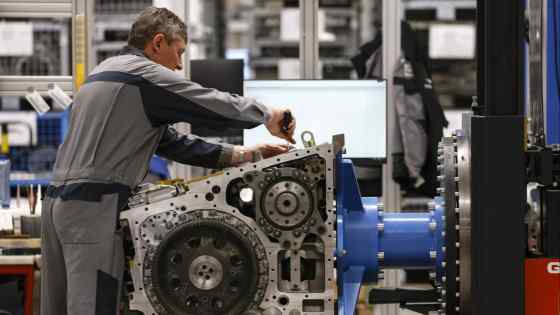
On the job-creation front, Europe’s record is actually better than many people might suspect. Between 1995 and 2008, the European Union generated slightly more jobs than the US – 23.9m to 20.5m. (For statistical reasons, the study only includes the 15 countries that were EU members before its 2004 enlargement).

“There’s quite a good story on job growth,” Mr Roxburgh said. “The flipside is in productivity.” Read more

The European Commission, the EU’s executive branch, on Wednesday formally kicked off what is now known as the “European Semester” – a new six-month process of reviewing national budgets and reform programmes to make sure the countries are getting their fiscal acts in order.

The Commission considers the process so important to pulling the continent out of the current crisis that it organised a day-long conference in Brussels to discuss its role in the post-crisis world.

But at the first panel of the day, two of the most influential economists in town – Marco Buti, the powerful head of the Commission’s economic and financial affairs directorate, and Daniel Gros, director of the respected Centre for European Policy Studies – got into a heated tussle over whether the whole process was just one big waste of time.

Gros played the skunk at the garden party, saying that all the attention being paid to the European Semester – essentially another round of austerity recommendations – was taking time and energy away from the real task at hand: fending off the bond market’s attack on one eurozone country after another. Read more

It is a pre-summit tradition in Brussels for the heads of state to divide up and huddle with their fellow partisan big-wigs for a few hours before the main event. The idea is that they are “coordinating their positions” – although one suspects they are probably trading gossip. 

The big excitement this afternoon will be at the gathering of the centre-right European People’s Party in a suburb outside Brussels. The expected attendees include the European Union’s heaviest heavyweights – German Chancellor Angela Merkel, French President Nicolas Sarkozy, Italian prime minister Silvio Berlusconi and Jose Manuel Barroso, the European commission president, to name a few.

Back in town – and just down the road from the Council building – a handful of Liberal Democrat leaders will congregate, including Ireland’s Brian Cowen, the Netherlands’ Mark Rutte and Finland’s Mari Kiviniemi. 

But one group has called off its pre-summit powwow this time around. That would be the Socialists. A party spokesman said the group had taken the decision because its leaders met just last week at their party conference in Warsaw. Instead, they will make do with a simple pre-summit conference call. Read more

By Jo Johnson, British MP and former editor of the FT’s Lex column

As it’s prediction season, here goes… My crystal ball, for what it is worth, foretells political and economic union between France and Germany, perhaps within the next 12-24 months. Europe needs a gamechanger, one that creates an insurmountable firebreak against the speculators. Crises have historically been the motor of European integration and a full union, much like the panicky one Britain offered France in June 1940, might look tempting. It would provide for joint organs of defence, foreign, financial and economic policies, finally fulfilling the founding fathers’ dream of “ever closer union”. Read more