

The intellectual contradiction of Google Voice

Google Voice, the company’s new free phone service in the US (you cannot yet use it in other parts of the world) is a smart service that deserves to succeed. It does, however, place Google in a tricky intellectual position.

Google has come up with a clever way of circumventing the barrier to using Skype or other free services on phones. Instead of you dialing out, Google Voice calls your number and simultaneously connects you with the one you want, like an automated assistant.

You either enter the number you want on a computer or you dial up the Google Voice number, enter the one you want to dial, and it connects you. There are some bells and whistles, including automated transcription of voicemail.

I have tried out Google Voice in beta and, although the service sounds complicated, it works smoothly and is a neat way of calling people in the US free, and those in other countries cheaply.

The killer application would be to be able to use Google Voice on a mobile phone, and avoid using minutes from your monthly plan. Accordingly, Google submitted a Google Voice app to Apple for the iPhone, but  Apple is not cooperating.

Google claims that Apple rejected its Google Voice application, while Apple insists that it is considering it. The affair is being investigated by Federal Communications Commission.

This is where the challenge comes in for, as an article in the Wall Street Journal points out this morning, Google could face a separate FCC inquiry over aspects of Google Voice:

One issue for the FCC: Google reserves the right to restrict calls to certain telephone numbers, such as adult chat lines or free conference-call centers, that have steep access charges.

Traditional phone companies such as AT&T and Verizon aren’t allowed to block those kinds of calls. Those companies could cry foul if newer phone services like Google Voice aren’t given the same treatment.

The piece goes on to explain that “common carriage” requirements imposed on US telecoms companies, which prevent them discriminating among different users of phone lines, lie at the heart of the potential challenge to Google. Google’s response is that it should not be bound by common carriage.

All this is fine, and I tend to agree with Google, but there is a problem here – network neutrality. Google has also been lobbying the FCC hard to prevent telecoms carriers from discriminating among different forms of internet traffic and charging the heaviest users of capacity (such as Google’s YouTube).

Julius Genachowski, the new FCC chairman, has now proposed network neutrality rules to bind telecoms carriers and cable companies. As James Surowiecki of The New Yorker pointed out, network neutrality is similar to common carriage because it enforces non-discrimination.

So Google is arguing for others to be bound by network neutrality and, on the other hand, arguing against itself being bound by common carriage.

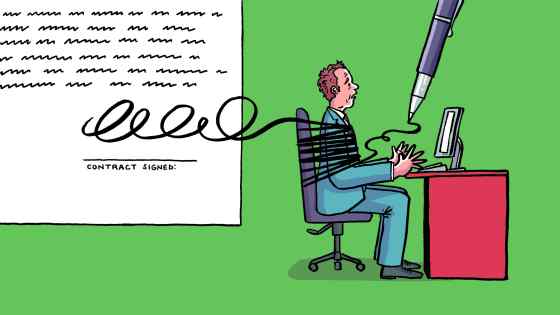
There is probably a way to square this circle, but it strikes me as an intellectual contradiction.

Business blog

Strategy & managing

About this blog Blog guide
This blog is mainly about business and strategy and how and why people who run companies take the decisions that they do.

Most of the time, John Gapper is in New York and Andrew Hill is in London. We occasionally debate business issues between us, but your comments and criticism are welcome.


To comment, please register for free with FT.com and read our policy on submitting comments.

All posts are published in UK time.

Contact andrew.hill@ft.com or john.gapper@ft.com about the Business blog.

See the full list of FT blogs.

About John and Andrew

John Gapper is an associate editor and the chief business commentator of the FT. He has worked for the FT since 1987, covering labour relations, banking and the media. He is co-author, with Nicholas Denton, of All That Glitters, an account of the collapse of Barings in 1995.

Andrew Hill is an associate editor and the management editor of the FT. He is a former City editor, financial editor, comment and analysis editor, New York bureau chief, foreign news editor and correspondent in Brussels and Milan.

Archive

« Jul Oct »September 2009
M T W T F S S
 123456
78910111213
14151617181920
21222324252627
282930