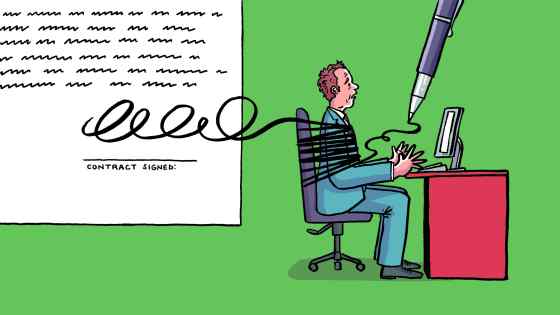



Chuck Prince and Bob Rubin’s counsel of despair

Watching Chuck Prince and Robert Rubin, the former Citigroup chairmen, giving evidence today on the bank’s losses in “super-senior” sub-prime mortgage securities, was not reassuring for anyone seeking lessons from the 2008 financial crisis.

In summary, they told the Financial Crisis Inquiry Commission in Washington that the risk management and management structures at Citigroup were state-of-the-art, that regulators were keeping a close eye on the business, and that the board was functioning correctly.

The problem was that no-one actually saw a hole looming in the $40bn portfolio of triple-A tranche collateralised debt obligations being held on Citi’s balance sheet.

As Mr Rubin, a former “senior adviser” to Citi who became chairman after Mr Prince resigned over the initial losses in November 2007, put it:

“A board cannot know what is in the position books of a financial services firm. You cannot know the granularity of the positions . . . I think we actually had very robust processes around reporting risk. We had a very well regarded head of risk management [in charge of] 2,500 people and he presented to the board and the risk management committee at every meeting.”

On the regulators, Mr Prince added:

“The regulators had offices in building. I would personally meet with regulators at least once a quarter, sometimes on a private basis. The regulators also mistook the ulimate safety of these positions. I don’t think this was a situation where they were  not active. They certainly felt active.”

So, what lesson does one draw from that? Almost none, it seems to me, apart from “stuff happens”. If there was no structural weakness in the way Citi was examining risk, and it was being correctly regulated, then how can any bank guard against such disaster again?

Apart from this, the most notable aspect of the hearing so far has been how Mr Rubin has stuck to his view (criticised by me in this earlier column) that he wasn’t an executive at Citi and was not directly responsible  for what happened.

“Having spent my career in positions with significant operational responsibility – at Treasury and at Goldman Sachs – I no longer wanted such a role at this stage in my life, and my agreement with Citi provided that I would have no management of personnel or operations.”

Mr Prince started his testimony with a robust and personal apology for the events – “Let me start by saying I’m sorry” – whereas Mr Rubin confined himself to a more general mea culpa:

“Almost all of us, including me, involved in the financial system, including financial firms, regulators, rating agencies, analysts, and commentators, missed the powerful combination of forces at work and the serious possibility of a massive crisis. We all bear responsibility for not recognising this, and I deeply regret that.”

The hearing continues, so we shall see how this goes down with the commissioners.

Business blog

Strategy & managing

About this blog Blog guide
This blog is mainly about business and strategy and how and why people who run companies take the decisions that they do.

Most of the time, John Gapper is in New York and Andrew Hill is in London. We occasionally debate business issues between us, but your comments and criticism are welcome.


To comment, please register for free with FT.com and read our policy on submitting comments.

All posts are published in UK time.

Contact andrew.hill@ft.com or john.gapper@ft.com about the Business blog.

See the full list of FT blogs.

About John and Andrew

John Gapper is an associate editor and the chief business commentator of the FT. He has worked for the FT since 1987, covering labour relations, banking and the media. He is co-author, with Nicholas Denton, of All That Glitters, an account of the collapse of Barings in 1995.

Andrew Hill is an associate editor and the management editor of the FT. He is a former City editor, financial editor, comment and analysis editor, New York bureau chief, foreign news editor and correspondent in Brussels and Milan.

Archive

« Mar May »April 2010
M T W T F S S
 1234
567891011
12131415161718
19202122232425
2627282930