
Category: Food and Drink

John Gapper

Starbucks is still struggling to remake itself amid a global economic downturn that has dented people’s willingness to pay a lot for a frothy cup of coffee.

It does not seem to have made up its mind whether to become more of a value brand or stick with being a premium retailer. In fact, it is sending out signals that it wants to do both simultaneously.

So here is my suggestion: why doesn’t it become a retail bank as well as a coffee chain?

I realise that this sounds like a ridiculous idea (and may in fact be a ridiculous idea) but hear me out.

John Gapper

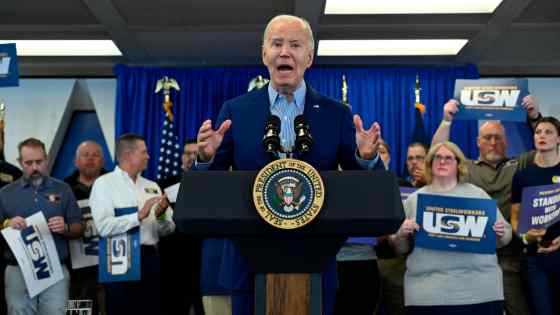
It seems that Chrysler could eventually end up under the majority ownership of the UAW, its main union, with Fiat holding a minority stake. It sounds awfully like the revisiting of a past era.

In the 1980s, there was a rash of employee-owned companies emerging out of troubled private ownership. In 1994, United Airlines became majority owned by its employees after all else had failed.

The employee share ownership movement was popular as an alternative to bankruptcy for unionised companies in financial trouble. It was supposed to cement the commitment of workers.

But it did not deliver the goods.

United Airlines went bankrupt in 2002, despite hopes that co-operation between management and the unions would solve previously intractable problems.

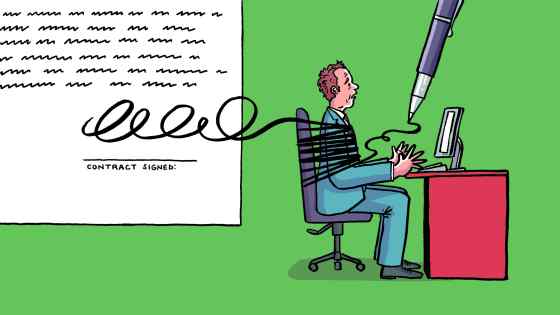
Now, the UAW reportedly stands to gain a 55 per cent stake in return for giving up contract entitlements. This is intended to head off the threat of Chrysler’s going into Chapter 11 bankruptcy.

I wish I felt more optimistic about it. The Obama administration has declared that it sees no future for Chrysler as an independent company and has pressed for it to strike a deal with Fiat.

But who knows what obstacles lie with a union-dominated Chrysler depending on Fiat for its viability? It does not feel like a stable solution to its troubles.

John Gapper

Good grief. Every so often, one learns something shocking about markets and this morning I found out that wholesale tea is priced in dollars rather than sterling (or the Indian or Chinese currencies).

This means that the British tea drinker is going to suffer even more from the rising price of tea than Americans because of the fall in the value of the pound against the dollar.

Droughts in tea-producing countries are pushing up the wholesale price of tea leaves and, as this FT piece points out, currency weakness is compounding the problem for the UK, which is now the second-largest importer of tea, having been overtaken by Russia.

Russian tea aficionados are presumably drinking to the recent resurgence in the rouble against the dollar, as a result of a bounce in oil prices

It feels a bit unfair for tea to be priced in the US currency when this remains a coffee-drinking culture, on the whole. One can easily buy British tea here, but it is getting ever pricier.

It is enough to make one wish for a global reserve currency, as those tea-drinking Russians would prefer.

Update: Felix Salmon, who has moved from Conde Nast Portfolio to Reuters, points out that I am falling for the denomination fallacy. So does an acerbic commentator below.

John Gapper

I am not sure I believe the assertion by John Rishton, chief executive of the Dutch food retailer Ahold, that people will keep buying higher-priced food in a recession because it is an affordable luxury.

“It is relatively easy to forego a flat screen television, it is relatively easy to cut back on expensive luxury durable items,” John Rishton, chief executive, told the FT.

“[But] people have to eat and the question is when people are cutting back in all these other areas, are they also going to cut back on some of the small luxuries that they enjoy with their families? Evidence to date suggests the answer is no.”

Ahold is primarily a European company – although it owns some US supermarkets – but the evidence from the US suggests the answer is yes.

There have been various straws in the wind reported in the past few days. Tesco, the UK supermarket chain, is starting to discount in its California retail chain Fresh & Easy because its effort to replicate its premium food strategy in the US has not worked as planned.

“We may have assumed that certain elements of the Fresh & Easy brand would do the work for us and we would not have to go down and dirty on price. That may have been a mistake,” said Tim Mason, head of Tesco’s US business.

Meanwhile, the New York Times has a piece this morning on how Starbucks is trying to change its pricey  image in the US with new products such as a $3.95 breakfast of coffee and an egg sandwich or cup of oatmeal. More generally, the newspaper’s advertising columnist Stuart Elliott observes:

It was only a year or so ago that the concept of affordable luxury meant a Coach bag, Tiffany bauble or Starbucks latte. Since then, the recession has defined splurging downward to the price level of a can of soda, pack of gum or candy bar.

It could be that there is some cultural difference at work. The US is a very price-conscious market and many European companies go astray simply by charging too much for the mass consumer to bear. That was true even before the recession took hold.

But you can also see the effects of cutbacks in consumer spending on supermarkets and food groups in Europe. Tesco, for example, is price-cutting in its UK supermarkets.

I wish Mr Rishton luck but I doubt whether Ahold will escape unscathed.

John Gapper

As an orange juice consumer, I have observed the uproar over the new Tropicana cartons with bemusement. Even before a revolt blew up, I wondered what on earth Tropicana was thinking.

For those unfamiliar with this storm, Tropicana has just been forced to go back to its original packaging in the US for its orange juice because so many people dislike the new style.

The company is correct to retreat because the new packaging had the effect of making Tropicana look like a European private label brand, while lacking the European virtue of functionality.

I carried out a consumer survey of my own this morning by asking my seven-year-old daughter about the cartons. “They’re silly. You don’t know what kind of orange juice it is,” she replied.

Indeed. Take a look at the image above (via Jeff Bercovici). You will note that the original packaging on the left immediately informs you that this is “no pulp” Tropicana.

It does so by having a big orange block on the top and an orange carton top. If you wanted one of the many other varieties – high pulp, calcium etc – you could pick it out on a supermarket shelf simply by looking at the colour of the package.

Apart from this, the original Tropicana packaging told you want it was by having a photograph of an orange and had pleasantly bouncy lettering, which converyed a Florida theme.

The new packaging, however, removes all these signals. Every carton is roughly the same colour and relies on a few words to signal the different varieties.

It is also oddly European-looking, with its lower-case sans serif lettering. In general, I am more of a fan of European than present-day US design, but this is a poor example.

The affair has done little good to the reputation of Peter Arnell, a Madison Avenue guru who worked on the redesign for Tropicana. For those who want a bit of Schadenfreude, here is a video of Mr Arnell discussing his agency’s work before the debacle emerged.

John Gapper

Nespresso, Nestle’s brand of espresso coffee and coffee makers, seems to be going from strength to double strength, according to the company. The brand’s annual sales grew 30 per cent last year, taking them past the SFr2bn mark well ahead of schedule, the New York Times reports.

I wrote a column about the success of Nespresso and the similarities – such as the combination of products and services – that it bears to Apple’s iTunes and iPod (and indeed iPhone) combination. It appeared about a year ago and, despite the recession, Nespresso is still doing well.

A year on, here are two further thoughts about Nespresso and such “category killers”.

One is that, in various industries, one device has a tendency to become the category winner, despite intense competition from others. The winning company finds a way to pitch its product in what turns out to be the most adroit and distinctive way.

Nespresso did that for the single-serve espresso market, as did iPod/iTunes for MP3s. Amazon’s Kindle shows signs of becoming the dominant electronic book reader, as I have observed elsewhere.

The second is that Nespresso is unusual in coming to the US relatively late, having first become entrenched in Europe. It is unlike the iPod and the Kindle, which is still only available in the US, while Amazon talks to European mobile phone operators about wireless deals.

Companies in the US, being the world’s largest economy and single market, has had considerable advantages in producing dominant consumer devices (with occasional exceptions, such as video games consoles, which have mostly emerged out of Japan).

I expect that this will gradually change, as globalisation (despite its current crisis) proceeds. Nespresso is a sign of that evolution.

John Gapper

I can see two obvious flaws in the proposal by David Paterson, governor of New York (and Eliot Spitzer’s successor) to impose a “fat tax” on soft drinks such as Coca-Cola and Pepsi while allowing the diet versions of the drinks to escape.

One is that, if it really worked as advertised in making people cry off Coke and Pepsi, then the measure would not raise sorely-needed taxes for New York. In practice, the health aspect seems more like a cover story, rather like marketing taxes on petrol as “green taxes”.

The second is that I suspect it would be a very regressive tax. While people from all income brackets drink sugary soda sometimes, I think the upper middle class must drink less of it than poorer people.

Indeed, one of the notable social divides is modern society – which is evident in New York in particular – is that rich people tend to be thinner than poor people. Their diet is better and they are more inclined to keep fit.

It is an unfortunate fact, but it does mean that “health taxes” probably end up hitting the poor disproportionately.

John Gapper

Is Big Cereal going the way of Big Pharma?

I ask because there seems to be some evidence of sagging innovation in the all-important breakfast cereal market.

Consider this article in Fortune that extols the relentless efforts by General Mills, the maker of Cheerios, Wheaties and Lucky Charms, to fatten its margins by cutting costs. It cites General Mills’ elimination of letter shapes in its Hot’n'Spicy Chex Mix, which has provoked this online protest petition.

Then consider this chart of branded cereal innovation in the 20th century produced by Geek Out New York. It shows a burst of cereal creativity in the mid-century that brought us such great names as Rice Krispies (1928), Cheerios (1941) and Special K (1956). There is a history of Cheerios here.

Business blog

Strategy & managing

About this blog Blog guide
This blog is mainly about business and strategy and how and why people who run companies take the decisions that they do.

Most of the time, John Gapper is in New York and Andrew Hill is in London. We occasionally debate business issues between us, but your comments and criticism are welcome.


To comment, please register for free with FT.com and read our policy on submitting comments.

All posts are published in UK time.

Contact andrew.hill@ft.com or john.gapper@ft.com about the Business blog.

See the full list of FT blogs.

About John and Andrew

John Gapper is an associate editor and the chief business commentator of the FT. He has worked for the FT since 1987, covering labour relations, banking and the media. He is co-author, with Nicholas Denton, of All That Glitters, an account of the collapse of Barings in 1995.

Andrew Hill is an associate editor and the management editor of the FT. He is a former City editor, financial editor, comment and analysis editor, New York bureau chief, foreign news editor and correspondent in Brussels and Milan.

Archive

« JanFebruary 2012
M T W T F S S
 12345
6789101112
13141516171819
20212223242526
272829