Barclays

John Gapper

Getty Images

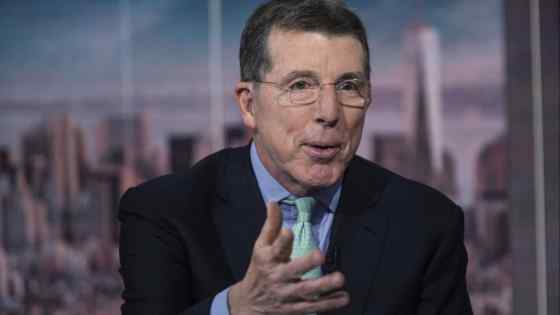
Antony Jenkins, Barclays’ new squeaky clean chief executive, is winning good reviews today for his attempt to turn his back on the “aggressive, short-termist” regime of his predecessor, Bob Diamond.

That includes shutting down the bank’s controversial, but very profitable, tax avoidance unit. Conveniently, the announcement coincides with an example of what exactly this unit was doing.

BNY Mellon Bank has just, very expensively, lost a tax battle with the US authorities over an extremely complex swap arrangement dreamed up by Barclays. The judgement will cost the US bank about $850m. Read more

Andrew Hill

Simon Fox of Trinity Mirror, the UK newspaper and publishing group, is the latest chief executive to attempt to give a restructuring plan a sense of focus, simplicity and unity by attaching “One” to the company name. “One Trinity Mirror” – which unifies the regional and national newspaper divisions under a “flatter, more efficient management structure” – follows in the footsteps of One Ford, One Siemens, and One Anglo (at Anglo American), to name just a handful.

I prefer the “One” theme to some of the other names applied to past restructurings. Among my least favourite: “Shape 2012″ at Metro, the German retailer (“Pear-shaped 2012″ would have been more appropriate, as one observer pointed out ); Reuters’ “Fast Forward” – a scheme that predated the Thomson merger and led to mordant humour among the newly redundant about having been “fast-forwarded”; and law firm Linklaters’ “Project New World“, with its sinister Aldous Huxley overtones. Read more

John Gapper

There is a contradiction at the heart of legal actions piling up against large banks, including Barclays, for distorting Libor. Half the plaintiffs are complaining that the rate was kept too high; the other half that it was kept too low.

One lawsuit filed in New York by Berkshire Bank in July accuses the Libor-fixing banks of hurting lenders by artificially depressing the lending rate. As the Wall Street Journal reported:

The lawsuit effectively argues that the alleged manipulation short-changed lenders by helping borrowers pay less for mortgages and other loans.

 Read more

Andrew Hill

The contrast between the rhetoric of James Gorman, chief executive of Morgan Stanley, and that of his Barclays counterpart Antony Jenkins – in interviews with, respectively, the FT and the BBC – underlines differing attitudes to the future of banking in the US and Europe.

In remarks squarely addressed to shareholders, Mr Gorman suggests jobs must be cut and pay curbed at Morgan Stanley; Mr Jenkins’ comments, on the other hand, are aimed directly at regulators, politicians and the general public.

That’s partly down to context – the BBC interview was filmed during a visit by the new Barclays chief executive to a UK glass manufacturer, part of Barclays’ campaign to show it is helping customers to export more. Here’s Mr Jenkins:

Barclays has a significant job to rebuild trust, but I’m also confident that we can. It goes back to what we do: if we serve customers and clients, day in and day out, in a way that people perceive as socially useful, then we will rebuild that trust.

 Read more

Andrew Hill

Antony Jenkins, new chief executive of Barclays, and Rich Ricci, chief executive of corporate and investment banking, have said the right thing. Can they now do the right thing?

The rhetoric of their speeches to analysts on Monday was fine. Mr Jenkins said Barclays would “operate to the highest ethical standards. It will be balanced, less risky and more profitable”. Mr Ricci expanded on this:

We have always scrutinised our businesses based on their ability to generate returns, with careful evaluation of risk and controls embedded in that analysis. Now however, I feel it is appropriate to modify that assessment by explicitly looking at reputational risk as the first hurdle. We have to take a fresh look to see if there are products and services in which, given the changing environment, we no longer deem it appropriate to do business, regardless of financial return.

 Read more

Andrew Hill

Barclays may rue having declared its involvement in the Libor lending rate scandal first, but as a consequence it has had first choice of “City grandees” to replace its chairman, Marcus Agius. The bank has managed to land the grandest of those grandees, Sir David Walker.

Author of the Walker report on governance in the financial system (probably the most downloaded document at Barclays’ HQ this week), Sir David is the squeaky-clean face of the old word-is-my-bond City of London, with experience on both sides of the regulatory fence. In 2009, he was one of five wise heads appointed by the Financial Services Authority to vet senior appointments to UK financial institutions (it might be interesting to know just how many of the current and outgoing crop of Barclays’ senior management he helped to approve). If you’re in doubt about what a grandee is, or whether you are one, take my patented multiple-choice questionnaire, published at the time. Read more

Andrew Hill

Bob Diamond arriving to give evidence to the Treasury Select Committee on interest rate fixing. Getty Images

Bob Diamond arriving to give evidence to the Treasury Select Committee on interest rate fixing. Getty Images

Bob Diamond’s keenly awaited appearance before the Treasury select committee promised much and has so far (it was still going on when I broke off to write this post) offered very little for those seeking to know more about the Libor rate-fixing scandal.

But I think the former Barclays chief executive’s responses have shed light on one puzzle: how did the bank underestimate the public revulsion to the outcome of the investigation so badly? The short answer: the bank thought it would receive more credit in the court of public opinion for having helped expose the mess. Read more

Andrew Hill

Barclays has finally got the order of resignations the right way round. Bob Diamond’s departure – and the temporary restoration of Marcus Agius as chairman, a day after announcing his own exit – hands the can to the man who should have carried it in the first place.

As I wrote in my column on Monday, after Mr Agius said he would go, the resignation of the chairman didn’t mean Mr Diamond had “dodged the bullet aimed at both of them”.

Yet I still think there is worrying evidence that Barclays senior directors are in denial. In ringing the wagons against outside attack, they seem to be pursuing the line that talented individuals have been laid low by external “events” – the word used in Mr Agius’s resignations statement (now rescinded). Read more