




Column: America’s human capital is tested
July 7, 2008
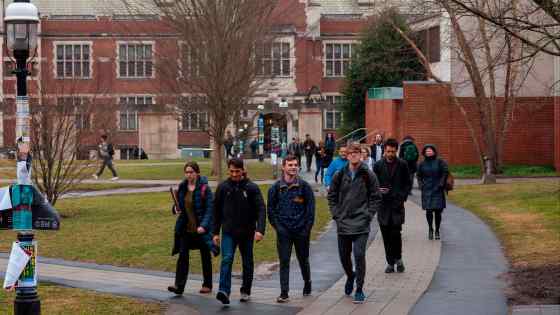
A startling and profoundly important fact about the US economy has received surprisingly little attention. The educational quality of the country’s workers is starting to decline – not just relatively (because other countries are catching up and moving ahead) but also, for the first time, in absolute terms. Over the coming years, baby-boomers departing from the labour force will have better educational qualifications than the younger workers replacing them. If the ultimate source of an economy’s ability to grow and prosper is its human capital, the US is in trouble.
For decades the educational quality of the US labour force surged. In 1940, less than 5 per cent of the population aged 25-64 had at least a four-year college education. By 2000, the proportion had increased to nearly 30 per cent. Successive generations of workers improved on the educational attainments of their predecessors. Retiring workers were replaced by better-educated youngsters. This remorseless accumulation of human capital helped fuel the country’s postwar growth. According to at least one authoritative study, it was the principal driver.
This trend came to a halt with workers now aged 55-59. Younger cohorts are no better educated than these soon-to-retire boomers. Broadly speaking, educational quality has topped out – and on at least one measure, it is actually deteriorating. In 2006, Americans aged 55-59 collectively possessed more masters degrees, professional degrees and doctorates than Americans aged 30-34. This impending loss of educational capital is entirely outside the country’s experience.
The remainder of this column can be read here. Please post comments below.
Back to Clive Crook's blog homepage


“Over the coming years, baby-boomers departing from the labour force will have better educational qualifications than the younger workers replacing them. If the ultimate source of an economy’s ability to grow and prosper is its human capital, the US is in trouble.”
Isn’t that making a slightly dangerous assumption? That formal education translates directly into human capital?
Do we think that all those media studies (insert course of your choice here) graduates are an increase in human capital over what might have happened with three years in the workforce?
Not sure I’d want to base an argument on that presumption.
Posted by: Tim Worstall | July 7th, 2008 at 1:10 pm | Report this commentThe degradation of American educational standards and the hostility to admitting greater numbers of skilled foreign professionals are mutually reinforcing. Less educated Americans are more likely to believe myths about foreign professionals, such as that they allegedly steal US jobs by working for lower wages.
Less educated Americans are also more likely to accept negative racial stereotypes, whether relating to comparatively well educated Asians, or to less skilled Latin Americans, as valid, and to be taken in more easily by hate group propaganda. It would be a mistake to underestimate the power and influence of these groups in shaping current attitudes and policies toward immigration.
In the above comments, I do not mean to imply that Asian immigrants in the US are all well educated or that Latin American ones are all unskilled, something which is patently not the case, and which would be indulging in the same type of ethnic stereotyping that these comments are meant to oppose.
Posted by: algasema | July 7th, 2008 at 1:26 pm | Report this commentThe business education programs in the US leading business schools at universities have to be reshaped completely with the purpose to create the XXI century human capital. In this connection, the suggestions by Professor Howard Gardner to encourage more Harvard students to consider public service and other careers beyond the consulting and financial jobs may be interpreted as inability to educate the leaders, who have enough skills and entrepreneurial experiences to establish the new businesses in the US. This is a weak move. My vision is that the educational programs at North American universities are mainly concentrated on the business evaluation methodologies. Professors develop the students skills to evaluate rather than to innovate and create. Therefore, the efforts have to be taken to encourage students to found the new high tech businesses to create the new nano-electronic devices, software, services and so on. The students from Harvard shouldn’t be advised to try to get the governmental jobs and stay for the rest of their life on the governmental spending list, because it is absolute nonsense, which will lead the nation to the state of collapse rather than to the state of prosperity.
Posted by: Viktor O. Ledenyov | July 7th, 2008 at 2:17 pm | Report this commentFirst, an interesting fact: some graduate programs, especially math and science, in the best universities of the United States now have about two-thirds foreign students.
In a globalized world, this seems unavoidable. The quality of a university is best measured by the quality of the students it attracts.
And the hard fact is many, many Americans cannot compete when the contest for entrance becomes open and international, as it is now pretty much for the first time.
After all, only half a century ago, places like Harvard had unspoken quotas even for American Jews. Today the Chinese and others represent a vast intellectual resource, and, importantly in the American system, one well able to pay.
The Chinese students I know actually view coming to North American universities as far less difficult and demanding than the best ones in China. Money isn’t even a consideration as their families are very wealthy. Of course, they also enjoy the reputation of prestigious North American names.
Places in China are disproportionately small in number for the size of the intellectually-qualified population.
I believe this relates to one of the key reasons China has been so successful in recent decades: it has an extraordinary intellectual endowment. In Mao’s Dark Ages, the natural intellectual abilities of the Chinese had little outlet. Now it is bursting out like flood waters from a broken dam. Pretty much the same for India.
There are others factors at work too.
Despite America’s great institutions, the nation has a huge number of highly questionable colleges and universities. Post-secondary education has become seriously debased in the United States over the last fifty years.
Part of the problem is the post-war idea of “my kid’s goin’ to college,” no matter whether he or she is genuine college material. The whole American education system has stretched itself to fit this fatuous notion.
Inflated grades in American high school are a scandal. There are places where 70% of the students end up on the honor roll, reducing the concept of distinction to meaninglessness.
Universities can’t even depend on transcripts to tell them anything. That is why the SAT/ACT tests have become important. The tests function as filters.
But many places either do not use these tests or weight them very differently. Also, even the prestigious universities use special criteria for some, as for example the sons and daughters of the well-off or sports-scholarship students.
America has institutions giving “degrees” in subjects like circus or recreational management. There are colleges where half the students are in a soft, utterly unacademic subject like education. They churn out what might be called bare-foot teachers for the thousands of poor public schools in America. Because standards of admission are low, they are naturally admitting many who can’t finish even a soft course.
Can any thinking person truly believe George Bush got into Yale by his competitive standing? He was what they call a ‘legacy’ admission, his wealthy family being expected at some point to top up the endowment coffers. Prestigious names - and Bush’s father did have a prestigious career, unfortunately young Bush got his intellectual endowment from Barbara, the dimmest woman in the White House in ages - count this way too, since universities like to have them on the graduate rolls.
The American tradition of athletic scholarships, always a very questionable practice, has become a disgrace. Young people of absolutely no academic inclination or potential are given scholarships to play for teams whose function is donation-gathering.
It’s just a cheap trick, and it effectively cheapens the meaning of university because again administration needs for money and prestige (in athletics) over-ride academics.
If schools want teams to garner donations from alumni, they should simply pay the players for what they do. This would bring more benefit to them and more credit to the institution. As it is, the young people either do not graduate or graduate with meaningless degrees in return for bringing in the crowds to “homecoming.”
Posted by: JOHN CHUCKMAN, TORONTO | July 7th, 2008 at 3:44 pm | Report this commentRather than being tight as assumed by this article, I would say the market for IT jobs in the US is flooded.
For my last several jobs, I was one of dozens applying for each position. Entry level jobs have virtually disappeared. Salaries have stalled over the past few years, while benefits decrease. Even simple data entry level jobs require years of experience to even be considered. More advanced jobs are virtually nonexistent, and while anecdotes do not make hard evidence, I personally know several very experienced and qualified individuals that have ended their careers in IT for other opportunities due to the lack of acceptable jobs. Both employees of a local gas station hold CompSci degrees.
If there truly was a shortage, we should be seeing compensation increase, and employers would not be getting dozens to hundreds of applications for every open position. We should not be seeing people with over a decade of experience go back to vocational school. There is nothing other than the self-serving cries of tech companies for more qualified personnel that would lead us to believe there are not enough qualified individuals in the job market already.
Posted by: nakajoe | July 7th, 2008 at 9:24 pm | Report this comment“I would say the market for IT jobs in the US is flooded”…
And I can’t find (no one else can either) a decent programmer that will work for under $100/hour. Something is missing in the skills sets in practice, not in the theoretical certifications gathered via the education industry.
JBP
Posted by: John Powers | July 7th, 2008 at 10:11 pm | Report this commentSome of these comments seem a bit off the point. Mr. Crook is discussing the social effects of a failing school system in the US, combined with a closed or semi-closed door to immigrants. If one wishes to drift away from that central point, let us drift away to the matter of political correctness, surely one of the most pernicious concepts ever to come down the pike. Heaven forbid that we should say any unpleasant truths within higher education! All children are wonderful, all are beautiful and brilliant, all are equal, and everyone needs above all a high self-regard. As the kids say, yeah, right. And while we’re at it, let’s assert yet again that the No Child Left Behind act is both popular and effective!
Posted by: Dr. Kendra Gaines | July 7th, 2008 at 10:53 pm | Report this commentProfessor Howard Gardner advise addressed to the Harvard MBA graduates to start looking for the open governmental jobs is a serious reminder to the rest of the nation about the present deep recession in the US economy. http://www.deanstalk.net/deanstalk/2008/07/big-paycheck-or.html#comments
We know one Yale graduate and Harvard MBA, who is the US President George W. Bush. We can see the results of his governance at White House in the US. It is necessary to note that there is no result at all, because the national economy doesn’t function well.
We can take another example from Canada. The Mayor of Toronto, who is a Harvard graduate, led the City of Toronto to the complete environmental and economic disaster. The only idea that David Miller had intelligence to introduce during meeting at City Council was: To raise the property taxes paid by home- and business- owners. Then, Mr. Miller decided to appeal to the federal government with the purpose to obtain more money from federal budget.
Do American and Canadian citizens need more Harvard graduates like the US President George W. Bush and the Mayor of Toronto David Miller at key governmental jobs? I believe that the American and Canadian people have to decide on their own, but as a European I think that it is enough. This is a time to introduce the long awaiting changes in North America. The American and Canadian citizens have to act immediately.
Posted by: Viktor O. Ledenyov, Ukraine | July 8th, 2008 at 12:42 pm | Report this commentVL,
I am with you on a moratorium on Harvard Grads as president.
The current Harvard Alum candidate seems to have little knowledge of basic economics or foreign policy, stressing his media generated celebrity rather than any leadership ability.
JBP
Posted by: John Powers | July 8th, 2008 at 1:03 pm | Report this comment“Americans aged 55-59 collectively possessed more masters degrees, professional degrees and doctorates than Americans aged 30-34.” Though some compelling points are made in the article to further discuss this, I don’t this this fact gives an accurate picture of the education of the current versus past workforce.
Many Americans don’t achieve the masters or PhD level until their late 30’s, as the high cost of education forces them into the work force after four years of college - so that they can get reimbursement for further education from their employers.
I’d like to know how many of those baby boomers had their advanced degrees by the age of 34 versus those that achieved it later in life.
Posted by: Andrea Keenan | July 8th, 2008 at 1:23 pm | Report this comment“Heaven forbid that we should say any unpleasant truths within higher education! All children are wonderful, all are beautiful and brilliant, all are equal, and everyone needs above all a high self-regard.”
Welcome to your future, Kendra Gaines. It was during the course of my lifetime that American schools went from a realistic philosophy towards students to the mush-brain mess today.
There are several reasons for this. As I wrote, above, there’s the postwar “my kid’s goin’ to college” popular attitude. I sense this in Britain today from the newspapers.
There is the immense grade inflation that has taken place, and today the muddy-thinking education establishment embraces it as a social measure. This clearly is underway now in Britain in the national tests that used to be highly demanding.
There is the loss of authority of teachers that has now reached the ridiculous level of teachers being taught in their intellectually-bankrupt education courses to avoid the “teacher-centered classroom.” I don’t doubt that this, too, is underway in Britain.
There is the effect of the teacher’s unions on the finances of what North Americans call public schools. Once, wages were the minority portion of the budget for running a school. Today they are on the order of 80% of the budget. That leaves facilities and maintenance and special program budgets bare. And for this huge increase in money over fifty years, there has been no measurable increase in performance.
Undoubtedly the same thing is underway in Britain. One can just sense the growing expectations on all fronts in post-Margaret Thatcher/Tony Blair Britain. Good in many ways, but almost certainly harmful to the quality of education.
I do think, as I have written before, that the U.S. will unavoidably slip in this regard through time. It is one of a number of forces working over time towards a relative decline of America. China simply has a massive intellectual endowment. On all tests of intellectual ability, Asians average higher than Caucasians, who in turn average higher than Blacks. Also on all international achievement tests, Asians do better, especially in crucial areas of science and math.
We should recognize, too, that the great U.S. educational institutions are comparatively new, at least in the form we now of them. A place as distinguished as the University of Chicago only came into existence about a century ago. Today it has had more Nobel Laureates than any other university, but many came originally from other countries. Many of the distinguished people at American universities were poached from Europe, not home-grown. U.S. wealth has provided the institutions and resources, but the country’s education system has not, even in the past, been able to staff them up adequately to the level of world competitiveness.
Sooner or later, the U.S. will formally recognize its problems and may alter its immigration patterns accordingly, but such change is politically very difficult for the U.S. This is a country where a presidential candidate still feels obliged to sound like Annie Oakley in a major state. This is a country where a simple translation of the national anthem into Spanish and played on Spanish radio raised a firestorm, few even realizing the irony that the tune of their national anthem comes from an old English song.
This is a country that has a constant ferocious debate about migrants from Mexico, where we had for a considerable time – and may still have for all I know - a large private armed militia patrolling lands near the southern border at night to keep Mexicans out. And this is a country that regularly points its finger at certain Asian nations, accusing them of unfair trade or currency manipulation, and in the process heats up xenophobic attitudes. And it regularly does the same with unproved accusations about Chinese spying.
Xenophobia in a land of immigrants? Yes, indeed, seemingly ironic but true.
Posted by: JOHN CHUCKMAN, TORONTO | July 8th, 2008 at 1:58 pm | Report this commentPerhaps the immigration which Mr. Crook suggests as the solution is the problem. With so many high-skilled immigrants available, the wages of high-skilled work are no longer high enough to justify taking years off to get a doctorate.
Posted by: Robert Shelburne | July 8th, 2008 at 3:34 pm | Report this commentIn California educational levels and competencies have gone way down because of the masses of illegal ( and legal) uneducated and non-educationally oriented Latin Americans immigrants. The schools in LA, for example, are a wreck.
Posted by: John | July 8th, 2008 at 9:16 pm | Report this commentFinland has a long record of almost no immigration, is caucasian, and tops the list of countries in educational achievement.
Posted by: John | July 8th, 2008 at 10:02 pm | Report this commentKendra Gaines should be congratulated for her fine letter in today’s FT print edition pointing out the downward trend in the abilities and motivation of American students, based on her experience as an educator. Citing the example of Chinese born or first generation students as a notable exception, she asks:
“Do you suppose it is sheer envy that motivates the immigrant visa limitations?”
My own experience as an immigration lawyer representing professional level foreign workers bears this out. No matter which part of the world foreign students in the US may come from, and no matter what their innate levels of ability may be, they tend to be highly motivated to succeed academically and in their careers, compared with many American students.
The only thing I would add is that it is not only envy that is behind current US visa limitations. These is a deeper and more pernicious belief in white racial superiority which has long been part of US attitudes toward immigration. Indeed, for much of the past century, beginning with the Chinese exclusion laws in the 1880’s and continuing through the racially inspired “national origin” immigration quotas in force from 1924 to 1965, a belief in the superiority of “Caucasians”, similar to that expressed in John’s above comments, was the foundation of US immigration law.
John’s comments also show that negative stereotypes against unpopular immigrant groups, whether Irish, Polish, Jewish or Italian in the past, or Latin American today, have hardly disappeared from America’s immigration debate.
This is despite the fact that, by many accounts, most of today’s Latinos learn English faster and try harder to educate themselves and their children that was the case among those earlier (and “whiter”) immigrants.
Roger Algase
Posted by: algasema | July 9th, 2008 at 7:50 am | Report this commentSorry, I meant “than was the case”, not “that was the case”.
I would also like to explain why I put “whiter” in quotes in referring above to Italian, Jewish and certain other European Immigrants. 80 or 100 years ago, immigrants from Southern and Eastern Europe were not regarded as white by American nativists.
Going back to the mid 19th Century, African-Americans were called “Smoked Irish”, which, as can be imagined, was not meant to be a compliment to either group. In the 18th century, no less of a worthy than Benjamin Franklin himself wrote that German immigrants in the colony of Pennsylvania could no more adopt the English language and English customs than they could change the color of their skin.
To return specifically to the subject of education, it is, of course, not only immigrants who are unfairly accused of being difficult to educate. It was not so long ago that the notorious book “The Bell Curve” tried to “prove” that African-Americans allegedly had less innate ability than whites.
Also to get back to John’s comment about allegedly “non-
educationally oriented” Latin Americans, one has to ask how much of this is due to the efforts of white nativists to have laws enacted barring children of Latin American illegal immigrants from attending US public schools.
Recently, two of my close friends, a husband originally from England and his American Jewish wife, told me that their adopted daughter, who was born in Latin America but brought to the US as a child and who does even speak Spanish, has been subjected to anti-Latino racial taunts by her fellow students on the campus of a well known American university with a long standing reputation as one of the most liberal in this country.
Specifically, the students reportedly asked her what a “Hispanic” like herself was doing in an educational institution. Stereotyping an entire ethnic group as allegedly uninterested in education is not exactly conducive to an intelligent discussion of either the educational system or of immigration, John. Verdad?
Posted by: algasema | July 9th, 2008 at 9:19 am | Report this commentSorry for another typo: I meant “an Hispanic”.
Posted by: algasema | July 9th, 2008 at 9:23 am | Report this commentOne more typo: I meant “does not even speak Spanish”. Apologies.
Posted by: algasema | July 9th, 2008 at 1:41 pm | Report this commentUS Universities accept more foreign students
because the Universities charge much higher fees
compared with a US born student; this is required
by state law. Basically, the profit margin from
foreign students is much higher.
Furthermore, as a former integrated circuit design engineer, BSEE, turned lawyer, I can say law is more profitable. Also, there is NO organization claiming there is a shortage of lawyers in the US
Posted by: John, California | July 12th, 2008 at 4:54 am | Report this commentand demanding the increased immigration of lawyers. When I had to decide between an MSEE or
a JD in law, it was not a difficult decision.
CEOs claim the US has a storage and we need more
immigrant engineers. The consequence is more US
born students will select law, medicine or
plumbing. This is all fine with me. If I were the
CEO of a semiconductor company I would always
claim there is a storage of labor and have the
government subsidize its creation. That is good
business.