The Atlantic/Aspen Institute/Newseum event

October 2nd, 2009 7:31pm

This was the second day of a conference organised by The Atlantic, the Aspen Institute and the Newseum.

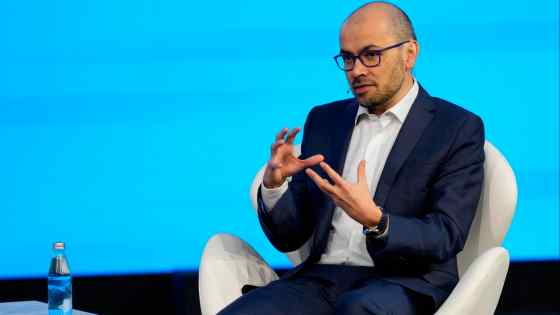
David Leonhardt’s interview with Alan Greenspan was interesting. (Megan McArdle’s write-up is here, along with a video.) Greenspan emphasised the need for higher capital requirements in banking and finance. He was also asked to name the issue that we would one day come to see as today’s biggest neglected economic-policy problem. Public debt, he said. Asked how we solve that problem, he said with higher taxes–they will be needed even if control of spending can be tightened–and a VAT would be the best way to raise them. He is right on all those counts, in my view. What’s striking, though, is that as a matter of practical politics the conversation about restoring fiscal balance has not even started. In the end, of course, the country will have to confront this question. But when and how will the inevitable present itself? What kind of further crisis will it take to get this subject on the table?

In another session, political strategists Steve Schmidt and Bob Shrum discussed, among other things, the prospects for next year’s elections. (See Marc Ambinder’s write-up.) Whether and how far the Republicans make progress will depend on the strength of the recovery, they noted. If the economy surges back, the administration and the Democrats might do quite well, said Shrum. At the moment, most economists seem to be expecting a fairly tepid expansion, with unemployment still higher than 10 percent on election day–but not all. The column I mentioned in my previous post mentions a paper by Michael Mussa of the Peterson Institute. This argues, and quite persuasively, I think, that the recovery will be a lot stronger than that, with unemployment falling to less than 9 percent by the end of 2010. Democrats seeking uplift should read it.

The G20’s unfinished business

October 2nd, 2009 5:19pm

My new column for National Journal argues that the success of the G20’s efforts to stabilise the world economy will turn on whether governments can mend the capital-adequacy regime for banks and other financial firms. [The link to the article expires in a week.]

The most important unfinished business is reform of financial regulation — and the most crucial piece of that fix is capital requirements. To prepare the way for the Pittsburgh summit, the G-20 finance ministers met in London, and Treasury Secretary Timothy Geithner presented some good proposals. The details are complex and troublesome, of course, but the basic principles of what needs to be done are actually quite simple and not in dispute…

Regulators have let banks hold less and less capital over the years, reasoning that bankers were competent managers of financial risk. How quaint that now seems. In effect, banks were allowed to decide for themselves how much capital was needed, and even what counted as capital for regulatory purposes. Capital has a low yield — which is why a higher capital requirement is like a tax on banks’ lending — and governments were standing by to rescue them if necessary. So they cut corners. You know the rest.

Geithner said that banks need to set aside much more capital. Big banks should reserve proportionally more than small banks. The new requirement also needs to be “counter-cyclical”: Banks should have to set aside proportionally more capital when their lending is increasing quickly. There should be an overall leverage ratio, too, as a global check on capital adequacy, even if proper amounts of capital have been reserved against specific types of “risk-adjusted” lending. And there should be a liquidity requirement so that banks have a line of retreat if their ability to borrow short-term is compromised…

The Pittsburgh meeting affirmed the need for this new regime, but the timetable for reform is vague and the G-20 partners have different ideas about what happens next. Right now, U.S. banks are better capitalized than many of their European counterparts, so Europe is complaining that it will be harder for its banks to execute Geithner’s proposal. This disagreement is liable to slow the introduction of new rules and might lead to their being watered down…

This is the G-20’s real challenge. Forget the rest — rebalancing global growth, rebuilding the International Monetary Fund, coordinating fiscal and monetary “exit strategies,” and all the other stuff name-checked in the communique. Helpful though some of that may be, none of it is indispensable (and some of it is impossible). Stricter bank capital requirements are in a category of their own. Judge the G-20 — and place your bets on the next financial crisis — according to what, if anything, it achieves on this.

Centrists and the public option

October 1st, 2009 2:29pm

EJ Dionne asks a good question: why don’t centrists approve of the public option?

It doesn’t involve a government takeover of the health-care system. The idea is that only consumers who want to enroll in a government-run health plan would do so. Anyone who preferred private insurance could get it.

The public option also uses government exactly as advocates of market economics say it should be deployed: not as a controlling entity but as a nudge toward greater competition. Fans of the market rightly oppose monopolies. But in many places, a small number of insurance companies — sometimes only one — dominates the market. The public option is a monopoly-buster.

Centrists tell us they want to hold down spending and fight deficits. Strong versions of the public option, as the Congressional Budget Office showed in its scoring of Sen. Jay Rockefeller’s proposal, cut the costs of insuring everyone.

My view on the public option has always been that I’ll know whether I like the idea when I see it explained. The problem is that the idea has been pitched as all things to all men. Centrist voters are told it won’t make much difference. Progressive voters are told it will make so much difference that the entire project is a waste of time without it.

Dionne does that very thing in recounting the public option’s virtues. The public option cannot be both an ordinary competitor, leaving your circumstances unchanged if you choose not to take it up, and a force that can balance the budget by squeezing hundreds of billions out of public health-care costs. It can be one of these or the other but not both.

Democrats have been debating whether a “strong” public option should pay Medicare reimbursement rates, something an ordinary competitor could not do. If it did, this would drive down costs and have many other (not necessarily intended) consequences. It would be a big step towards Medicare for all.  As I have argued before, there are worse things than Medicare for all, including in my view the present system. But this outcome is one of the things that the administration is saying it does not want. If you want Medicare for all, do what some Democrats do and make the case. If you don’t, stop proposing a public option that would push the system towards it.

Politically, the problem with the public option is that it has added to the uncertainty, and hence the anxiety, that surrounds this reform. People want to know where all this is heading. The public option might be nothing, or it might be everything, depending on how it is done. But when advocates like Dionne say that it can be both everything and nothing at the same time, according to your preferences, then centrist voters are right to say, “No thanks.”

Looking back at the G20

September 29th, 2009 5:35pm

Returning from a week’s vacation, I’ve been catching up on the G20 summit in Pittsburgh. I am moved, of course, by  the FT’s strictures against cynicism, but one is still entitled to ask what was achieved.

Certainly, the communique is full of fine promises and commitments. The FT summarises:

They agreed to: avoid premature withdrawal of stimulus; plan their exit strategies; launch a “framework for strong, sustainable and balanced growth”; strengthen financial regulation, via reformed rules on capital adequacy and remuneration of bank employees; reform the global institutional architecture, including reallocation of quotas in the IMF; phase out fossil fuel subsidies; “bring the Doha round to a successful conclusion in 2010”; reach agreement in Copenhagen on climate change; and meet twice in 2010, first in Canada and then in South Korea.

Well done. But was there ever any risk that they would promise instead to withdraw stimulus too soon, commit themselves to not thinking about their exit strategies, strive to make financial regulation less effective, increase fossil-fuel subsidies, abandon the Doha round, pledge to reach no agreement on climate change, or say “we may meet again next year, or we may not”? I didn’t think so. Continue reading "Looking back at the G20"

Deal with the banks while they are down

September 21st, 2009 3:49am

Bromley illustration

Economic summits are always more about messaging than substance. In recent days officials have been striving, they say, to “lower expectations” about what this week’s meeting of the Group of 20 leading nations in Pittsburgh might achieve. I had not noticed that expectations were dangerously high. I had supposed they could hardly be lower. Usually this would be no great cause for concern, but 2009 is different.

In many ways, events are following the standard pattern. One of the clearest messages from the first summit of this crisis, in November last year, was the collective commitment to hold back protectionism. Since then, every government has been bending or breaking international rules on subsidies and import barriers to protect jobs. Admittedly, they have shown some restraint, for which one is grateful. But the leaders’ fine words still cloak the classic beggar-thy-neighbour response.

On the very eve of the Pittsburgh summit, Barack Obama’s administration raised tariffs on Chinese tyres. This was probably technically legal under the World Trade Organisation’s “safeguard” procedures. It is protectionism nonetheless, and in plain breach of the earlier commitment, which Mr Obama has repeatedly affirmed. We shall see whether kneeling down to the unions in this case abates the demand for further protection, or stimulates it. My guess is the latter.

The remainder of the article can be read here. Please post comments below.

China tariffs pose needless risk…

September 18th, 2009 4:34pm

Or so I argue in this new column for National Journal [link expires in two weeks].

The fact that the China tariffs may be legal does not refute the charge of protectionism. One of the main setbacks to liberal trade since the economic crisis began has been governments’ willingness to resort to WTO-conforming trade restrictions. For instance, a country may have tariffs that are lower than the rates they have committed themselves to at the WTO — their so-called bound tariffs. So governments often have scope to raise their tariffs for the usual bad protectionist reasons, without actually cheating…

So protectionism is sometimes legal. That does not make it good policy — still less, as the administration pretends, an effort to uphold the ideal of “free and fair trade.” Of course, the Obama White House is aware of all this. In the China tires case, it knows how safeguards are supposed to work. In reality it is making a cynical political calculation. Dressing the action up as an effort to get tough on trade cheats delights the unions — which seem to regard most imports as unfair by definition — and thrills Democrats, who can use a little protectionist meat thrown their way at the moment, to take their minds off the administration’s equivocation on health care reform and the public option. The tire tariffs have nothing to do with upholding high standards in trade policy.

But note this excellent piece by Alan Beattie. It takes a quite different line:

The conventional wisdom in Washington is that this is a straight trade-off. Placate the labour unions on trade and get them to support Mr Obama on healthcare. Whisper it quietly, and be prepared for accusations of heresy to rain down on your head, but that might be a deal worth making.

Whether or not any such exchange is possible is unclear to anyone below grandmaster level in the perpetual three-dimensional chess game of acquiring, retaining and expending political capital that goes on in Rahm Emanuel’s head. (White House officials deny a trade-off, but then they would, wouldn’t they?) Yet if that is the political calculation, and if it works – two very large ifs, to be sure – it might end up being good for Americans and good for globalisation.

Actually I partly agree with Alan. If things played out this way, it would be a very good deal. Universal health care is an enormous prize and in itself the China tyres issue is small beer. I also agree with the important insight elsewhere in the column that universal health care in the US would have done more for globalisation than Nafta. Yes, absolutely. The problem is the linkage. How plausible is this trade-off in the present case?

It’s true that the unions are unhappy with the healthcare compromise that Obama is signalling he might accept. I see the connection, and refer to it myself in my piece. Still I cannot believe that they will oppose healthcare reform in the end. It is odd, surely, to say that the unions have to be bribed to accept a much stronger economy-wide safety net (even if the strengthening falls a little short of what they want).

The main question when you are thinking about the trade-off Alan describes is whether you feed or suppress the appetite for protectionism by giving way now and then. I think you are more likely to feed it–especially if you rationalise your capitulations in ways that invite new demands. As I argue in the NJ column, Obama’s biggest mistake over the China tariffs was in the way he defended them.

The future of the WTO

September 16th, 2009 6:26am

An interesting paper on the WTO by Uri Dadush of the Carnegie Endowment. His main conclusions:

  • The WTO must adopt a more flexible approach to trade negotiations, tailored to the needs of individual countries and groups. The institution should move beyond multilateral, all-or-nothing negotiations that are bearing little fruit and find ways to leverage opportunities where liberalization is taking place.
  • Though critical for the WTO’s credibility and to capitalize on eight years of negotiations, a conclusion of the diluted Doha round will not negate the need for reform. Nor should discussion of reform wait until after the Doha round has been completed, it might actually encourage progress.
  • A formal discussion about reform should get underway during the WTO’s ministerial meeting in Geneva in November.
  • The WTO is nowhere to be found in several areas of crucial concern, including food security, international financial regulation in the wake of the global financial crisis, and climate change.

Gary Hufbauer, Steve Charnovitz, and Arvind Subramanian joined Dadush to discuss the paper on Tuesday. There was broad agreement with the recommendations for the institution, but not so much on whether the Doha round was capable of being revived, or even worth reviving. (There should be a transcript here soon.)

Comments on the new US tariffs on tyres imported from China mostly agreed with the line taken in this FT editorial: the Obama administration’s safeguard action was probably legal, and unlikely to start a trade war; but nonetheless wrong-headed, ill-timed (with the G20 summit coming up), and badly presented. Further comment from Subramanian at the Peterson Institute and Simon Lester at the International Economic Law and Policy blog.

It is never too early to fear inflation

September 14th, 2009 1:16am

Bromley illustration

Is it too soon to worry about rising prices? Inflation hawks have been speaking up in the US lately, but are not getting much of a hearing. “The economy is still limping, job losses are still rising, and consumers are still reluctant to open their wallets. So it’s the perfect time to worry about inflation?” asks the New Yorker’s James Surowiecki incredulously in a recent column.

He tries to take the idea seriously, but not very hard. The economy has plenty of spare capacity; productivity is surging; inflation expectations – from the interest rate on US inflation-indexed bonds – are low, he points out. “Then why are people afraid that inflation is about to get out of control? Because they’re always afraid that inflation is about to get out of control.”

This is not even about economics, he reckons. It is a kind of twisted moralism. Inflation hawks are puritans obsessing over monetary turpitude and the debasement of the currency. Many are Republicans. Best ignore them.

The remainder of this column can be read here. Please post comments below.

Obama’s big speech

September 10th, 2009 6:31am

Once again, he rose to the occasion. My overall feeling: “This is the Obama who won the election. What a superb politician he is. Where has he been on this issue for the past six months?”

He set out to talk to the country over the heads of the politicians in front of him. About time: it is public opinion he needs to bring round if healthcare reform is to succeed. In this, the occasion both helped and hindered–helped, because it permitted a style of oratory that he does brilliantly, and which could seem false in a more modest, informal setting; hindered, on the other hand, because the audience kept interrupting, getting between Obama and the country, imposing itself on the event with its frequent, fatuous, pantomime ovations.

I thought it striking that the ovations ceased during a long, seemingly heartfelt, and very effective peroration: they stopped, it seemed to me, because the audience started listening. (Nancy Pelosi even stopped grinning.) Obama invoked Ted Kennedy as part of a renewed appeal for bipartisanship, a theme he is reluctant to abandon, and did it so cleverly that Republicans were folded in and obliged to respond.

He said that meeting the challenge of healthcare reform was a test of the nation’s moral character–which, in my view, it is. I found his closing words genuinely affecting. My guess is that many other independents will feel the same way. (In this, an earlier moment of boorish heckling from one Republican also helped.) At last, Obama emphasised the “health security” benefits of reform for those who already have insurance: they will not lose it; their out-of-pocket expenses will be capped. This is at least as important as the benefits to the currently uninsured.

All in all, I think he made the case for reform about as well as it could be made.

But what difference is it going to make? I wrote down three questions before the speech. Did he take charge of the process? Did he explain what “the plan” actually is? Did he settle the row over the public option? He should have done all these things already. Tonight I thought he made some progress in each case, but without answering any of the questions definitively. Continue reading "Obama’s big speech"

What Bernanke has to look forward to

September 8th, 2009 6:27pm

In this article for National Journal, I look at the task now facing Ben Bernanke at the Fed [the link expires in a fortnight].

I remember congratulating Alan Greenspan on his timing when he retired as chairman of the Federal Reserve Board in 2006. He left with a reputation for limitless, inscrutable wisdom — and the stresses he let build up in the economy were going to be somebody else’s problem. As it turned out, the crash that Greenspan’s policies helped to cause was the worst since the Great Depression. So the books on Greenspan’s tenure at the Fed were reopened; the man himself recanted his previous views on the economy; and his reputation was trashed, most avidly by people who had previously led the cheers.

History will not put Greenspan alongside, say, Paul Volcker on the roll of great Federal Reserve chairmen. But is such a place something that Greenspan’s successor might aspire to?

Of course. Why else take the job? Ben Bernanke, just named by President Obama to a second four-year term starting in January, has had to cope with the immediate consequences of the financial crisis. He has taken the Federal Reserve into unexplored and even constitutionally dubious territory. His performance may not have been flawless, but the boldness of his interventions — such a contrast with his quiet, scholarly demeanor — has been amazing. And the innovation is by no means over.

I spend some time discussing David Wessel’s excellent new book, In Fed We Trust. I’ll post a fuller review of later this week, but in the meantime consider it recommended.