
IT for execution: It’s not how much you spend, it’s how you spend it

July 8, 2009 11:09am

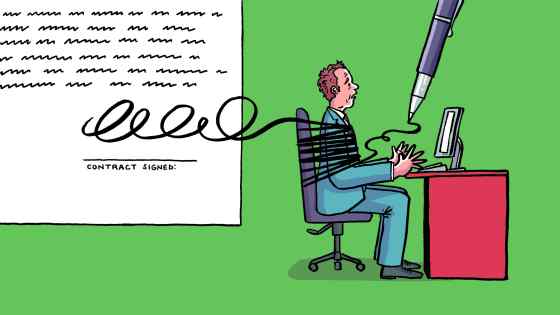
During the boom, many companies invested heavily in enterprise resource planning (ERP) systems to consolidate all of their organization’s information into a single data base. In the retail sector, for example, an investment of $100 million for an SAP installation would qualify as modest. A single integrated data base sounds great in theory. In reality, these systems rarely lived up to their advance billing. Senior executives blame the shortfalls on buggy software or flawed implementation. Heads roll, often the manager who championed the new system or oversaw its implementation.

Firing a scapegoat satisfies the corporate need to pin blame on an individual to exonerate everyone else. It does not, however, address the deeper issues of why ERP systems disappoint. These systems fail to meet expectations for many reasons: Employees lack the analytical skills to use the new information, for instance, and need time to adapt their behavior to the new system.  A deeper problem occurs when managers fail to ask the basic question–what kind of data do we need to run our business? In many companies, managers do not think about the reports they will use until after the installation is up and running. That should be the first question they ask, not the last.

When companies start with the question of what data do we need to execute effectively, they can achieve a great deal without massive investments in IT. Consider Zara. The Spanish retailer surpassed the Gap in 2008 as the world’s largest fashion retailer. Zara leads the world in “fast fashion” a retail category pioneered by European companies including Sweden’s H&M and Britain’s Topshop. These companies track fashion globally, spot emerging trends, and translate them into new products. Zara can move a product from design table to store rack in three weeks. Zara, like other fast fashion retailers, succeeds or fails based on the quality of their market data.

Zara’s business model demands good information. Yet the company spends less, not more, than its competitors on information technology. In a careful study, Professor Andrew McAfee found that Zara invests approximately one-quarter of the retail industry average on IT. Zara’s underspent other retailers regardless of how investment was measured-e.g., IT employees as a percentage of total employees, total IT spending as a percentage of sales. Until 2004, the company collected sales data from cash registers using floppy disks and sent the consolidated data to headquarters using a dial-up connection.

Zara’s success is not a story of CRM, ERP, BI, or any of the other baffling acronyms promulgated by software vendors. Rather Zara executives focused on what information they needed to run the business. The Zara case study illustrates a more universal set of attributes necessary for execution in turbulent markets. My next post will discuss these in detail.