



By Johannes Witteveen
When we think about a second Bretton Woods conference, we have to realize that the international monetary system created in Bretton Woods was fatally damaged when the US suspended the convertibility of the dollar into gold in 1971.
This opened the door to a fundamental change of the system to which the articles of agreement of the International Monetary Fund were adjusted in 1976.
The possibility for floating exchange rates was opened; but this should be under the “firm surveillance” of the IMF. The aim of member countries should be to promote better international surveillance of global liquidity and to make the Fund’s special drawing rights the principle reserve asset in the system.
But developments after 1976 began to deviate more and more from these aims. Floating exchange rates became more prevalent and the firm surveillance of the Fund remained a rather dead letter.
At the same time, there was practically no need for the Fund to create more special drawing rights as world liquidity needs were more than amply provided for by US dollars that were created by US balance of payments deficits and by private banks in the euro-dollar market.
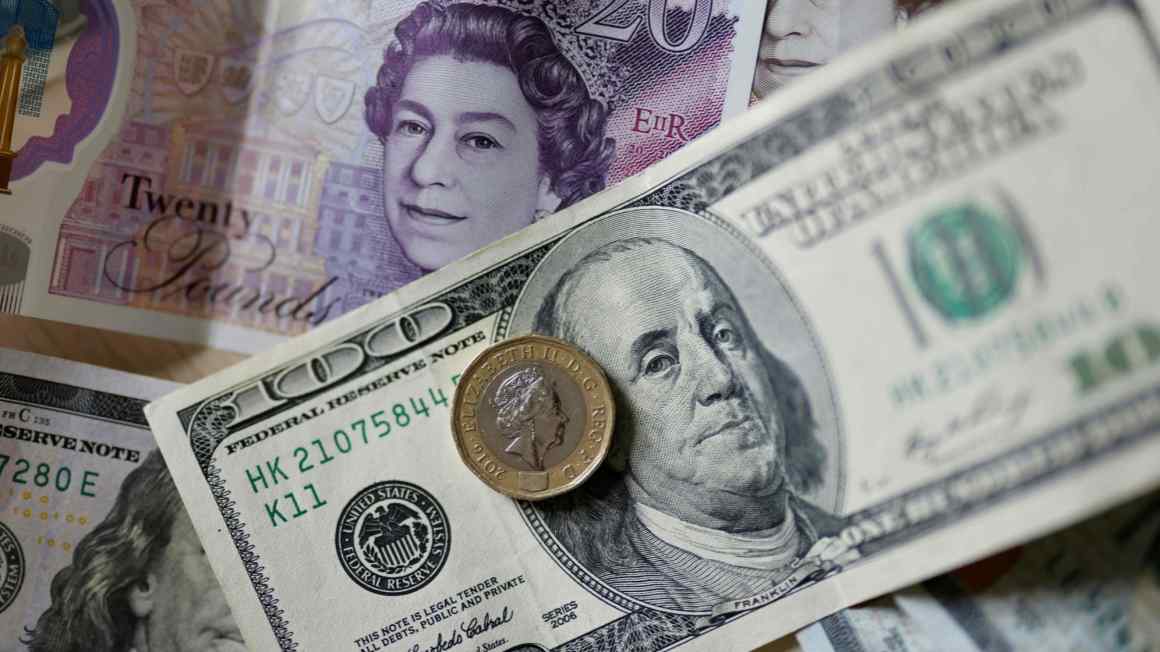
Thus, the system mutated into a dollar reserve system where international payments and reserves were mainly in dollars. This was a deep-seated systemic change.
It brought a great privilege to the US, as its balance of payments deficits would now be automatically financed by accumulation of US dollars in the reserves of other countries. It removed the discipline of reserve losses for the US; a discipline that holds for all other countries.
But on the other hand this also meant a weakness for the US, as it could not adjust its own exchange rate. Surplus countries were able to keep their exchange rate constant, or adjust it only very slowly, by intervening in currency markets, buying dollars and accumulating reserves.
In this way the US and surplus countries have a shared responsibility for the development of international liquidity and exchange rates.
But these responsibilities are very important for the world as a whole and should therefore be subject to collaboration with the IMF.
In the beginning, this completely free system seemed to work reasonably well. But gradually US governments and politicians discovered how easy it had become to create budget deficits by increasing spending and reducing taxes, as the resulting international payments deficits could simply be paid in US dollars.
During the last eight years of the George W. Bush administration all rules of responsible budgetary policies were then thrown aside by starting a very expensive war in Iraq, while at the same time carrying through large tax reductions, instead of raising taxes to pay for the war.
At the same time, monetary policies were also extremely expansionary with short- term interest rates zero or even negative in real terms. And supervisory rules limiting bank lending in relation to capital were practically abolished.
Is it a wonder that in that climate many banks went too far in using that abundant and cheap credit to increase short term profits by innovative but complicated and risky forms of lending?
The example of an overspending government was also not helpful in the maintenance of prudent spending limits by consumers.
All this was only possible because the normal discipline of reserve losses by balance of payments deficits was absent.
On the other hand this could only continue as long as surplus countries preferred accumulation of dollar reserves instead of exchange rate adjustment, causing their rapid growth to become more and more inflationary.
This is the underlying problem that a second Bretton Woods conference would have to address. How could we restore more stability and discipline to a monetary system that has become so free of rules that it seems more apt to call it a non-system?
A starting point could be found in the aims that were agreed in the amended articles of the IMF in 1976 and that were lost from view.
How could we now move special drawing rights more to the centre of the system? A first important step could be a new creation of SDRs by the IMF to meet the present dangerous lack of international liquidity.
Then ways should be found to give SDRs a more important role in the international payments system so that some discipline is restored.
Restoring the central position of the IMF in this way in the present world would of course require a long overdue adjustment of its governance structure and quota system. In that respect it should leave the legacy of the western dominance in 1944 behind it and be made truly international.
By working together in the IMF the world could then be guided back to a more stable system. The essential need is to get the world, including the US and large surplus countries, to recognize that the task of managing the main reserve currency - with its consequences for world liquidity - is an international responsibility.
At least an effective way of international surveillance of it should then be developed and accepted, together with the firm surveillance of exchange rates by the IMF that was already envisaged in 1976.
Johannes Witteveen was managing director of the International Monetary Fund from 1973 – 1978

Back to Economists' Forum homepage
Leading economists discuss topics raised by 
With most of the world’s big economies now officially out of recession, the Financial Times examines the legacy of the worst global economic crisis since the 1930s. See our in depth page:
News, data and opinions on market-moving economics. Read posts from Chris Giles, the FT's economics editor, Krishna Guha, US economics editor and Ralph Atkins, Frankfurt bureau chief.