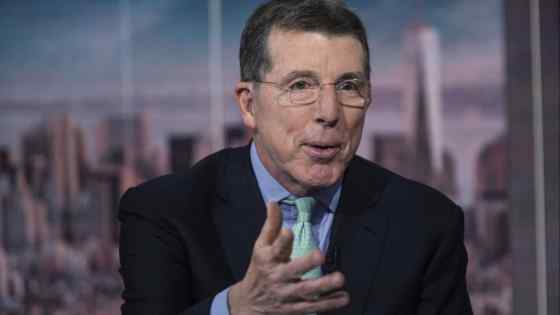
Windfall taxes are a ghastly idea. They are a sop to prejudice, a burden on risk-taking and a form of arbitrary confiscation. No sensible person should support them. So why do I now find the idea of a windfall tax on banks so appealing? Well, this time, it really does look different. Continue reading "Tax the windfall banking bonuses"
Grim truths Obama should have told Hu
November 18th, 2009 12:52am

Barack Obama, president of the US, met Hu Jintao, president of the People’s Republic of China, for a private meeting on Tuesday. The agenda was long, covering the world economy, climate change and non-proliferation of nuclear weapons. The last two are the most important, over the long run. But the first is the most urgent. If we do not achieve a healthy global economic recovery, hope of a co-operative relationship is likely to prove vain. Yet such a recovery is far from ensured. Worse, some of what is now happening – particularly China’s decision to depreciate the renminbi along with the dollar – makes healthy recovery less likely.
This, then, was an opportunity for Mr Obama to tell some brutal truths. I hope he did, after careful briefing from his staff, on the following lines.
“Mr President, as I said in Japan, ‘the US does not seek to contain China, nor does a deeper relationship with China mean a weakening of our bilateral alliances. On the contrary, the rise of a strong, prosperous China can be a source of strength for the community of nations’. For the foreseeable future, our two countries will be the leading players on the world stage. We must approach our challenges in a spirit of co-operation and accommodation. But that is, alas, not happening over your exchange rate policies.
The remainder of the article can be read here. Please post comments below.
Victory in the cold war was a start as well as an ending
November 11th, 2009 1:25am

“A crisis is a strange way to celebrate an anniversary.” This is the wry judgment of Erik Berglöf, chief economist of the European Bank for Reconstruction and Development.* Yet a crisis is what we see in countries that began the march from communism two decades ago. So, has capitalism failed, as communism did? In a word, “no”. Some transition countries are in crisis; transition is not. The same judgment applies elsewhere: capitalist countries are in crisis; capitalism itself is not. But reform is necessary. The great virtue of liberal democracies and market economies is their ability to reform and adapt. They have shown these qualities before. They must do so once again.
For those born, like me, shortly after the second world war, the cold war was the defining intellectual and political struggle of our lifetimes. With the collapse of communism ended a catastrophic epoch of millenarian politics and the delusion of a rationally planned economy. The freedom offered by democracy and the prosperity supplied by markets won. But the fact that communism expired not with a bang, but with a whimper, we owe largely to Mikhail Gorbachev.
Yet 2009 is a sobering year from which to look back. A year ago, capitalism careered over a cliff. With vast effort, states have put it back on the road. According to Piergiorgio Alessandri and Andrew Haldane of the Bank of England, in a superb new paper**, the total gross value of interventions on behalf of banks has been $14,000bn (€9,400bn, £8,400bn). This is state socialism.
The remainder of the article can be read here. Debate from our panel of economists appears below.
Time for a debate on immigration
November 6th, 2009 1:38am
Alan Johnson, home secretary, has recently admitted that the government has been “maladroit” in its handling of immigration. This is British understatement. It has been dishonest: it has pursued a radical policy, with profound consequences, on weak grounds, without serious debate. That is why the British National party is on BBC television. Continue reading "Time for a debate on immigration"
Private behaviour will shape our path to fiscal stability
November 4th, 2009 12:53am

If we are to understand where we are, we must understand where we have
been. This is particularly true if we are to escape from the huge
fiscal deficits being run by many governments. These deficits are not
the result of government stupidity; they are mainly a consequence of –
and response to – private behaviour. We must not ignore this connection. Continue reading "Private behaviour will shape our path to fiscal stability"
How mistaken ideas helped to bring the economy down
October 28th, 2009 12:41am

How did the world economy fall into such a deep hole? It is recovering, but painfully, and after a deep recession, despite unprecedented monetary and fiscal easing. Moreover, how likely is it that a balanced world economy will emerge from this force-feeding? The very fact that such drastic action has been necessary is terrifying. The fact that there is little room for a policy encore is yet more terrifying. Most terrifying of all is that this is not the first time in recent decades the world economy has had to be guided through a post-bubble collapse.
In his latest book – a successor to Valuing Wall Street, which appeared in time to help alert readers avoid the 2000 meltdown – Andrew Smithers of London-based Smithers & Co, provides an invaluable guide to past errors of analysis and policy.* He is a rare guide – a man with a deep understanding of economics and a lifetime’s experience of financial markets. His work helps to explain the stock-market bubble of the 1990s, the fiscal errors of Gordon Brown and the recent credit excess.
The big points of the book are four: first, asset markets are only “imperfectly efficient”; second, it is possible to value markets; third, huge positive deviations from fair value – bubbles – are economically devastating, particularly if associated with credit surges and underpricing of liquidity; and, finally, central banks should try to prick such bubbles. “We must be prepared to consider the possibility that periodic mild recessions are a necessary price for avoiding major ones.” I have been unwilling to accept this view. That is no longer true.
The remainder of this article can be read here. Please post comments below.
Why curbing finance is hard to do
October 23rd, 2009 1:18am
About a month ago, I visited the aero engine factory of Rolls-Royce, in Derby. I was hugely impressed. Making jet engines able to work at extreme temperatures is an extraordinary achievement. Why does the financial industry not work this way? How might we bring the performance of finance close to that of other sophisticated businesses?
How to manage the gigantic financial cuckoo in our nest
October 21st, 2009 2:06am

A year ago, at the height of the financial panic, the world yearned for a profitable and confident financial sector. It now has what it wants, but hates it. As joblessness soars and the hopes of hundreds of millions of people are blighted, the financial sector’s survivors are thriving. Even bonuses are back. Policymakers have made a Faustian bargain. Success feels like failure. Continue reading "How to manage the gigantic financial cuckoo in our nest"
The rumours of the dollar’s death are much exaggerated
October 14th, 2009 1:28am
It is the season of dollar panic. These panic-mongers are varied: gold bugs, fiscal hawks and many others agree that the dollar, the dominant currency since the first world war, is on its death bed. Hyperinflationary collapse is in store. Does this make sense? No. All the same, the dollar-based global monetary system is defective. It would be good to start building alternative arrangements.
Continue reading "The rumours of the dollar’s death are much exaggerated"
Britain’s phoney debate on slashing spending
October 9th, 2009 1:09am
“Our country is facing the largest budget deficit in our modern history.” Thus did George Osborne, shadow chancellor of the exchequer in the Conservative party, start his speech at the party conference this week. He was right. The questions are what to do, how and when.
Continue reading "Britain’s phoney debate on slashing spending"

Older entries
Leading economists discuss topics raised by 
Award-winning FT writers and some of the world’s top political and business figures examine the far-reaching implications of the credit crunch on our investment system in our special series on the
News, data and opinions on market-moving economics. Read posts from Chris Giles, the FT's economics editor, Krishna Guha, US economics editor and Ralph Atkins, Frankfurt bureau chief.