



Victory in the cold war was a start as well as an ending

November 11th, 2009 1:25am

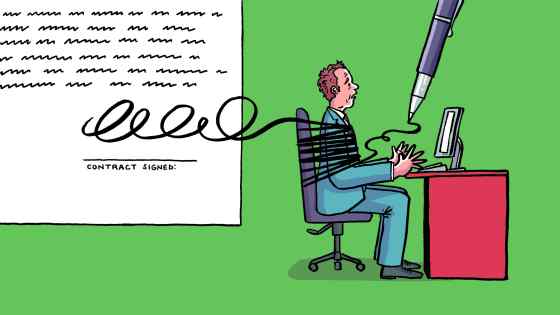
Pinn illustration

“A crisis is a strange way to celebrate an anniversary.” This is the wry judgment of Erik Berglöf, chief economist of the European Bank for Reconstruction and Development.* Yet a crisis is what we see in countries that began the march from communism two decades ago. So, has capitalism failed, as communism did? In a word, “no”. Some transition countries are in crisis; transition is not. The same judgment applies elsewhere: capitalist countries are in crisis; capitalism itself is not. But reform is necessary. The great virtue of liberal democracies and market economies is their ability to reform and adapt. They have shown these qualities before. They must do so once again.

For those born, like me, shortly after the second world war, the cold war was the defining intellectual and political struggle of our lifetimes. With the collapse of communism ended a catastrophic epoch of millenarian politics and the delusion of a rationally planned economy. The freedom offered by democracy and the prosperity supplied by markets won. But the fact that communism expired not with a bang, but with a whimper, we owe largely to Mikhail Gorbachev.

Yet 2009 is a sobering year from which to look back. A year ago, capitalism careered over a cliff. With vast effort, states have put it back on the road. According to Piergiorgio Alessandri and Andrew Haldane of the Bank of England, in a superb new paper**, the total gross value of interventions on behalf of banks has been $14,000bn (€9,400bn, £8,400bn). This is state socialism.

The remainder of the article can be read here. Debate from our panel of economists appears below.

A better way to regulate financial markets: Asset based reserve requirements

November 10th, 2009 3:35pm

By Thomas Palley

There is widespread recognition that the financial crisis which triggered the Great Recession was significantly due to financial excess, particularly in real estate lending. Now, policymakers are looking to reform the financial system in hope of avoiding future crises. But like the drunk who looks for his lost keys under the lamppost because that is where the light is, policymakers remain fixated on capital standards because that is what is already in place. Continue reading "A better way to regulate financial markets: Asset based reserve requirements"

Japan needs more aggression in warding off deflation

October 26th, 2009 4:31pm

By Kumiharu Shigehara

Japan’s economic expansion stumbled by late 2007, and in the context of the global economic crisis, it has been trapped in the deepest recession of the post-war era. Initially, the impact of the global crisis on the Japanese economy was expected to be limited because Japanese banks and other financial institutions were relatively insulated from financial turmoil. However, between the third quarter of 2008 and the first quarter of this year, Japan’s exports fell at an annual rate of some 55 per cent in volume terms, the sharpest among OECD countries and double the area’s average rate of decline. Continue reading "Japan needs more aggression in warding off deflation"

Martin Wolf’s chart of the week: QE

October 22nd, 2009 12:44pm

This international comparison shows the effects of quantitative easing and how far ahead Japan is.

Further reading: Mervyn King calls for break-up of banks

October 21st, 2009 12:45pm

From the FT:
King calls for the breakup of banks
Chris Giles
Darling responds to King’s bank speech Chris Giles FT video

Elsewhere:
Mervyn King’s speech in full
Bank of England
Volcker fails to sell a bank strategy NY Times
The consensus on big banks begins to move The Baseline Scenario
Mervyn King calls for banks to split as public finances take record hit The Times

Further reading

October 20th, 2009 5:53pm

From FT:

Time for the ECB to get serious about the overvalued euro - Willem Buiter

Why the euro is not the next global currency - Jean Pisani-Ferry and Adam Posen

Safe as houses - FT editorial on new mortgage regulation

From elsewhere:

The global crisis and central banks in Latin America: Breaking with the past - Luis I. Jácome H., VOXEU

The secret Paulson-Goldman meeting - Felix Salmon, Reuters

Why Is The Chamber Of Commerce Defending Big Banks? - Simon Johnson, Baseline Scenario

So Now We Know Why Lehman Went Under - Naked Capitalism

Don’t give up on quantitative easing: We can have our cake and eat it too

October 16th, 2009 12:37pm

By Roger E. A. Farmer

According to a widely-held consensus view, the world is slowly emerging from the Great Recession of 2008. Growth in China is projected to top 8 per cent in 2009. Australia raised the interest rate on the Australian dollar last week and the US and UK economies are showing signs that unemployment growth has slowed even though the unemployment rates in both countries are very high. Sometime soon, perhaps in the spring of 2010, perhaps earlier, the Fed, the European Central Bank, and the Bank of England are likely to respond to the perceived global recovery by reducing the sizes of their balance sheets and raising interest rates on overnight loans. Continue reading "Don’t give up on quantitative easing: We can have our cake and eat it too"

Zero interest rate policy: Treatment may be as expensive as the crisis

October 15th, 2009 11:22am

By Andrew Sheng and Michael Pomerleano

The national authorities and the international community should be commended for the speed of action taken to stop the spread of the financial crisis. To protect the financial system from the deflation in asset bubbles, the public sector has essentially guaranteed all deposits, rescued systemically important institutions, made large liquidity injections and brought interest rates to zero or near zero under a zero interest rate policy. Almost all systemically important central banks entered into ZIRP under emergency conditions at the same time.

But the polices adopted to combat the crisis are creating their own problems. In the medium term, the treatment may be as expensive as the crisis.

Continue reading "Zero interest rate policy: Treatment may be as expensive as the crisis"

Turner is asking the right questions on finance

September 11th, 2009 3:07am

I like and admire Lord Turner, chairman of the UK’s Financial Services Authority. He is more than an acute analyst. He is also brave. He showed that in his struggle with Gordon Brown, then chancellor of the exchequer, over plans for pension reform published in 2005. He is showing that again today in the lively debate he has initiated on the future of financial regulation. Continue reading "Turner is asking the right questions on finance"

Bolstering financial stability regulation

August 28th, 2009 2:52pm

By Masahiro Kawai and Michael Pomerleano

In a previous article in the Economists’ Forum, we expressed skepticism about the capacity of the Financial Stability Board to implement sound international financial stability regulatory architecture. We concluded that the prospects were more promising on the domestic front; this led to a discussion on creating a financial stability regulator at the national level.

The Obama administration has proposed that the Federal Reserve should become the overseer of financial stability in the US. The central bank would gain power to monitor risks across the financial system and sweeping authority to examine any firm that could threaten financial stability. The nation’s biggest and most interconnected firms would be subject to heightened oversight. Continue reading "Bolstering financial stability regulation"