Grim truths Obama should have told Hu

November 18th, 2009 12:52am

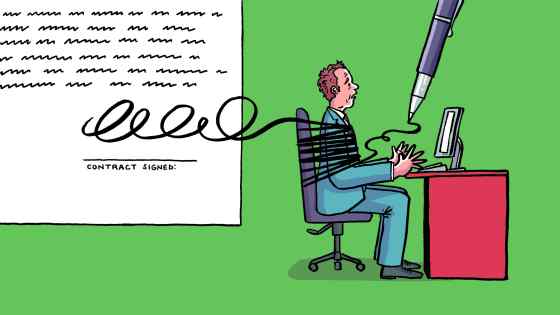
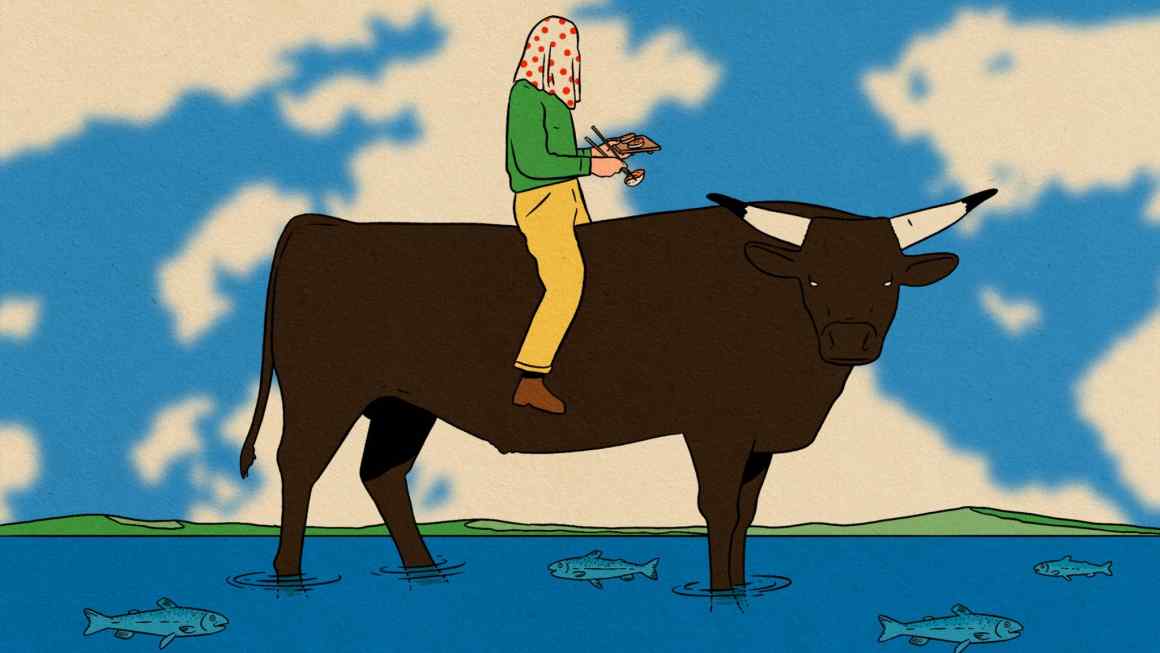
Ingram Pinn illustration

Barack Obama, president of the US, met Hu Jintao, president of the People’s Republic of China, for a private meeting on Tuesday. The agenda was long, covering the world economy, climate change and non-proliferation of nuclear weapons. The last two are the most important, over the long run. But the first is the most urgent. If we do not achieve a healthy global economic recovery, hope of a co-operative relationship is likely to prove vain. Yet such a recovery is far from ensured. Worse, some of what is now happening – particularly China’s decision to depreciate the renminbi along with the dollar – makes healthy recovery less likely.

This, then, was an opportunity for Mr Obama to tell some brutal truths. I hope he did, after careful briefing from his staff, on the following lines.

“Mr President, as I said in Japan, ‘the US does not seek to contain China, nor does a deeper relationship with China mean a weakening of our bilateral alliances. On the contrary, the rise of a strong, prosperous China can be a source of strength for the community of nations’. For the foreseeable future, our two countries will be the leading players on the world stage. We must approach our challenges in a spirit of co-operation and accommodation. But that is, alas, not happening over your exchange rate policies.

The remainder of the article can be read here. Please post comments below.

Victory in the cold war was a start as well as an ending

November 11th, 2009 1:25am

Pinn illustration

“A crisis is a strange way to celebrate an anniversary.” This is the wry judgment of Erik Berglöf, chief economist of the European Bank for Reconstruction and Development.* Yet a crisis is what we see in countries that began the march from communism two decades ago. So, has capitalism failed, as communism did? In a word, “no”. Some transition countries are in crisis; transition is not. The same judgment applies elsewhere: capitalist countries are in crisis; capitalism itself is not. But reform is necessary. The great virtue of liberal democracies and market economies is their ability to reform and adapt. They have shown these qualities before. They must do so once again.

For those born, like me, shortly after the second world war, the cold war was the defining intellectual and political struggle of our lifetimes. With the collapse of communism ended a catastrophic epoch of millenarian politics and the delusion of a rationally planned economy. The freedom offered by democracy and the prosperity supplied by markets won. But the fact that communism expired not with a bang, but with a whimper, we owe largely to Mikhail Gorbachev.

Yet 2009 is a sobering year from which to look back. A year ago, capitalism careered over a cliff. With vast effort, states have put it back on the road. According to Piergiorgio Alessandri and Andrew Haldane of the Bank of England, in a superb new paper**, the total gross value of interventions on behalf of banks has been $14,000bn (€9,400bn, £8,400bn). This is state socialism.

The remainder of the article can be read here. Debate from our panel of economists appears below.

A better way to regulate financial markets: Asset based reserve requirements

November 10th, 2009 3:35pm

By Thomas Palley

There is widespread recognition that the financial crisis which triggered the Great Recession was significantly due to financial excess, particularly in real estate lending. Now, policymakers are looking to reform the financial system in hope of avoiding future crises. But like the drunk who looks for his lost keys under the lamppost because that is where the light is, policymakers remain fixated on capital standards because that is what is already in place. Continue reading "A better way to regulate financial markets: Asset based reserve requirements"

Further reading

October 27th, 2009 11:38am

From the FT:

In depth: George Soros lectures
Storms lie ahead for politics’ odd couple - Philip Stephens on Mervyn King and George Osborne
We must overturn the status quo in derivatives - Kenneth Griffin

Elsewhere:

Oil prices and bank profitability - Heiko Hesse and Tigran Poghosyan, VOXEU
The Big Banks Get Bigger: Notes - James Surowiecki, The New Yorker
Fixed rates and protectionism, 2009 edition - Paul Krugman, New York  Times
The Panic of ’08: Recession Cause or Effect? - Casey B. Mulligan, NYT Economix Blog
How international reserves and easy money caused the crisis - Guillermo Calvo, VOXEU

Don’t give up on quantitative easing: We can have our cake and eat it too

October 16th, 2009 12:37pm

By Roger E. A. Farmer

According to a widely-held consensus view, the world is slowly emerging from the Great Recession of 2008. Growth in China is projected to top 8 per cent in 2009. Australia raised the interest rate on the Australian dollar last week and the US and UK economies are showing signs that unemployment growth has slowed even though the unemployment rates in both countries are very high. Sometime soon, perhaps in the spring of 2010, perhaps earlier, the Fed, the European Central Bank, and the Bank of England are likely to respond to the perceived global recovery by reducing the sizes of their balance sheets and raising interest rates on overnight loans. Continue reading "Don’t give up on quantitative easing: We can have our cake and eat it too"

Zero interest rate policy: Treatment may be as expensive as the crisis

October 15th, 2009 11:22am

By Andrew Sheng and Michael Pomerleano

The national authorities and the international community should be commended for the speed of action taken to stop the spread of the financial crisis. To protect the financial system from the deflation in asset bubbles, the public sector has essentially guaranteed all deposits, rescued systemically important institutions, made large liquidity injections and brought interest rates to zero or near zero under a zero interest rate policy. Almost all systemically important central banks entered into ZIRP under emergency conditions at the same time.

But the polices adopted to combat the crisis are creating their own problems. In the medium term, the treatment may be as expensive as the crisis.

Continue reading "Zero interest rate policy: Treatment may be as expensive as the crisis"

A second Great Depression is still possible

October 11th, 2009 4:37pm

By Thomas Palley

Over the past year the global economy has experienced a massive contraction, the deepest since the Great Depression of the 1930s. But this spring, economists started talking of “green shoots” of recovery and that optimistic assessment quickly spread to Wall Street. More recently, on the anniversary of the Lehman Brothers crash, Ben Bernanke, Federal Reserve chairman, officially blessed this consensus by declaring the recession is “very likely over”. Continue reading "A second Great Depression is still possible"

This time will never be different

October 2nd, 2009 6:24pm

The four most dangerous words in finance are “this time is different”. Thanks to this masterpiece by Carmen Reinhart of the university of Maryland and Kenneth Rogoff of Harvard, no one can doubt this again.

As the authors note, “If there is one common theme to the vast range of crises we consider in this book, it is that excessive debt accumulation, whether it be by government, banks, corporations or consumers, often poses greater systemic risks than it seems [to do] during a boom”. Continue reading "This time will never be different"

Free us from imprudent risk-aversion

October 1st, 2009 5:08pm

By Per Kurowski

There is no reason to believe the world would be better if financial regulators provided extra incentives to those who, perceived as having a lower default risk, are already favoured by lower interest rates, or punish further those who, perceived as more risky, are already punished by higher interest rates. In fact, the opposite is probably true. Continue reading "Free us from imprudent risk-aversion"

Another crash is all too possible

September 30th, 2009 4:20pm

By Michael Pomerleano

I was in Chicago last week to participate in the 12th Annual International Banking Conference sponsored by the Federal Reserve Bank of Chicago and the World Bank. The answer to the question posed — have the rules of the global financial game really changed? — is a resounding no.

This was my first week back in the US after being away for three years, and the conference gave me an opportunity to gauge the state of the debate there. Compared to my two years at the Bank of International Settlements in Basel and my year at the Bank of Israel, the openness of the debate and the quality of the discussions in Chicago were refreshing. However, in the US — the epicentre of the crisis and the country that is supposed to lead the world toward reform and out of the crisis — I expected a far more forceful articulation of remedial measures. Continue reading "Another crash is all too possible"