Raise interest rates to increase lending

October 29th, 2009 6:00am

By Ronald McKinnon

This is an updated version of Liquidity traps and the credit crunch, published in this forum on August 13, 2009

Since the onset of the credit crunch and global downturn, governments everywhere have responded to the shortfall in aggregate demand in a textbook Keynesian fashion. They have adopted fiscal stimuli: ramping up government expenditures and cutting taxes. Central banks followed the lead of the Federal Reserve by driving down short-term interest rates toward zero: almost exactly zero for overnight interbank rates in the US, Japan, and Canada, and generally less than 1 per cent in Europe into the autumn of this year. Continue reading "Raise interest rates to increase lending"

Further reading

October 20th, 2009 5:53pm

From FT:

Time for the ECB to get serious about the overvalued euro - Willem Buiter

Why the euro is not the next global currency - Jean Pisani-Ferry and Adam Posen

Safe as houses - FT editorial on new mortgage regulation

From elsewhere:

The global crisis and central banks in Latin America: Breaking with the past - Luis I. Jácome H., VOXEU

The secret Paulson-Goldman meeting - Felix Salmon, Reuters

Why Is The Chamber Of Commerce Defending Big Banks? - Simon Johnson, Baseline Scenario

So Now We Know Why Lehman Went Under - Naked Capitalism

Further reading

October 19th, 2009 1:29pm

From the FT:

Goodbye, Macroeconomics - Eli Noam

The travesty of the commons - Christopher Caldwell on the field of Nobel winner Elinor Ostrom

The free market is not up to the job of creating work - Mort Zuckerman on US unemployment

Countdown to the next crisis is already under way - Wolfgang Münchau

Down but not out - Krishna Guha on the dollar

Elsewhere:

Cognitive Dissonance and Global Macroeconomics - James Kwak on rhetoric and reality in the global imbalances debate, at Baseline Scenario

Escaping the state should cost Lloyds - Peter Thal Larsen, Reuters

Herbert Hoover and the start of the Great Depression - Lee E. Ohanian on history VOXEU

No L - James Hamilton on having avoided an ‘L-shaped’ recovery, at Econbrowser

Goldman Turns Into a Financial Frankenstein While the Fed Snoozes Away - Huffington Post

A reflection on the G20 (The question never asked to Mr Zoellick) - Biagio Bossone on the legitimacy of the G20 for small nations, at VOXEU

Further reading: The US economy

October 12th, 2009 2:50pm

From the FT:

Wolfgang Münchau: Making the case for a weaker dollar

Alan Rappeport: US trade gap unexpectedly narrows in August

Editorial comment: US jobs subsidies

Roger Altman: How to avoid greenback grief

John Authers: Manufactured surprises will keep stocks rolling

Elsewhere:

James Hamilton, Econbrowser: Will stimulating nominal aggregate demand solve our problems?

Brad Delong on the wisdom of more fiscal stimulus

Paul Krugman, NYT: The madness of the monetary hawks

James Kwak, Baseline Scenario: “What’s wrong with a phone call?” - How Wall Street influences Washington

Alan S. Blinder, VOX EU: 25 per cent of US jobs are offshorable

A second Great Depression is still possible

October 11th, 2009 4:37pm

By Thomas Palley

Over the past year the global economy has experienced a massive contraction, the deepest since the Great Depression of the 1930s. But this spring, economists started talking of “green shoots” of recovery and that optimistic assessment quickly spread to Wall Street. More recently, on the anniversary of the Lehman Brothers crash, Ben Bernanke, Federal Reserve chairman, officially blessed this consensus by declaring the recession is “very likely over”. Continue reading "A second Great Depression is still possible"

Finding a route to recovery and reform gets tough now

October 7th, 2009 1:09am

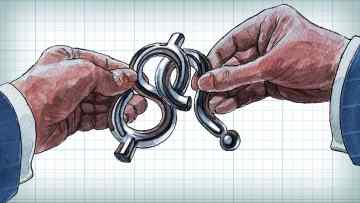
Ingram Pinn illustration

A year ago, the world economy fell into a deep recession. Now, happily, we see financial stabilisation and economic recovery. But we must not declare victory. The world could still make two mistakes: first, we might withdraw stimulus too soon; second, we might lose the opportunity for reform. We must avoid both dangers. That is the lesson I learnt at the annual meetings of the International Monetary Fund and World Bank in Istanbul. So where are we and where do we need to go? Think of this in terms of five ‘r’s: rescue; recovery; rebalancing; regulation; and reform.

Continue reading "Finding a route to recovery and reform gets tough now"

Further Reading

October 5th, 2009 12:48pm

From the FT:

Michael Milken: Prosperity rests on human and social capital

Wolfgang Münchau: Diverging deficits could fracture the eurozone

John Authers: Crisis creates new sophistication in risk

Deven Sharma: Insight: Consistency in credit ratings

Elsewhere:

Dimitri Vayanos and Paul Woolley, VOX EU: Capital market theory after the efficient market hypothesis

Simon Johnson, Peterson Institute: The G-20, the IMF, and Legitimacy

Paul Krugman, NYT: Obama’s Anzio

James Kwak, The Baseline Scenario: Fed Chest-Thumping for Beginners

Another crash is all too possible

September 30th, 2009 4:20pm

By Michael Pomerleano

I was in Chicago last week to participate in the 12th Annual International Banking Conference sponsored by the Federal Reserve Bank of Chicago and the World Bank. The answer to the question posed — have the rules of the global financial game really changed? — is a resounding no.

This was my first week back in the US after being away for three years, and the conference gave me an opportunity to gauge the state of the debate there. Compared to my two years at the Bank of International Settlements in Basel and my year at the Bank of Israel, the openness of the debate and the quality of the discussions in Chicago were refreshing. However, in the US — the epicentre of the crisis and the country that is supposed to lead the world toward reform and out of the crisis — I expected a far more forceful articulation of remedial measures. Continue reading "Another crash is all too possible"

Further reading

September 4th, 2009 12:12pm

From the FT:

Jean-Claude Trichet: Europe has mapped its monetary exit

Timothy Geithner: Financial stability depends on more capital

Gillian Tett: A matter of retribution

Elsewhere:

Mark Kleinman: Reforming regulatory benefit cost analysis

Viral Acharya:   Systemic risk and deposit insurance premiums

Paul Krugman:  How did economists get it so wrong?

Further reading

August 11th, 2009 3:35pm

From the FT:

Germany still in credit crunch danger: James Wilson investigates the suggestion that Germany could still suffer as the financial crisis reaches its lowest point

Singh’s big chance to unchain the Indian economy: Eswar Prasad says financial sector reforms will determine the pace and quality of India’s growth

Elsewhere:

Easing job losses don’t change weak prospects for US recovery: RGE Monitor

Undersized: Could Greenland be the new Iceland? Should it be? Anne Sibert in VoxEU.org