Friday May 16 2008
All times are London time

Search Quotes in the FT.com site
FT Logo

April 30th, 2007

More problems for Iraq’s oil law

Iraq’s long-awaited oil law will be delayed a while longer, it seems. Kurdistan’s regional government has raised "serious concerns" about draft annexes to the law, talking about unacceptable concentration of power, breaches of constitutional agreements, and a "return to old regime methods."

AP, at the International Herald Tribune site, reports that Kurdish law-makers will try to block the legislation in parliament.

Over at the Oil Drum blog, my story about the IHS report on Irag’s undiscovered potential (press release is here) sparked a lively debate. As the writer of the original post observes, all that oil is not much use to anyone if it is too dangerous to extract, and no-one knows who owns it. Getting an oil law passed, and accepted by all sides, may not be a sufficient condition for getting Iraq’s oil industry to begin its recovery, but it is certainly a necessary one.

April 30th, 2007

And the Winner is…

Repsol is still the company to hold the unfortunate distinction of having paid the most generous price for a recent Gulf of Mexico asset, with its 2005 deal to buy BP’s Shenzi field. Tom Ellacott, analyst for Wood Mackenzie, who crunched the numbers for today’s Eni deal, came up with an implied long-term oil price of $42 a barrel, less than half of the price Repsol assumed, according to Wood Mackenzie. In fact, Mr Ellacott said Eni’s generosity was in line with recent deals and understandable given the amount of current interest in assets located in Gulf of Mexico. In contrast to Venezuela, where Mr Chavez is riding rough-shot over his foreign investors, the US is one of the dwindling number of places oil companies can be reasonably sure they won’t get strong-armed for a substantially bigger slice of profits and control by the government. Not even the UK can make that kind of boast.

April 30th, 2007

Macho macho

The US Gulf of Mexico appears in significant demand. Following on from this morning’s news of new leases, Eni this morning paid a macho price of $4.757bn for Dominion Resources’s assets there. Read the FT story here. Citigroup in a note this morning valued the assets at only $3.9bn. Analysts at Wood Mackenzie, the Edinburgh-based industry consultanting firm, are still crunching their numbers, but hint their valuation for the Gulf of Mexico fields Eni is buying had also been significantly lower. In terms of implied oil price, the one to beat is Repsol’s acquisition of BP’s Shenzi field. The Spanish energy group last July assumed a whopping $97 oil price to make it work, barring significant new reserve discoveries. Eni’s disappointing production results are not as desperate as Repsol’s problems, but it will be interesting to see what the numbers reveal later today. Judging from the field’s names: Devil’s Tower, Goldfinger, Spiderman, Q and Thunderhawk among others Eni’s Dominion deal is quite a macho affair.

April 30th, 2007

Could Kyoto be counterproductive?

Larry Summers, ex-Treasury secretary, has a typically thoughtful and well argued column in today’s FT, warning of the potential dangers in the Kyoto cap and trade approach to curbing greenhouse gas emissions, some of those dangers highlighted, as he notes, by my colleague Fiona Harvey in her superb recent series on carbon markets.

But for a more positive view of Kyoto, look at last week’s speech at Stanford from Lord Browne, chief executive, for three more months, of BP. It is a striking speech for an oil executive to make. But Lord Browne, of course, is not your standard Big Oil CEO. He was, as he reminded his listeners last week, the first leader in almost any industry, never mind the oil business, to confront the prospect of man-made climate change. That 1997 speech, full text here, is still worth a look today. One line stands out: "we must now focus on what can and what should be done, not because we can be certain climate change is happening, but because the possibility can’t be ignored": controversial then, but as Larry Summers puts in the FT, "that debate is over among the rational."

April 30th, 2007

Summer Fun

As the summer draws nearer it’s not just school children who are rejoicing. The Houston Chronicle reports that today Washington plans to announce a new round of oil and gas leases in the Gulf of Mexico, and off the shores of Virginia and Alaska. Oil companies produce more than 1.6m barrels of oil a day and 4,000bn cubic feet of natural gas a year from federal waters. The government hopes to increase that by offering new plots, which had previously been off limits, over the next five years in order to stem the country’s growing dependence on foreign supplies. But summer also brings with it the threat of hurricanes and this season is expected to be fiercer than the last. Having learned its bitter lesson during hurricanes Dennis, Katrina and Rita in the past three years, the industry is bracing itself by trying to find better ways to secure its rigs, some of which are worth upwards of $1bn, the Chronicle also reports.

April 27th, 2007

Not yet cornered

A little more digging has revealed that Hugo Chavez, Venezuela’s populist president, does not have the world’s international oil companies quite as cornered as he professes…at least not yet. This Dow Jones story gets it about right: Chevron, BP, Total, Statoil and even ExxonMobil, have all signed an agreement to renegotiate their Orinoco heavy oil contracts with PDVSA, Venezuela’s national oil company, and ConocoPhillips is likely to do so before the May 1 deadline. But what do these signatures actually mean? This is where things get a little fuzzy. On May 1, despite the flags, military and pomp, the main change will be the logo of the oil workers’ uniforms. Instead of Sincor, Total’s venture, the tags will read PDVSA. But whether Chavez will be able to extract the 60 per cent controlling stake he wants, and how he will compensate the partners, will be hacked out in tense negotiations over the next few months. Chavez may generally have gotten what he wants until now, but the oil companies have at least one trump card: they have the know-how to run the fields.

April 25th, 2007

Chavez gets the oil majors to sign

In the latest sign of the pressure on the international oil companies, all but one of the foreign majors operating in Venezuela’s Orinoco belt have signed new contacts with the government (AP story in the Houston Chronicle), to begin the process of the state taking control of the project. The Reuters version here.

Chevron, BP, Total, Statoil and even ExxonMobil, which traditionally plays hardball in these cases, have signed Hugo Chavez’s new terms for continuing to operating in the vast heavy oil resource region. Only ConocoPhillips, which has two projects in the area, is still holding out.

Mr Chavez, of course, has hailed the agreements as a victory for his brand of socialism. But for the IOCs, things could be worse. They have still got substantial equity stakes in projects in one of the biggest oil reserves in the world, bigger perhaps even than Saudi Arabia’s. The way things are going these days, they should probably be grateful for small mercies.

April 25th, 2007

Gazprom’s emissions goldmine

Gazprom has done a deal to buy carbon dioxide emissions reduction certiifcates in Brazil, which it can then sell in the EU, the New York Times reports. The arrangement is part of its plan to build a global carbon trading business to take advantage of the massive ptential for emissions reduction in Russia, as highlighted in the FT back in January.

The best quote in the NYT piece, from Gazprom Marketing and Trading’s PR man: "Russia is the Saudi Arabia of carbon.”

Of course, this is the way that the emissions trading system created by Kyoto and the EU’s own scheme, which will be linked from next year, are supposed to work. Incentives are created for emissions reductions to happen wherever in the world they are cheapest.

Whether EU energy users are prepared to pay through higher prices for $60bn worth of credits from Russia, with Gazprom and its partners no doubt claiming a healthy margin on the trades, may be another matter.

April 25th, 2007

Bad times for Big Oil

The World National Oil Companies Congress has been a relatively diplomatic affair so far, save for one very frank paper, submitted by Helmut Langanger, executive vp of exploration and production for OMV. Mr Langanger said what international oil company executives rarely admit: "IOCs will more and more change from operator to a service provider with pre-agreed reimbursement figures hereby substantially diminishing rates of return. Reduced profitability will lead to IOCs not delivering on major performance indicators, such as annual production growth, 100 per cent reserve replacement rates and moderate finding and development costs. " In fact Mr Langanger has no soothing words for investors in OMV or any other IOC. Perhaps that is why he submitted a paper and then nonetheless ended up sending a rather charming deputy who gave a far more humorous, less pessimistic point of view at the panel discussion.

April 25th, 2007

Springtime for gasoline prices

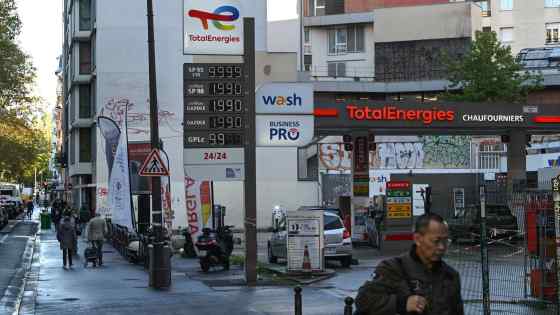
US gasoline prices have been rising steadily since January, and are now over $2.85 a gallon on average, James D. Hamilton points out at Econbrowser, in a post that also highlights plenty of other useful data on the cost of motoring in the US.

He also provides an elegant explanation of what is going on: the increase is a result of the usual seasonal effect - prices rise as the summer driving season approaches - plus crude oil going from about $50 a barrel to over $67 for Brent today.

Another factor is the tightness of US refining capacity, which has sent refiners’ margins soaring. Lucas Herrmann of Deutche Bank, in the note on BP referred to in an earlier post, lamented the company’s failure to "take advantage of the current exceptional environment for US refiners".

UPDATE: The EIA figures for gasoline stocks show a continued decline, suggesting the upward trend is not going to reverse any time soon. The analysis gives some further reasons why gasoline prices are strong, and apears to have given up on last week’s suggestion that "it wouldn’t be too surprising to see prices began to stabilize or decline over the next several weeks."


More FT Blogs and Forums

  • Clive Crook's blog The FT's chief Washington commentator blogs about intersection of politics and economics

  • Economists' Forum Leading economists and the FT's chief economics commentator, Martin Wolf, debate the big issues

  • Gideon Rachman's blog The FT's chief foreign affairs commentator on world issues and his travels

  • The Undercover Economist Tim Harford's blog on economics in everyday life

  • Willem Buiter's Maverecon The LSE professor blogs on 'economics, politics, ethics, religion, culture, free and open source software (FOSS), and whatever'

  • Brussels Blog By our Brussels writers

  • Westminster Blog By our UK Parliament writers

  • Dear Lucy Columnist Lucy Kellaway and readers solve your workplace woes

  • FT Tech Blog Our San Francisco and world correspondents look at the intersection of technology and business

  • Technology Policy Forum James Boyle, Richard Epstein, Eli Noam and Thomas Hazlett debate regulatory and legal issues

  • John Gapper's blog FT chief business commentator talks about business, finance, media and technology