

From God to Goldman

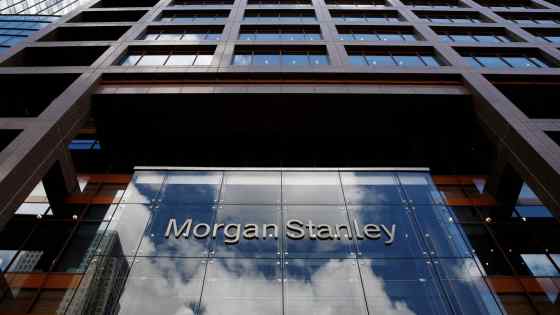
So Goldman Sachs is “doing God’s work”, says Lloyd Blankfein, its chief executive, in an interview with the Sunday Times. Leave us alone to make money, he argues:

“We help companies to grow by helping them to raise capital. Companies that grow create wealth. This, in turn, allows people to have jobs that create more growth and more wealth. It’s a virtuous cycle.” To drive home his point, he makes a remarkably bold claim. “We have a social purpose.”

This didn’t go down well with Goldman’s critics, whose high horses had already been fitted with stilts to attack the $16.7bn it has so far set aside this year for staff bonuses. Charlie Gasparino, in the Huffington Post, points out that Goldman has so much money only because it was bailed out by the government, and continues to be subsidised with cheap money.

In the New York Times this morning Maureen Dowd is particularly vicious. She starts with the vampire squid analogy Rolling Stone magazine so beautifully dreamt up for the bank (to which Goldman responded that it was “painfully conscious of the importance in being a force for good”) and ends with:

…as far as doing God’s work, I think the bankers who took government money and then gave out obscene bonuses are the same self-interested sorts Jesus threw out of the temple

Not everyone is a critic, though. Jeremy Warner, former Independent business editor, in his blog, points out that the comment about God was obviously a joke.

The wording may be amusing, but the sentiment behind them is not a joke: Goldman’s clones genuinely believe they are helping make the world better, and should be amply rewarded for doing so. Hard as this is to say, they are partially right – but only about what they do, not what they should get for it.

Markets only work when they are greased by the money of speculators. Ebay may make it easier to buy directly from sellers, but imagine trying to pick up all your groceries straight from the farm, without retailers sitting in between, risking their money by stocking shelves. The same goes for shares: try selling a package of 200 shares in any lightly-traded small company and the buyer is likely to be a marketmaker who will hold them until a buyer comes along. At a more complex level, fixed-rate mortgages work only because of the interest rate swaps market. So we need someone doing the sort of speculation Goldman does so well.

The problem is that hedge funds and banks, and particularly Goldman, are fabulously good at taking out a cut along the way. They are the market equivalent of the Soviet bureaucrats who drew up the 5-year investment plans, running the economy and taking a fee for doing so.

To most people these “fees” look insanely large. There is no easy way to measure the increase in efficiency of the economy thanks to their efforts, which leave many able to retire in their mid-30s with enough money to ensure their children and grandchildren will never have to work.

In part as a result the gap between the richest and poorest in US society is at its highest since the Robber Barons of the late 19th century, the Rockefellers and JP Morgans. This is not socially desirable, even if it turns out that the bankers add more wealth to the world than they cream off.

John Kay, in the FT today, points out the dangers of businesses trying to appropriate wealth through “rent-seeking” behaviour. Governments need to wake up to the dangerously high levels of “rent” the banks are managing to extract from their role as gatekeepers for the allocation of capital to the world’s businesses.

(For more on money and morals, see www.ft.com/morals)

FT dot comment

FT dot comment is no longer updated but it remains open as an archive.

Politics, economics, high finance and morality – this blog addresses the issues being considered by the FT’s comment team, and their thoughts.

FT dot comment: a guide

Christopher Cook is an FT editorial writer. Before joining the FT in 2008 as a Peter Martin Fellow, he worked for three years for the Conservative party.

Lorien Kite is deputy comment editor, a post he took up in 2009 after four years as a commissioning editor on the analysis page. He joined the FT in 2000.

Ian Holdsworth became assistant features editor in 2009 and was previously chief production journalist for the features pages.


Joining the debate: To comment, please register with FT.com. Register for free here. Please also read the FT's comments policy here.
Contact: You can write to the comment team using this email format: firstname.surname@ft.com
Time: UK time is shown on our posts.
Follow the blog: Links to the Twitter and RSS feeds are at the top of the blog.
FT blogs: See the full range of the FT's blogs here.