


Friday May 16 2008
All times are London time

Search Quotes in the FT.com site
FT Logo

March 26, 2008

Reflect before you regulate investment banks

bank-regulation.jpg

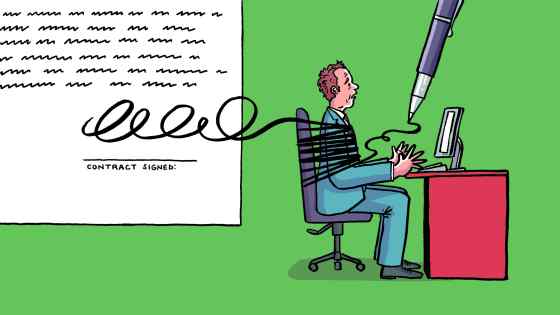
My column in the Financial Times this week is about the need for better incentives and simpler regulation of investment banks, rather than a vast new regulatory infrastructure and set of rules. You can read it here and comment below.

One Response to “Reflect before you regulate investment banks”

Comments

  1. Dear John Gapper, Re your “It is time for reflection, not regulation”, yes, everyone now seems to be discussing regulation in one form or another. Consequently it is a change to break away from that line of thought. May I please suggest an alternative approach?

    It seems to me important to get rid of the cause of the housing bubble. At present the housing bubble is caused by the variations in the bank rate dictated by the monetary control of the economy. The purpose of my discussion below is to demonstrate that we can have a very good monetary control –more stable and more stimulating than at present – without using variations in the bank rate as a control parameter. That would eliminate the cause of the present housing bubbles and it would eliminate the resulting problems with mortgage backed credit.

    About 40 years ago the FT was good enough to publish as a letter my conclusions on the response rate and stability of a monetary control with feedback - on 26th February, 1969. The analysis predicted high stability. I recommended the arrangement accordingly. The growth rate, also, is high, as discussed below.

    My immediate interest in the control is in the method for increasing the rate of spending.

    For a very good performance a control must achieve an increase in the rate of spending very soon after the monitor has indicated the need for an increase. Of various ways of achieving that result, I currently favour gifts of new money to a rota of people chosen to spend their gifts as an extra within one or two weeks. So if, for example, monitoring showed that there had been a slight build-up above optimum in the amount of goods for sale in the shops, and a slight rise above optimum in the availability of staff to perform services, then the control would provide gifts of new money to people according to the rota and that new money would be spent, as an extra, mostly within one or two weeks – without affecting the government’s budget or its borrowing requirement. The effect of the feedback would then be very rapid and the control would keep the economy very steady and very stable. Moreover, industry and commerce would find that, in total for the economy, all their output would be purchased however much they produce - provided average prices remain constant. So, for maximum profit, firms would strive to produce an increasing output, at constant prices, and growth would settle at a sustainable maximum. The demand for labour, also, would settle at the sustainable maximum, as would wages.

    The current equivalent is variation of the bank rate. That can be seen to be a poor match to the desired characteristics for the control, even before consideration of the undesirable side effects such as in disrupting the price of houses.

    Consequently present circumstances require a switch to the above type of monetary control, in order to eliminate both house price bubbles induced by the monetary control and the resulting interference with the financial credit system. Then, once the cause of the present problem has been removed, the investment banks could be subject as you suggest to a simpler regulatory structure and improved incentives.

    I hope that, by the time you read this, you will have had a very good holiday – which, I trust, will not include even glancing at blogs.

    Posted by: Brian Stratford | April 6th, 2008 at 1:40 pm | Report this comment

Post a comment

Comment Policy


As a final step before posting the comment, please type the two words you see in the image beloweight numbers in the audio clip; this test is to prevent automated robots from posting comments.


More FT Blogs and Forums

  • Clive Crook's blog The FT's chief Washington commentator blogs about intersection of politics and economics

  • Economists' Forum Leading economists and the FT's chief economics commentator, Martin Wolf, debate the big issues

  • Gideon Rachman's blog The FT's chief foreign affairs commentator on world issues and his travels

  • The Undercover Economist Tim Harford's blog on economics in everyday life

  • Willem Buiter's Maverecon The LSE professor blogs on 'economics, politics, ethics, religion, culture, free and open source software (FOSS), and whatever'

  • Management Blog A forum for the latest thinking about the issues that preoccupy managers around the world

  • FT Alphaville Instant market news and commentary for finance professionals

  • Brussels Blog By our Brussels writers

  • Westminster Blog By our UK Parliament writers

  • Dear Lucy Columnist Lucy Kellaway and readers solve your workplace woes

  • FT Tech Blog Our San Francisco and world correspondents look at the intersection of technology and business