Chris Cox versus Alan Greenspan on derivatives
September 23, 2008
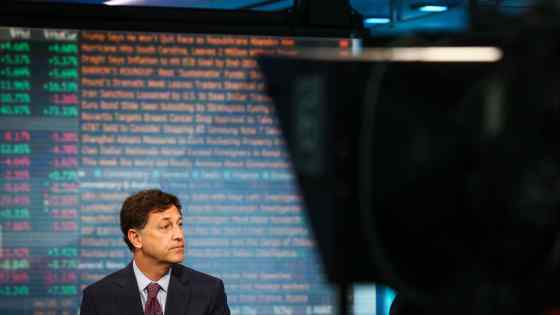
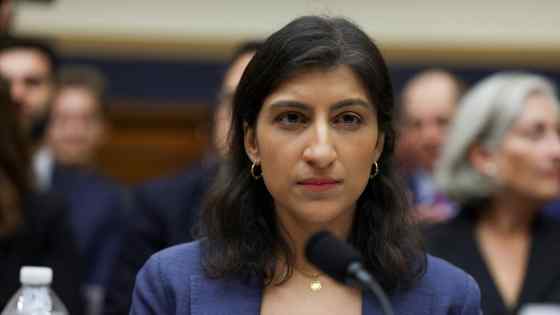
Listening to Chris Cox, the chairman of the Securities and Exchange Commission, giving evidence to Congress a few minutes ago, I was particularly struck by his assault on the lack of regulation of the over-the-counter derivatives market.
Mr Cox described the unregulated $58,000bn credit default swaps market as “ripe for fraud and manipulation”, saying that it was a forum for the shorting of corporate debt without the oversight imposed on cash markets.
It was, of course, Congress that chose in 2000 not to extend regulation to OTC derivatives markets, as I noted in my column on Saturday. One of the most influential proponents of not regulating OTC derivatives was Alan Greenspan, then chairman of the Federal Reserve.
Mr Greenspan told Congress in 2000 that regulation of the OTC derivatives market was not needed because:
“OTC transactions in financial derivatives are not susceptible to - that is, easily influenced by - manipulation.”
So then, the OTC derivatives market. Not susceptible to manipulation, or ripe for it? What a difference eight years, and a global financial crisis, make!
At the time, Mr Greenspan’s reputation and influence was at its height, and Congress went along with his assessment. I presume that it will now change its mind.
Back to John Gapper's Business Blog homepage


Greenspan won the hearts of Wall Street with his ‘87 liquidity provision. He won their hearts again by letting the Tech Bubble run, justifying it partially by efficiencies tech was providing. He won them again by providing endless cheap money, and by advocating against CDS regulation: Through it all the media lionized him. Why? They thought it was the cool thing to do. They never took Econ 101.
Posted by: Alan Pennsylvania | September 23rd, 2008 at 9:44 pm | Report this commentThnk you indeed for this timely piece of info. A critically important task, not necessarily just historians, should be to find out who said what and when. A few years ago Mr. Warren Buffet also said, apparently, that derivatives were weapons of financial mass destruction. And nobody listened then, why? Mr. Greenspan, the most overrated public official once, may soon become one of the most scorned, and with reason.
Posted by: Angel Delgado | September 23rd, 2008 at 9:49 pm | Report this commentI have read companies were even selling protection on their own names (anonomously via intermediaries). Anyone heard about that too?
Posted by: Frank Lonson | September 23rd, 2008 at 10:15 pm | Report this commentWell this is probably not as straight forward as it seems. I have read comments elsewhere where Greenspan has taken up issue with Fredie and Fanie and others. Admitted he is less hawkish on regulation but then again was it really his job to monitor the balance sheets.
Posted by: Gary | September 23rd, 2008 at 10:29 pm | Report this commenttake a simple example.. if you are allowed to leverage 10 times what you own, would you? If you are reasonable enough than you will probably not. The CEO’s of these companies levered there balance sheets upto 30 times!!! The problem with no interest loans, interest only loans, cooking the books are not the Greenspan’s making. Agreed he kept the loans low but these loans may have got boost because of that but there was liquidity everywhere due to sovreign funds. So its not right to blame one person. Warren buffet got it and so did many other banks like US Bank, Wells fargo etc.. However these greeds investment banks and AIGs did not. There was a herd mentality and if one was doing so was other. They were all playing in the hands of the wall street. How ironic!! especially these investment banks.
Even in bad times you should have the gumption to realize what exactly went wrong. Greenspan may not have squashed the bubble right away but he did not create the predatory lending practices. He had warned about the effects then but guess what.. who was listening at the time.. No one and still nobody is.. Thats a shame!!
CDS should be treated as insurance contracts (thus only be entered into as protector by insurance companies and banks) and accounted for exactly like the debt they are protecting — thus “consuming” regulatory capital and preventing further leverage. The introduction of such rule would automatically lead to a deleverage and, if need be, the closing down of “affected” companies.
Posted by: Karl Goper | September 23rd, 2008 at 10:49 pm | Report this commentthe nominal value of the CDS market is approx. $60,000bn, but if you look at the entire derivatives market (interest rate swaps, currency swaps, etc. etc.) we’re talking about a nominal market value of over $600,000bn - or well over global GDP - now that’s some leverage for you…
Posted by: Raviv | September 23rd, 2008 at 11:44 pm | Report this commentDems and repugs alike are struggling to to put on their best Casablanca Claude Rains imitation to cover up their shock over the fact that unregulated US financial corporations scammed the system in order to steal as much as they could as fast as they could - albeit, the timing of this economic “Pearl Harbor” event stinks to high heaven.
Posted by: Dusty | September 24th, 2008 at 4:12 am | Report this commentCan one of you goldbugs explain to me why you can’t see Deflation coming? It’s always ‘buy gold’ and ‘buy silver’. I think it’s going the opposite way here.
Posted by: Evan Rowe | September 24th, 2008 at 5:01 am | Report this comment[…] More here - Permalink […]
Posted by: The Anglo Far East News » Chris Cox versus Alan Greenspan on derivatives!! | September 24th, 2008 at 5:05 am | Report this commentIs this the same Chris Cox who gives a wink and a nod to the corrupt manipulation of the precious metal markets?
Posted by: Gerald Lawrence | September 24th, 2008 at 5:58 am | Report this commentEvan:
Posted by: Gary S. | September 24th, 2008 at 5:59 am | Report this commentThe reason to buy gold is because inflation is coming big time. Deflation can not happen in this environment. The deflation you see is falling business activity and a drop in demand for goods and services. That may be so, but inflation is caused by the printing of money. It is simply a cause and effect called “monetary inflation.” When so much money is created out of thin air it has to be accounted for and eventually finds it’s way into the system of all financial entities in the world. Gold is the only true money and has been for centuries. Just one more aside. When you print excessive amounts of Dollars out of nothing, you badly devalue the currency it is printed in. This being the U.S. dollar means that a badly devalued greenback cannot buy as many goods as it once did. You effectively need more dollars. In other word goods arriving into the United States become much more expensive because the dollar is worth much less. End result is huge inflation. Gold is going to go through the roof.
Evan. Are you afraid you’ll need a suitcase full of $$$ to pay for a Big Mac or a latte sometime soon? Hardly, imo. But it is a fact that back in 2001 US88cents would buy one Euro. Today, to buy one Euro you’d have to pay USD1,47!
Buy Euros or Swiss francs. Germany is still world export champion and the Swiss franc has always proved to be a “safe haven” in turbulent times. Right?
Posted by: J.J. | September 24th, 2008 at 8:11 am | Report this commentAs I have mentioned elsewhere, I have no pretensions at knowing anything about economics. Is that the reason why I am so horrified at the idea of the $700 billion bailout? What an incredible bonanza for the same Wall Street geniuses who got us into this mess, and what an even more incredible power grab for the same Bush/Cheney administration that got away with quasi-fascist control over the political sphere at the beginning of its rule by ramming through the Patriot Act, and now wants to impose a quasi-fascist “Corporate State” in the economic realm as well at the end of its term.
Ironically, this enormous transformation of America will likely go through (with, minimal, if any, relief for homeowners or controls over executive pay) with the help of craven Democrats scared that they will be blamed for an economic meltdown, just as they were earlier scared into abandoning our civil liberties on wiretapping and Guantanamo for fear of being called “soft on terror”. and just as they were stampeded into going along with the Iraq war.
Therefore, we may need to rely on right wing Republicans to save our democracy by opposing the extraordinary powers the Treasury secretary would be given under the bailout. What is happening to America?
Posted by: algasema | September 24th, 2008 at 2:17 pm | Report this comment“we may need to rely on right wing Republicans”
No problem with that if sufficient numbers act as true “fiscal” conservatives, as opposed to the gross and profligate spenders of the Bush Administration and its Christian-right Republican allies in Congress.
At least given the strong public pronouncements of Senator Shelby from Alabama, along with a few Republican Congressmembers, who has shown some consistency in opposition to federal guarantees of private debt, e.g. loan guarantee for Chrysler, in the past I am hopeful that a slush fund of any size is not created out of the pockets of the average tax-payer.
There are alternatives clearly through continued liquidity injected by the Federal Reserve into the banking system as needed and some sort of forced injection of private equity capital as replacement for or in addition to the existing liabilities of banks to cushion the impact of the losses until the mortgaged-based assets start to be traded or sold again in a more orderly market.
As I noted earlier, I do not trust many of the Democrats to either show backbone or honesty on a bonanza like this for all the private interests both Parties represent who either will benefit from the removal of their unrealized losses or from their “share” of the $700 billion in assets exchanged for the tax-payers’ money.
algasema: read the section on derivatives from the 2002 Berkshire Hathaway annual report that I pasted into one a comment on one of Mr. Gapper’s earlier posts. Mr. Gapper referred to it elsewhere. Outstanding exposition and analysis by Warren Buffett who is superb at both, as well as an excellent writer. You will be an expert in no time. Conceptually derivatives as simple, but the details of how they created, are accounted for and valued can be mind-numbing.
Posted by: Wendell Murray | September 24th, 2008 at 6:00 pm | Report this commentThank you, Wendell, Murray. I will read your Warren Buffett post. I certainly could use an instant economics education. I can think of at least two or three others who could do with the same, including a lady who reportedly spent part of yesterday riding wooden horses at a carousel together with some of us radical New York lefties not too far from my window overlooking Central Park, along her “first dude” husband and five month old baby.
Posted by: algasema | September 24th, 2008 at 7:34 pm | Report this commentWhat about the State investment funds of Wisconsin and Missouri? I understand they are now at 28% and 26% of their value in Q3 of 2006 That’s quite a drop. Talk about toxic debt
Posted by: window diver | September 25th, 2008 at 4:25 am | Report this commentI know nothing about economics or monetary policy which may explain why I could never understand why Alan Greenspan was so revered. This is what I wrote in March 2006
Alan Shrugged, or A Farewell to
Federal Reserve Chairman Greenspan
How we hung upon his every word,
to doubt him would have seemed absurd.
It was Greenspan who always knew the score,
he admonished us that less was more.
He taught a lesson that we all had learned,
a penny saved is a penny earned.
To surpluses he was enthralled
while deficits left him appalled.
In his reprimands we found no blame;
we thought Prudence was his middle name.
Then a sudden, stunning, change took place
which of the cautious banker left no trace.
The man whom some had called a Scrooge
had morphed into a Bush’s stooge.
A switch made, perchance, with a magic wand?
Or, shocking thought: had we all been conned?
Tax cuts, he said, were surely good
as he donned the cloak of Robin Hood.
Alas, no thought he gave the needy
for his concern was for the greedy.
When accused of having done the dirty
his attitude become quite shirty.
He said he’d never heard such rot
for one always gives to those who’ve got.
He admired the teachings of the famed Ayn Rand,
whose philosophy he revered as grand,
that the poor among us are immune to pain
so the hindmost is the Devil’s gain.
The solid greenback, once so prized,
Posted by: Phil Linehan | September 25th, 2008 at 4:31 pm | Report this commentis now funny money, much despised.
Can it be true he was heard to his wife to holler
“Andrea, Hon, guess what? I’ve shrunk the dollar!”
[…] were swell and needed no regulation in 2000, but now they are said by the SEC to be “ripe for fraud and manipulation.” Uh […]
Posted by: Dinocrat » Blog Archive » The consequences of being “addicted to complexity” | September 27th, 2008 at 7:11 pm | Report this commentOld proverb: Man cannot live in two houses. Mr. Greenspan the “Objectivist” has lived the last half of his life in the most Subjectivist” house in the world, the world of “funny money”. Today in front of Congress he said that his “model” of forty years was broken. Wrong again Sahib; You walked away from your “model forty years ago.
Posted by: Iben Hadd | October 24th, 2008 at 1:20 am | Report this comment